

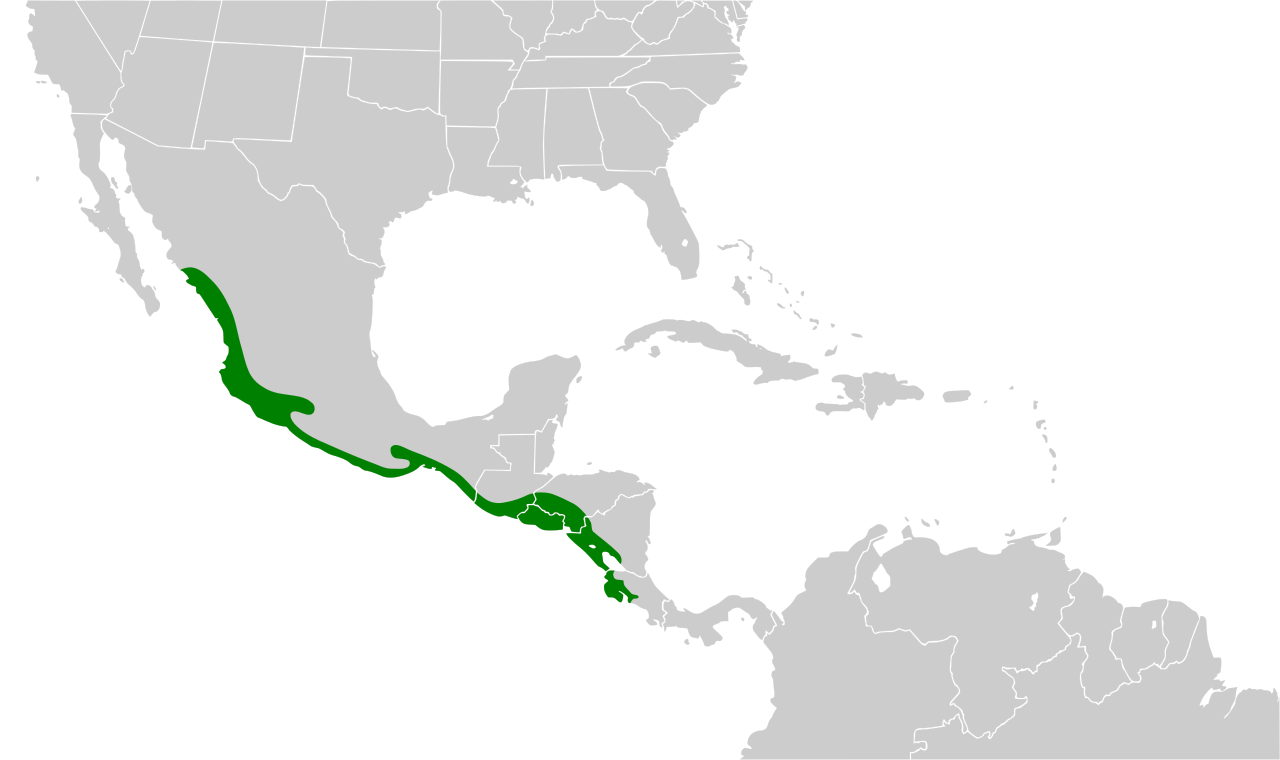
Eupsittula canicularis, also known as the orange-fronted parakeet, orange-fronted conure, half-moon conure or Petz's conure is a vulnerable species of birds in subfamily Arinae of the family Psittacidae, the African and New World parrots. It is found from western Mexico to Costa Rica.
Region
Mesoamerica
Typical Environment
Occurs along the Pacific slope from western Mexico through Guatemala, El Salvador, and Nicaragua to northwestern Costa Rica. Inhabits dry to semi-humid lowland and foothill forests, thorn scrub, gallery woods, and second growth. Frequently uses edges, clearings, riparian corridors, and agricultural mosaics including orchards and shade coffee. Readily visits towns and plantations where fruiting trees are abundant. Roosts communally in trees and sometimes in large cavities.
Altitude Range
0–1500 m
Climate Zone
Tropical
Ease of Keeping
Beginner friendly: 3/5
Also called the orange-fronted parakeet or half-moon conure, this small parrot ranges from western Mexico to Costa Rica. It often nests in arboreal termite mounds as well as tree cavities, a remarkable adaptation among New World parrots. Highly social and noisy, it forms chattering flocks that commute between feeding and roosting sites. It is common in aviculture but not domesticated.



Temperament
social and active
Flight Pattern
swift direct flight with rapid wingbeats
Social Behavior
Typically travels in small to medium-sized flocks and pairs off during the breeding season. Nests in tree cavities and frequently in arboreal termite nests, which the birds excavate. Pairs are monogamous and show strong site fidelity to nest and communal roost sites.
Migratory Pattern
Partial migrant
Song Description
Vocalizations are high, nasal screeches and sharp, chattering calls given in flight and at feeding sites. Contact calls carry far and are often repeated rapidly; perched birds exchange softer chatters within flocks.
Plumage
Mostly green with a distinct orange frontlet on the forehead and a bluish crown; underparts slightly paler green with yellowish wash. Wings show darker primaries with green coverts; tail is tapered and green with darker tip. Bill is horn to grey-horn above and darker below; bare orbital ring pale.
Diet
Feeds on a variety of seeds, fruits, and berries, including figs and cultivated fruits. Also takes buds, flowers, and nectar when available. May consume young shoots and occasionally small invertebrates, especially when feeding chicks. Will visit croplands and orchards where it can exploit seasonal resources.
Preferred Environment
Forages primarily in the canopy and upper midstory of dry forest, thorn scrub, and second growth. Frequently uses forest edges, riparian trees, and fruiting trees in plantations and village areas. Regularly commutes between feeding grounds and communal roosts.


