

The orange-headed tanager is a species of bird in the family Thraupidae. Native to South America, it is found in Argentina, Bolivia, Brazil, Colombia, Ecuador, Paraguay, Peru, and Venezuela, where it inhabits successional vegetation, cerrado, riparian forest, shrub, brush, and open woodland. Males of the species have sandy-gray upperparts, cinnamon to buff underparts, white on the center of the lower breast, belly, and tail, and rufous-orange and yellow heads. Females are similar but duller.
Region
South America
Typical Environment
Occurs from Venezuela and Colombia south through Ecuador, Peru, and Bolivia, east across Brazil, and into Paraguay and northern Argentina. It inhabits successional vegetation, cerrado, riparian thickets, brush, and open woodland edges. Frequently found along forest borders, in overgrown pastures, and in scrub near watercourses. It tolerates disturbed landscapes and can be locally common where dense shrub layers persist.
Altitude Range
0–1800 m
Climate Zone
Tropical
Ease of Keeping
Beginner friendly: 1/5
This tanager favors shrubby second growth and edge habitats, often benefiting from human-created clearings and successional vegetation. It commonly joins mixed-species flocks while foraging. Sexual dimorphism is subtle but noticeable, with males showing brighter rufous-orange tones on the head. Its adaptability helps keep populations stable across much of its broad South American range.


Juvenile

Feeding
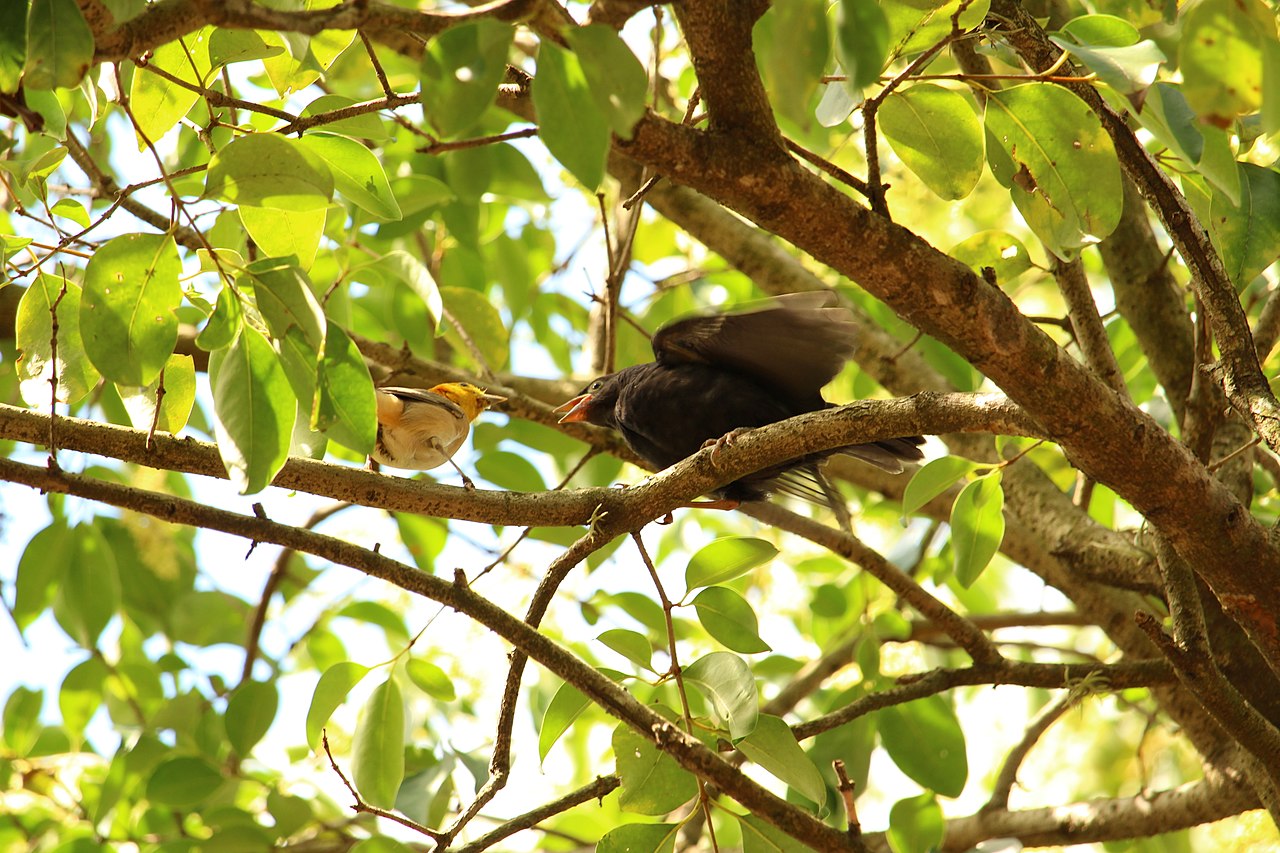
A shiny cowbird chick being fed by an orange-headed tanager
Temperament
social and active
Flight Pattern
short rapid wingbeats
Social Behavior
Often travels in pairs or small groups and frequently associates with mixed-species flocks in scrubby and edge habitats. Nests are typically cup-shaped and placed low to mid-level in dense shrubs or small trees. Breeding pairs maintain small territories within suitable shrubby patches.
Migratory Pattern
Resident
Song Description
Song is a light, twittering series of thin notes interspersed with short trills. Calls are sharp chips and high-pitched tseet notes used to keep contact within flocks.
Plumage
Males have sandy-gray upperparts with cinnamon to buff underparts and a distinct white center on the lower breast and belly extending to the undertail. The head shows rufous-orange and yellow tones, contrasting with paler throat and belly center. Females are similar but duller overall, with more muted head coloration. Wings and tail are grayish with subtle pale edging.
Diet
Omnivorous, taking small fruits and berries as well as insects and other arthropods. It gleans prey from foliage and twigs and occasionally sallies short distances to catch flying insects. Seasonal fruit availability influences its diet, with more insects taken during breeding.
Preferred Environment
Forages in scrub, hedgerows, young secondary growth, riparian thickets, and woodland edges. Often feeds from low shrubs up to mid-canopy, especially where dense leaf cover is present.


