

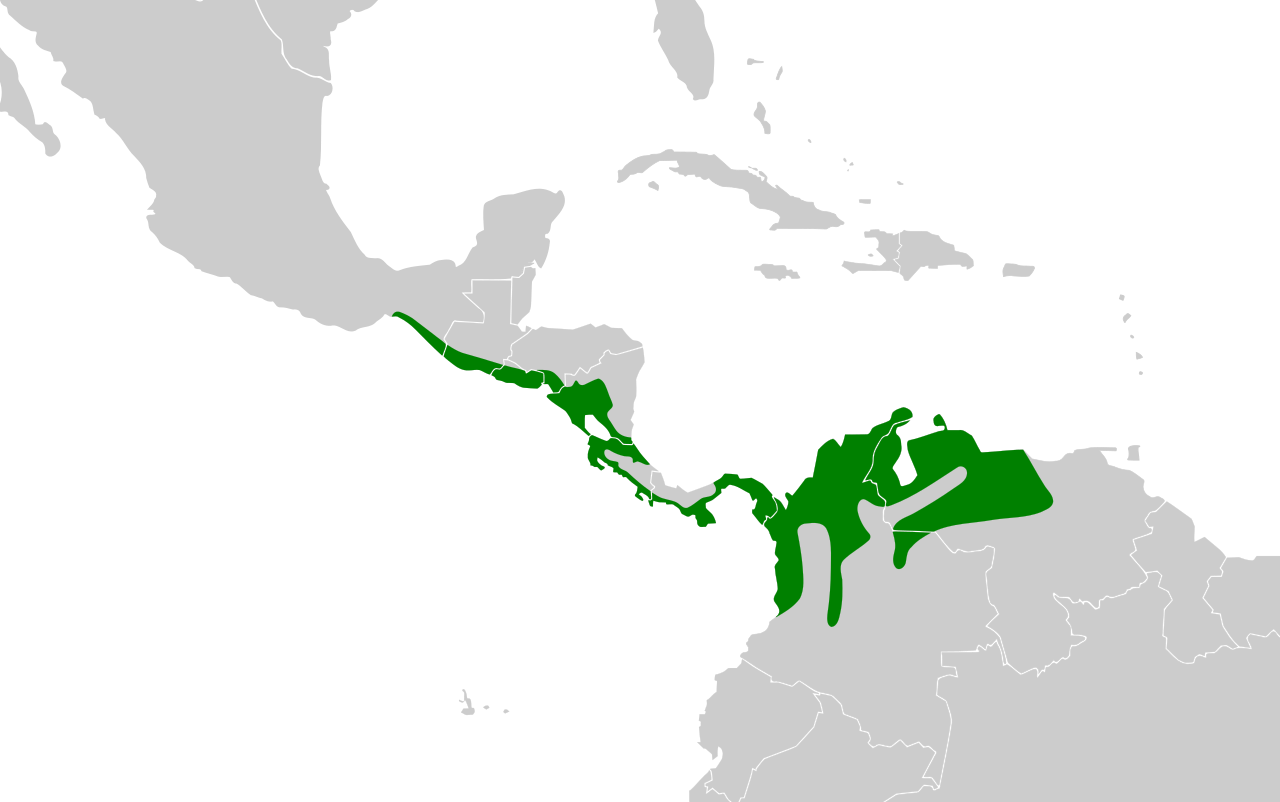
The orange-chinned parakeet, also known as the Tovi parakeet, is a species of bird in subfamily Arinae of the family Psittacidae, the African and New World parrots. It is found from southern Mexico through Central America into Colombia and Venezuela.
Region
Central America and northern South America
Typical Environment
Occurs from southern Mexico through Belize, Guatemala, Honduras, Nicaragua, Costa Rica, and Panama into northwestern Colombia and Venezuela. It favors open and semi-open habitats such as forest edges, secondary growth, riparian woodland, savannas with trees, plantations, and urban parks. Often seen in agricultural mosaics where fruiting trees are present. Readily occupies disturbed habitats and gardens near human settlements.
Altitude Range
0–1500 m
Climate Zone
Tropical
Ease of Keeping
Beginner friendly: 3/5
Also called the Tovi parakeet, this small parrot is highly adaptable and thrives from forest edges to towns and plantations. The namesake orange patch on the chin is subtle and often hidden by feathers. It frequently nests in arboreal termite mounds as well as natural cavities. Noisy, fast-flying flocks gather at communal roosts at dusk.


In Panama

Two pet birds of this species

Temperament
social and active
Flight Pattern
swift direct flight with rapid wingbeats
Social Behavior
Usually seen in pairs or small, noisy flocks that can join larger groups at fruiting trees. Nests in tree cavities or arboreal termite mounds, which pairs may excavate. Forms communal roosts outside the breeding season.
Migratory Pattern
Resident
Song Description
Loud, high-pitched chatter and squeaky notes, often given in flight. Contact calls are rapid, piercing chips; perched birds exchange softer twitters.
Plumage
Predominantly green with a subtle orange patch at the lower throat/chin and bluish tones on the outer wings. Underparts slightly paler green; tail narrow and pointed. Bill pale horn-colored with a darker tip.
Diet
Feeds mainly on fruits, berries, and seeds from a variety of native and cultivated trees, including figs and guava. Also takes flowers and nectar when available. Forages methodically in the canopy and visits orchards and gardens.
Preferred Environment
Prefers fruiting trees along forest edges, secondary woodland, and farmland with scattered trees. Common around towns and parks where ornamental and fruit trees are planted.


