

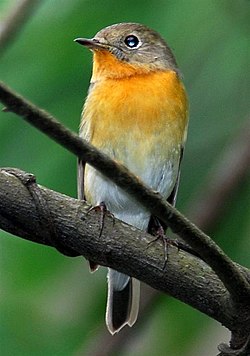
The mugimaki flycatcher is a small passerine bird of eastern Asia belonging to the genus Ficedula in the Old World flycatcher family, Muscicapidae. The name "mugimaki" comes from Japanese and means "wheat-sower". The bird is also known as the robin flycatcher.
Region
East Asia to Southeast Asia
Typical Environment
Breeds in coniferous and mixed forests of northeastern China and the Russian Far East, especially along forest edges, clearings, and riverine woods. Migrates through Korea and Japan, and winters in subtropical and tropical forests across Southeast Asia, including parts of southern China, Thailand, Myanmar, Malaysia, Indonesia, and the Philippines. In winter it frequents lowland and hill forests, secondary growth, parks, and wooded gardens. Often uses mid-canopy perches from which it sallies to catch flying insects.
Altitude Range
Sea level to 2500 m
Climate Zone
Temperate
Ease of Keeping
Beginner friendly: 1/5
The mugimaki flycatcher is a small Old World flycatcher that breeds in northeastern Asia and winters in Southeast Asia. Its Japanese-derived name means 'wheat-sower,' and it is also known as the robin flycatcher. Males are striking with a bright orange breast and bold white eyebrow, making the species a favorite among birders during migration. It catches insects by sallying from perches and sometimes supplements its diet with berries in winter.


Temperament
active and mildly territorial
Flight Pattern
short rapid wingbeats with quick sallies from perches
Social Behavior
Generally solitary or in pairs during the breeding season, defending small territories. Nests are typically placed in natural cavities or old woodpecker holes, lined with soft plant material. During migration and on wintering grounds it may join mixed-species foraging flocks, especially in forest edges and secondary growth.
Migratory Pattern
Seasonal migrant
Song Description
Song is a series of thin, sweet whistles and short trills, delivered from a perch in the canopy. Calls include soft ticking notes and high, thin seee calls, especially during migration.
Plumage
Male with blackish upperparts, bright orange face and breast, clean white belly, bold white supercilium, and prominent white wing patches; female and immature are brownish-olive above with buffy wingbars and a pale orange wash on the breast.
Diet
Primarily feeds on flying and gleaned insects such as flies, beetles, moths, and caterpillars. It sallies from exposed perches to snatch prey in the air and also picks invertebrates from leaves and twigs. During migration and in winter it may take small berries and other soft fruits, especially when insect activity is low.
Preferred Environment
Forages at forest edges, clearings, and along trails where perches offer good aerial hawking opportunities. Often uses the mid- to upper canopy but will descend to lower levels in secondary growth and gardens.


