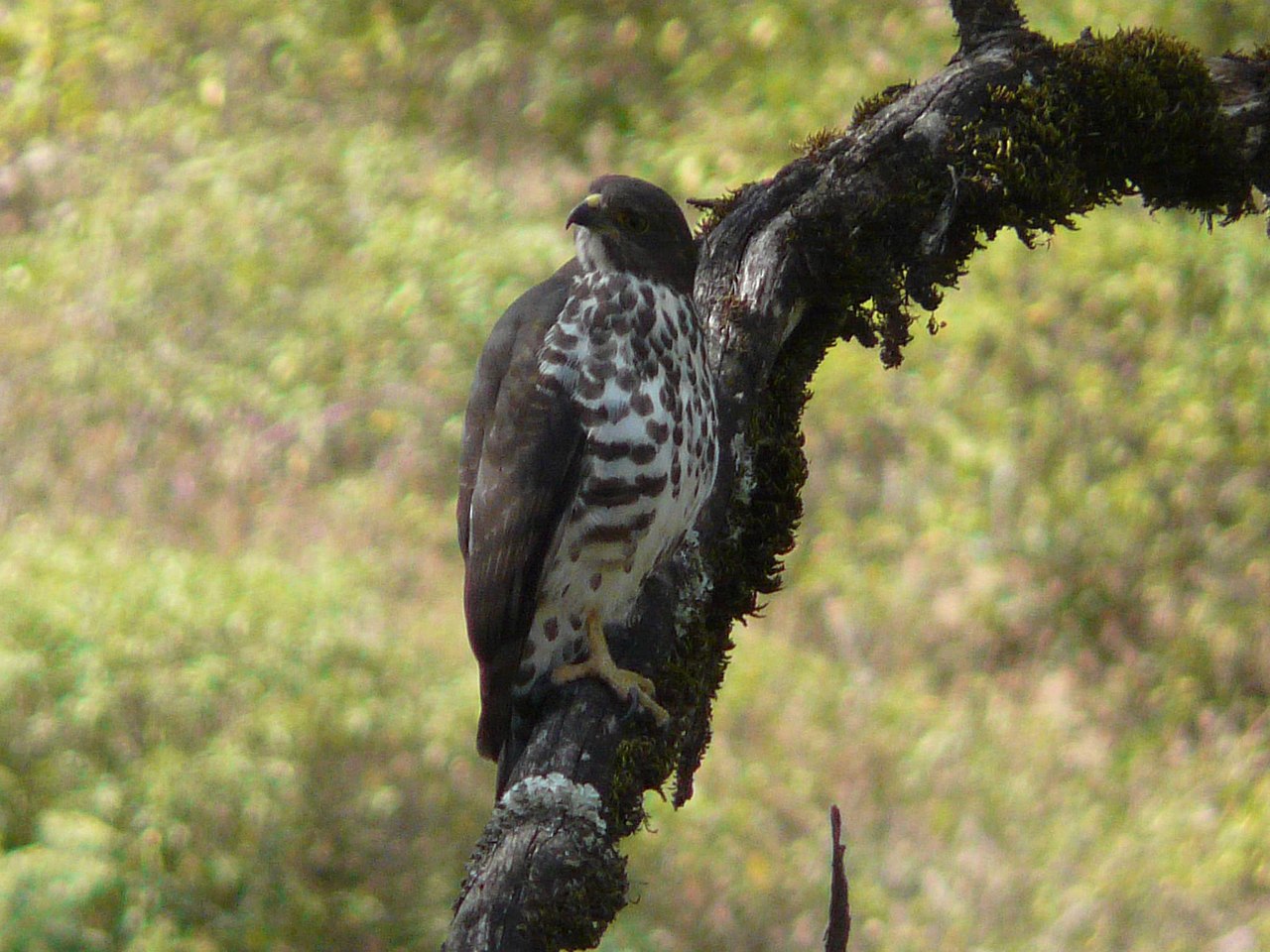
The Mount Victoria babax is a species of passerine bird in the family Leiothrichidae. It was formerly treated as conspecific with the Chinese babax
Region
Chin Hills, western Myanmar
Typical Environment
This species is confined to montane forests and shrublands on and around Mount Victoria. It frequents oak-rhododendron woodland, pine edges, and dense bamboo or rhododendron thickets. Birds often work along forest margins, clearings, and trails where leaf-litter and low shrubs provide foraging opportunities. Secondary growth and scrubby slopes are also used, especially where understory cover is intact.
Altitude Range
1800–3000 m
Climate Zone
Highland
Ease of Keeping
Beginner friendly: 1/5
The Mount Victoria babax is a shy, ground-favoring laughingthrush restricted to the highlands of Mount Victoria (Nat Ma Taung) in western Myanmar. It was formerly lumped with the Chinese babax but is now treated as a distinct species based on voice and morphology. Pairs or small parties often keep to dense thickets, but their rich, fluty songs can carry far on quiet mornings.

Temperament
secretive yet social
Flight Pattern
short rapid wingbeats; prefers low, fluttering hops between cover
Social Behavior
Usually in pairs or small family parties, sometimes joining mixed flocks in the understory. Territorial song is delivered from concealed perches within shrubs. Nesting is presumed to be cup-shaped and placed low in dense vegetation; both parents likely share care of young.
Migratory Pattern
Resident
Song Description
A rich, melodious series of fluty whistles and mellow phrases, often given in short bouts. Calls include scolding chatters and soft contact notes that keep group members coordinated in dense cover.
Plumage
Warm brown upperparts with paler, finely streaked underparts; feathers often show subtle scalloping on the breast and flanks. Tail is long and graduated with paler tips. Texture is soft with a slightly loose, fluffy appearance typical of laughingthrushes.
Diet
Takes a broad mix of invertebrates such as beetles, caterpillars, and spiders gleaned from leaf-litter and low foliage. Also consumes berries, small fruits, and seeds when available. Will probe moss, bark crevices, and rotting wood, and occasionally hawks short distances for startled insects.
Preferred Environment
Feeds along forest edges, shrubby clearings, and dense thickets where litter accumulates. Often forages on or near the ground, moving methodically through tangles and bamboo understory along trails and gullies.