The metallic starling, also known as the shining starling, is a bird in the starling family native to the Moluccas, New Guinea, Queensland and the Solomon Islands.
Region
Melanesia and Northern Australia
Typical Environment
Occurs in the Moluccas, New Guinea, the Solomon Islands, and northeastern Australia (especially Cape York Peninsula and coastal Queensland). Favors lowland and foothill rainforests, mangroves, forest edges, coastal woodlands, and urban gardens with fruiting trees. Breeds colonially in tall emergent trees, often near rivers or lagoons. Frequently follows fruiting events and may wander locally outside the breeding season.
Altitude Range
Sea level to 1500 m
Climate Zone
Tropical
Ease of Keeping
Beginner friendly: 2/5
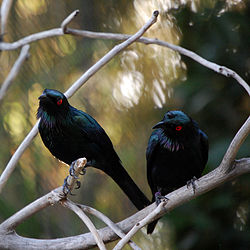
Also called the Shining Starling, this species is renowned for its glossy, iridescent plumage and striking red eyes. It often nests in large colonies with dozens to hundreds of hanging, purse-like nests in a single tall tree, sometimes near water. Metallic starlings move seasonally following fruiting trees and can form conspicuous flocks in coastal and lowland forests.


Immature at San Diego Zoo


Temperament
social and active
Flight Pattern
swift, direct flight with rapid wingbeats
Social Behavior
Highly gregarious, forming noisy flocks when feeding or commuting to roosts. Nests colonially, building numerous pendant nests in a single tree, with both parents helping to raise the young. Often associates with other frugivores at fruiting trees.
Migratory Pattern
Seasonal migrant
Song Description
Calls are sharp, metallic chinks, squeaks, and chatters delivered in rapid sequences. Colony trees can be loud, with constant whistles, rattles, and harsh notes.
Plumage
Smooth, glossy plumage with strong metallic sheen that shifts green to purple in good light; juveniles are browner and streaked.
Diet
Primarily eats fruits and berries, including figs and other rainforest fruits. Also takes insects and other small invertebrates, hawking them in flight or gleaning from foliage. Will visit gardens and farmlands when fruiting trees are available. Opportunistic and follows seasonal fruiting patterns.
Preferred Environment
Forages in the canopy and along forest edges, in mangroves, and in coastal woodlands. Frequently uses fruiting fig trees and other large fruiting trees, sometimes descending to lower strata in secondary growth or gardens.