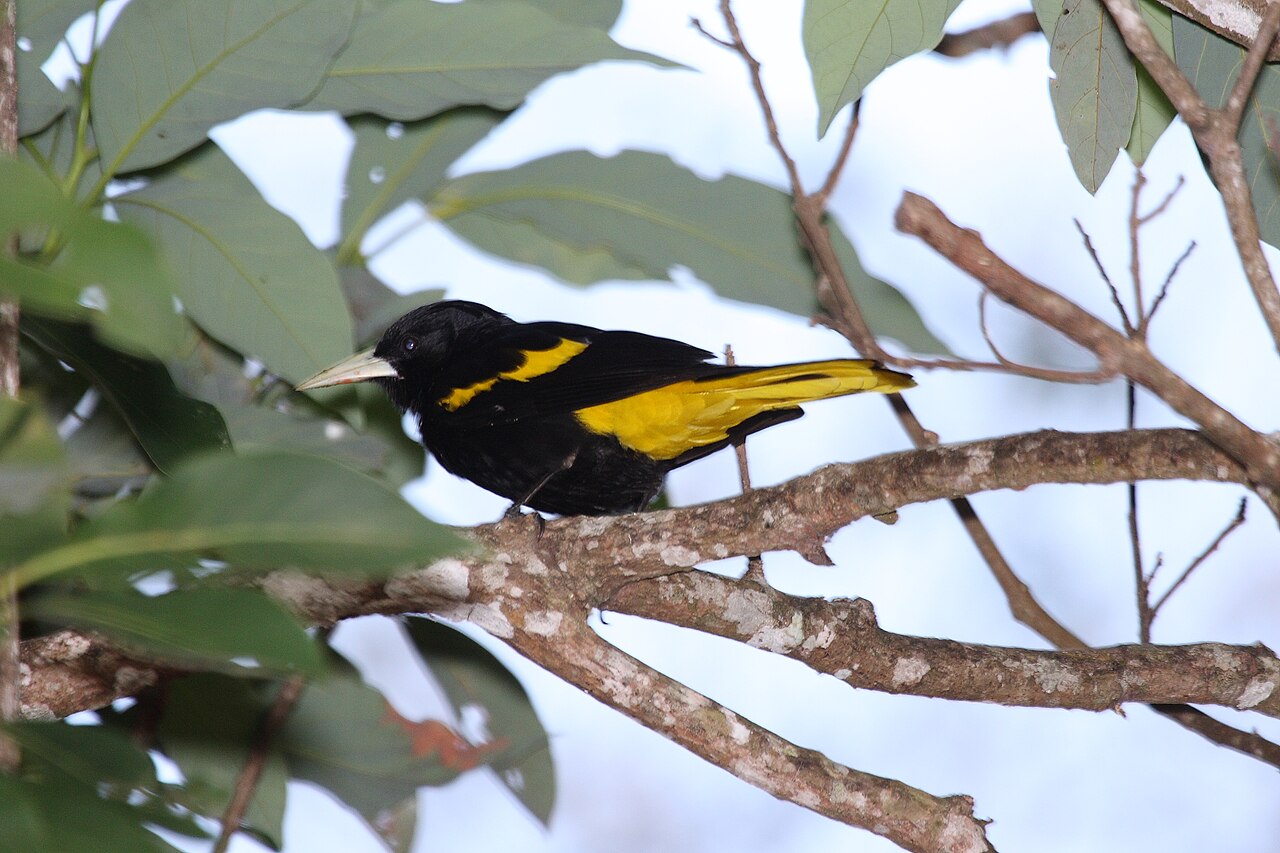
The metallic-winged sunbird is a species of bird in the family Nectariniidae. It is endemic to the Philippines.
Region
Philippines
Typical Environment
Occurs in lowland to foothill forests, forest edges, and secondary growth with abundant flowering plants. Frequently visits flowering trees, vines, and epiphytes in the midstory and canopy, but also uses clearings and gardens near forest. It adapts to disturbed habitats if nectar sources remain available. Local abundance can be patchy depending on flowering cycles and remaining forest cover.
Altitude Range
Sea level to 1600 m
Climate Zone
Tropical
Ease of Keeping
Beginner friendly: 1/5
This Philippine endemic sunbird has a brush-tipped tongue for sipping nectar and often perches to feed rather than hovering continuously. Males can be quite territorial around flowering trees. By moving between blossoms, they act as effective pollinators for many native plants. They also take small insects, especially when feeding young.


Temperament
active and territorial
Flight Pattern
short rapid wingbeats with brief hovering at flowers
Social Behavior
Usually seen singly or in pairs, sometimes joining small mixed flocks when foraging. Pairs defend nectar-rich trees during peak flowering. The nest is a small pendant, purse-like structure of plant fibers and spider silk, suspended from a twig. Breeding behavior includes attentive provisioning of nestlings with both nectar and small arthropods.
Migratory Pattern
Resident
Song Description
Produces thin, high-pitched tseep and tzip notes along with rapid twitters. Males deliver short, lively phrases from conspicuous perches, interspersed with contact calls while foraging.
Plumage
Male shows glossy, iridescent upperparts with a distinct metallic sheen on the wings and mantle; underparts darker with contrasting bright highlights. Female is duller with olive-green upperparts and paler yellowish to grayish underparts, lacking the strong iridescence. Both sexes have a slender, slightly downcurved bill.
Diet
Primarily consumes nectar from flowering trees, shrubs, and vines, using a brush-tipped tongue. Also takes small insects and spiders gleaned from foliage or snatched in short sallies, especially during breeding. Will visit native and ornamental flowers and may revisit productive blooms repeatedly.
Preferred Environment
Feeds in the forest midstory and canopy, along edges, and in secondary growth with many blossoms. Regularly visits gardens and plantations adjacent to forest where nectar sources are abundant.