
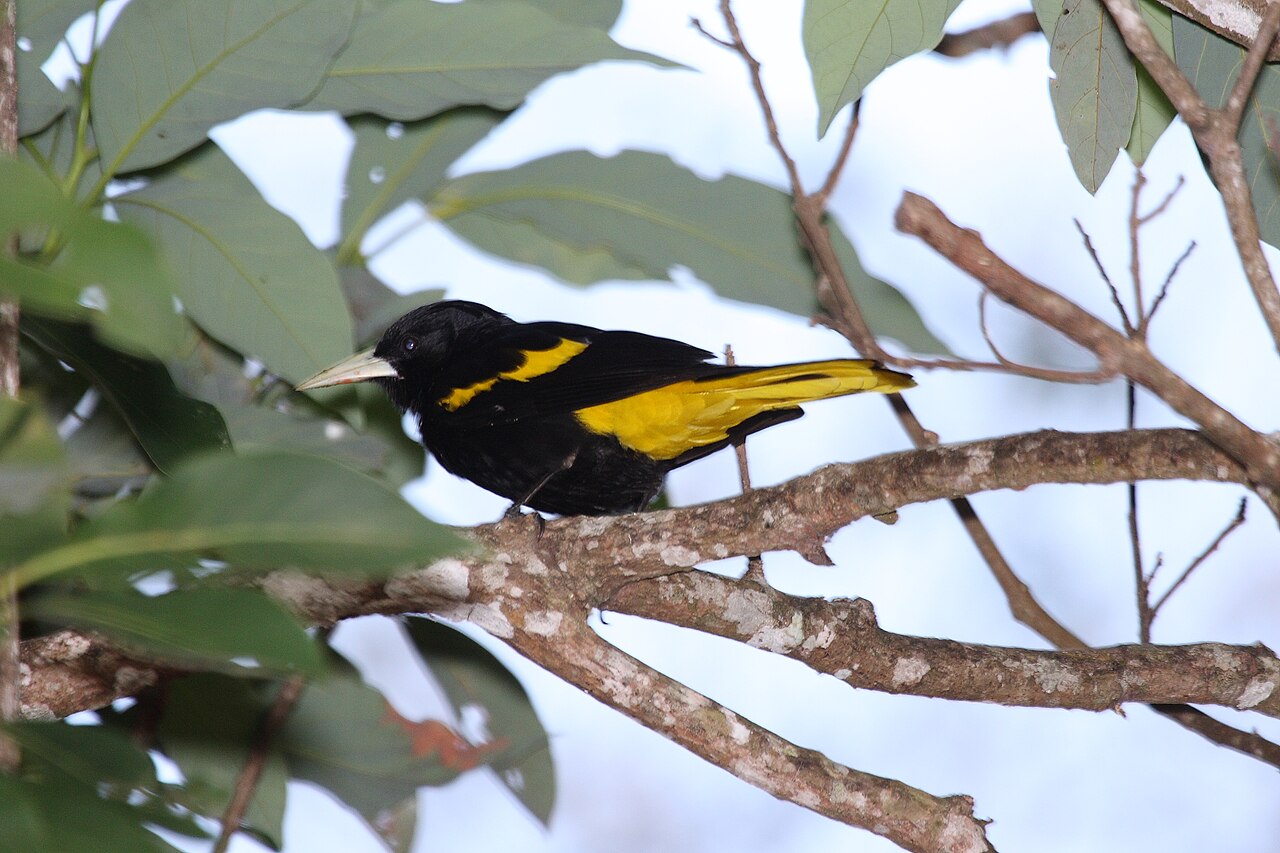
The Mexican cacique or yellow-winged cacique is a species of cacique in the family Icteridae. It is found only on the west coast of Mexico and the northernmost edge of Guatemala. It is monotypic in its own genus.
Region
Pacific slope of Mexico into western Guatemala
Typical Environment
Occupies tropical dry forests, thorn scrub, riparian woodlands, and second-growth along the Pacific lowlands. Frequently uses forest edges, plantations, and semi-open habitats with scattered tall trees. It is most common in lowlands but can range upslope along river corridors. Often seen near villages where large shade trees persist.
Altitude Range
Sea level to 1200 m
Climate Zone
Tropical
Ease of Keeping
Beginner friendly: 2/5
Also called the yellow-winged cacique, it is the sole member of the genus Cassiculus. It weaves long, hanging nests in colonies, often high in tall trees. The bold yellow wing patches flash in flight against its otherwise glossy black plumage.

Temperament
social and noisy
Flight Pattern
short rapid wingbeats with strong, direct flight
Social Behavior
Often forages in small groups and nests colonially, weaving pendant nests from plant fibers. Pairs defend the immediate nest area but rely on group alarm calls and mobbing to deter predators. Breeding typically coincides with the wet season when insects and fruit are abundant.
Migratory Pattern
Resident
Song Description
Vocalizations include sharp chatters, whistles, and harsh scolding notes. Males deliver a varied, ringing series of whistles during display, interspersed with rattles and squeaks.
Plumage
Mostly glossy black with striking yellow wing patch and yellow rump; wings show bright yellow lesser coverts in flight. Feathers are sleek with a satiny sheen.
Diet
Eats a mix of insects (beetles, caterpillars, and other arthropods) and fruit from native and cultivated trees. Will probe flowers and foliage for hidden prey and occasionally takes nectar. Often follows fruiting trees and gleans prey from leaves and branches.
Preferred Environment
Forages high in the canopy and at forest edges, but also visits shade trees in ranchlands, orchards, and gardens. Frequently joins mixed-species flocks along riparian corridors and second-growth thickets.


