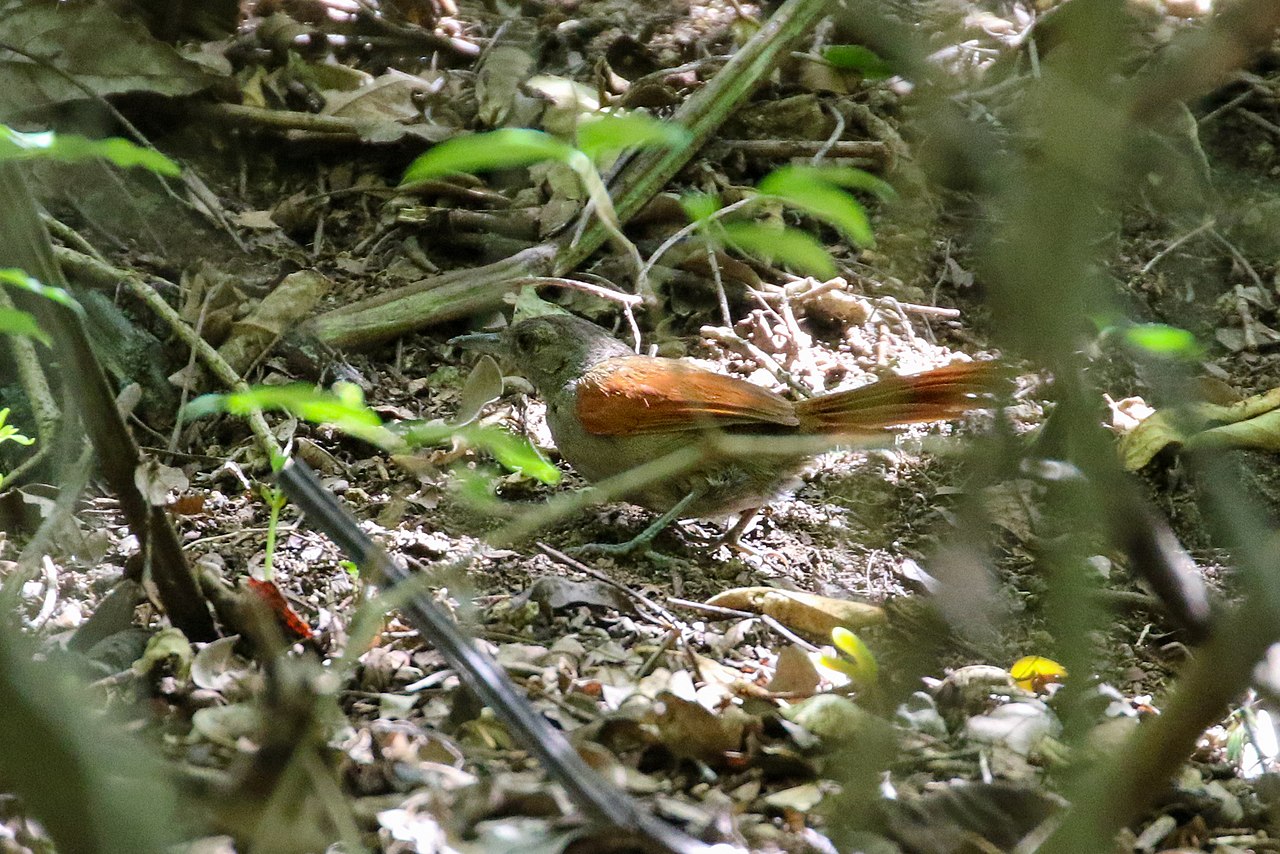
The Marañón crescentchest is a species of bird in the family Melanopareiidae. It is found in southern Ecuador and northern Peru.
Region
Marañón drainage of northern Peru and adjacent southern Ecuador
Typical Environment
It inhabits arid to semi-arid scrub, thorn forest, and rocky slopes with scattered shrubs and cacti along the inter‑Andean Marañón Valley. Birds keep close to the ground or within the lower shrub layer, using dense cover to move between foraging spots. It also occurs at the edges of dry deciduous woodland, in fallows, and on scrubby hillsides near agriculture where native vegetation persists. Localized populations follow patches of intact dry forest and shrublands.
Altitude Range
400–1800 m
Climate Zone
Arid
Ease of Keeping
Beginner friendly: 1/5
This skulking songbird of the dry inter‑Andean valleys is named for Peru’s Marañón River basin. It is typically encountered in pairs that keep low in thorny scrub, flashing a bold black crescent across the chest. Its clear, whistled song often betrays its presence before it is seen, and pairs may duet. Habitat loss in the Marañón drainage makes it a conservation priority.



Temperament
secretive and territorial
Flight Pattern
short rapid wingbeats, low and darting
Social Behavior
Usually found singly or in pairs that maintain small territories within scrubby habitat. Nests are placed low in dense shrubs or near the ground, with both adults contributing to parental care. Courtship and territory defense often involve duetting and conspicuous tail flicks from cover.
Migratory Pattern
Resident
Song Description
A clear, ringing series of whistles delivered in short phrases, often repeated from within cover. Pairs frequently duet, with one bird answering or overlapping the other, producing an antiphonal effect.
Plumage
Warm brown upperparts with fine streaking, a clean white throat and bold black pectoral crescent separating the throat from rich rufous underparts; long graduated tail. A striking white supercilium and dark facial mask accent the head.
Diet
Primarily small arthropods such as beetles, ants, termites, and spiders. It gleans from leaves and twigs in low shrubs, probes bark crevices, and occasionally picks prey from the ground. It may supplement its diet with small seeds or berries when available.
Preferred Environment
Forages within dense thorny scrub, cactus stands, and understory edges of dry deciduous woodland. Often works along ecotones, rocky outcrops, and shrub-choked gullies where cover is abundant.