
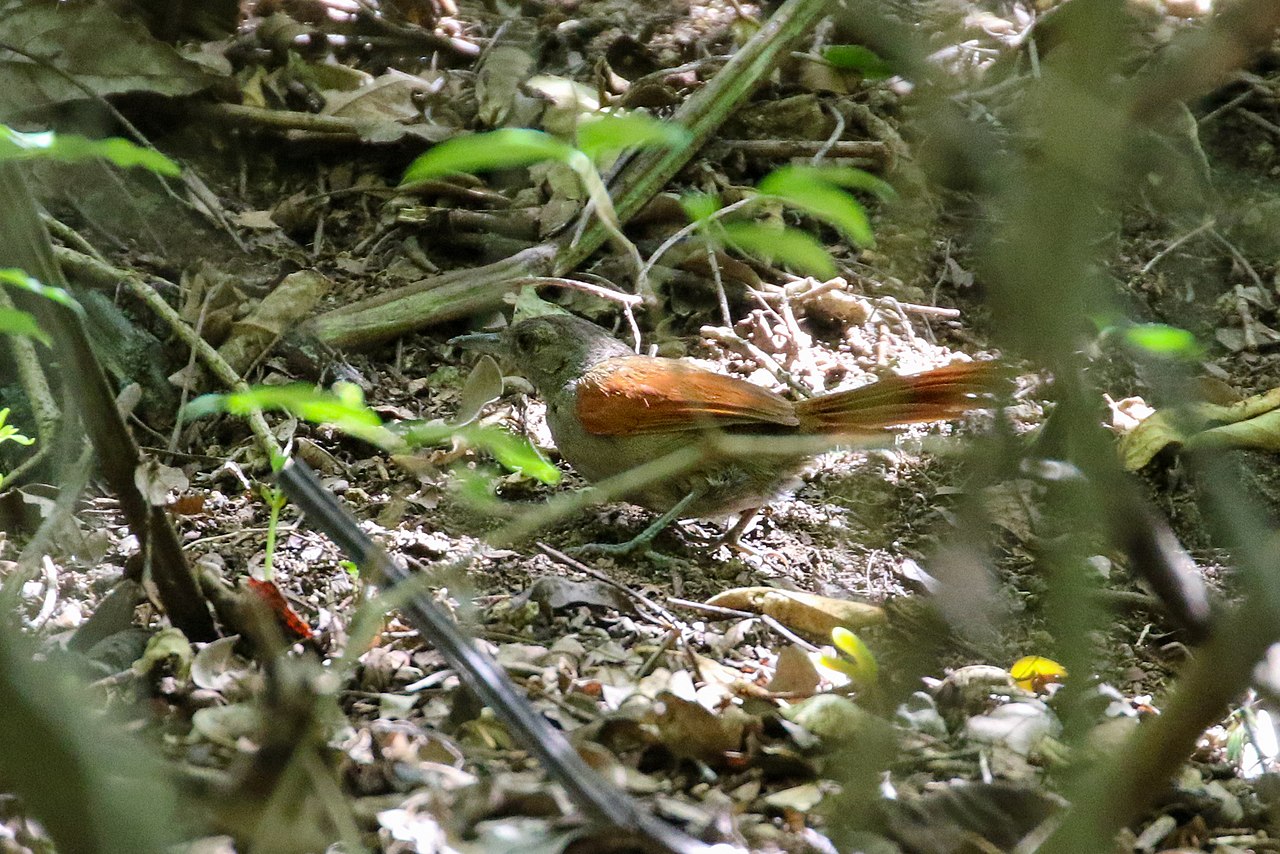
The Maranon spinetail is a Critically Endangered species of bird in the Furnariinae subfamily of the ovenbird family Furnariidae. It is found in Ecuador and Peru.
Region
Northern Andes (Marañón Valley of Peru and Ecuador)
Typical Environment
Occurs in arid and semi-arid intermontane valleys, especially dense riparian thickets, dry deciduous woodland edges, and scrub with cacti and acacias. It favors tangled undergrowth along ravines and riverbanks, often on steep, sparsely vegetated slopes. The species persists in some semi-degraded habitats with dense shrub cover but avoids open agricultural fields. Fragmentation of scrub and woodland has severely limited its occupancy. Local presence is patchy, tied to remaining thicket structure and cover.
Altitude Range
300–2000 m
Climate Zone
Arid
Ease of Keeping
Beginner friendly: 1/5
The Marañón spinetail is a skulking ovenbird restricted to the dry inter-Andean Marañón Valley of northern Peru and adjacent southern Ecuador. It favors dense thorny thickets and riparian scrub where it keeps low and is often detected by voice. Habitat loss and degradation across its narrow range have driven it to the brink, and it is listed as Critically Endangered. It constructs bulky stick nests with side entrances typical of spinetails.


Temperament
skulking and territorial
Flight Pattern
short rapid wingbeats with low, darting flights between cover
Social Behavior
Usually found singly or in pairs, maintaining small territories year-round. Forages close to the ground to mid-shrub level, often remaining concealed in dense cover. Builds bulky stick nests with a side entrance placed in thorny shrubs or low trees. Breeding behavior is poorly documented but presumed similar to other Synallaxis, with both adults involved in nesting duties.
Migratory Pattern
Resident
Song Description
Vocalizations include a sharp series of chips and a fast, accelerating rattle typical of spinetails. Songs are delivered from within cover and can be the best way to detect the species. Calls are dry and ticking, often given in duets by pairs.
Plumage
Overall earthy brown to rufescent with a grayer head and face; wings and long, graduated tail are rich rufous. Throat is pale to whitish with subtle streaking, merging into warmer buff underparts. Feathers appear somewhat loose-textured, giving a slightly scruffy look typical of spinetails.
Diet
Primarily small arthropods such as insects and spiders gleaned from leaves, twigs, and bark. It probes and picks methodically through dense tangles and thorny shrubs. Occasionally takes small seeds or berries, especially in the dry season when insects are less available.
Preferred Environment
Feeds within dense riparian thickets, dry scrub, and the understory of deciduous woodland edges. Often stays within 1–3 meters of the ground, working through vine tangles and shrub layers.


