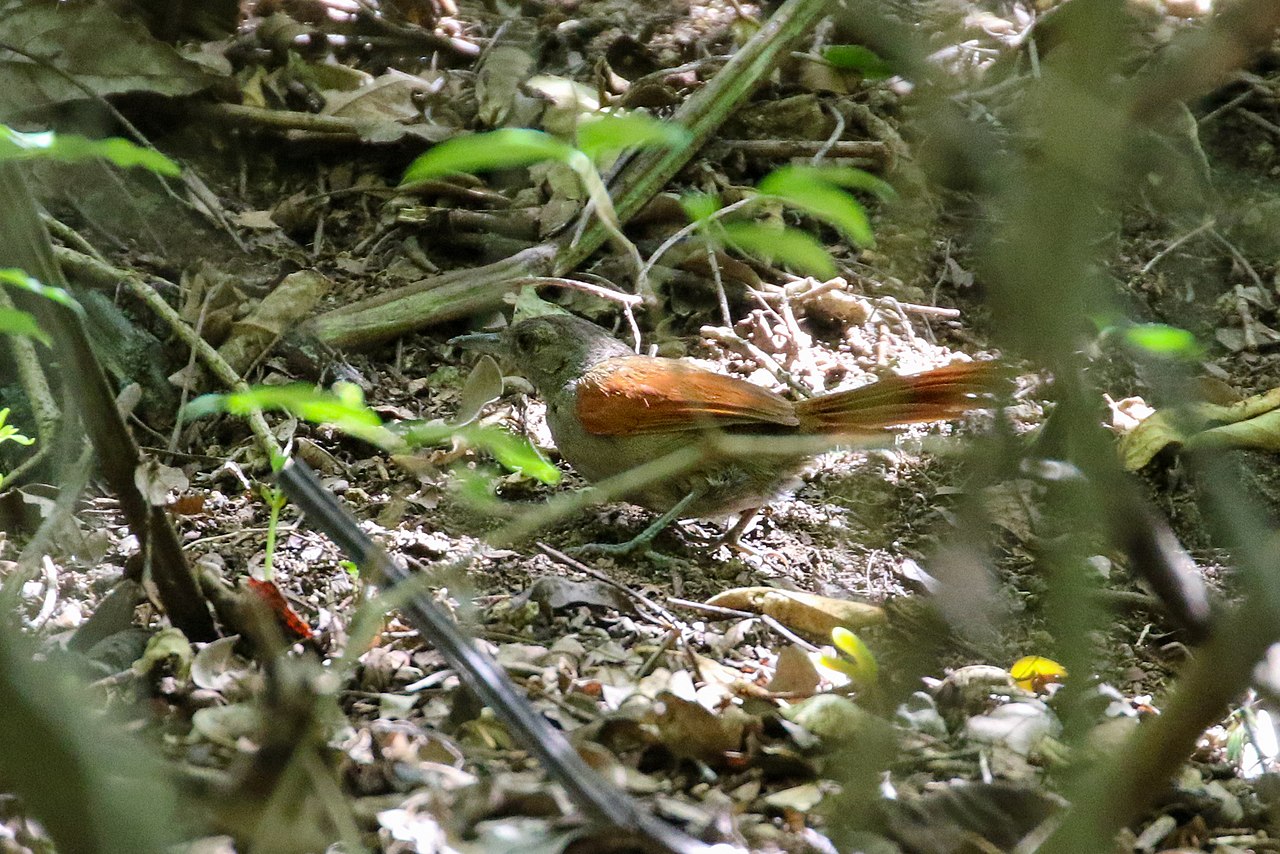
The Marañón gnatcatcher is a small active insectivorous songbird, that is found in the upper valleys of the Marañón River in northwest Peru. The species was formerly considered to be conspecific with the tropical gnatcatcher.
Region
Northern Andes (Peru)
Typical Environment
Occurs locally along the upper Marañón River in arid inter-Andean valleys. It favors dry deciduous woodland, thorn-scrub, and riparian thickets with scattered trees and cacti. Birds use edges, second-growth, and canyon slopes, often moving through the low to mid-canopy. It may also forage along ecotones where scrub meets agriculture, provided native shrubs persist.
Altitude Range
400–1800 m
Climate Zone
Arid
Ease of Keeping
Beginner friendly: 1/5
This tiny, restless insect-eater is confined to the dry upper valleys of the Marañón River in northwest Peru. It was long treated as part of the widespread Tropical Gnatcatcher complex but is now recognized as a distinct species. Pairs often keep close contact with thin, sibilant calls and frequently join mixed-species flocks. Tail flicking and fanning that flashes white outer tail feathers are classic behaviors that help with identification.

Temperament
social and active
Flight Pattern
short rapid wingbeats
Social Behavior
Typically found in pairs or small family groups, often accompanying mixed-species flocks in scrubby woodland. Pairs maintain contact with soft calls and defend small territories in the breeding season. The nest is a small, neat cup placed in a fork of a shrub or small tree, with both parents involved in care.
Migratory Pattern
Resident
Song Description
Song consists of thin, buzzy trills and short, sibilant phrases delivered from low perches. Calls are high, whispery tsit notes and soft rattles used to keep contact while foraging.
Plumage
Fine, smooth plumage with gray upperparts and clean whitish underparts; long tail with prominent white outer rectrices.
Diet
Feeds mainly on small insects and spiders, gleaning them from leaves, twigs, and bark. It probes into clusters of dead leaves and occasionally makes short sallies to snatch airborne prey. Foraging is rapid and methodical, often accompanied by tail-flicking.
Preferred Environment
Forages in dry scrub, thorny thickets, riparian vegetation, and woodland edges. Most activity occurs in the shrub layer and lower canopy, including along canyon slopes and river margins.