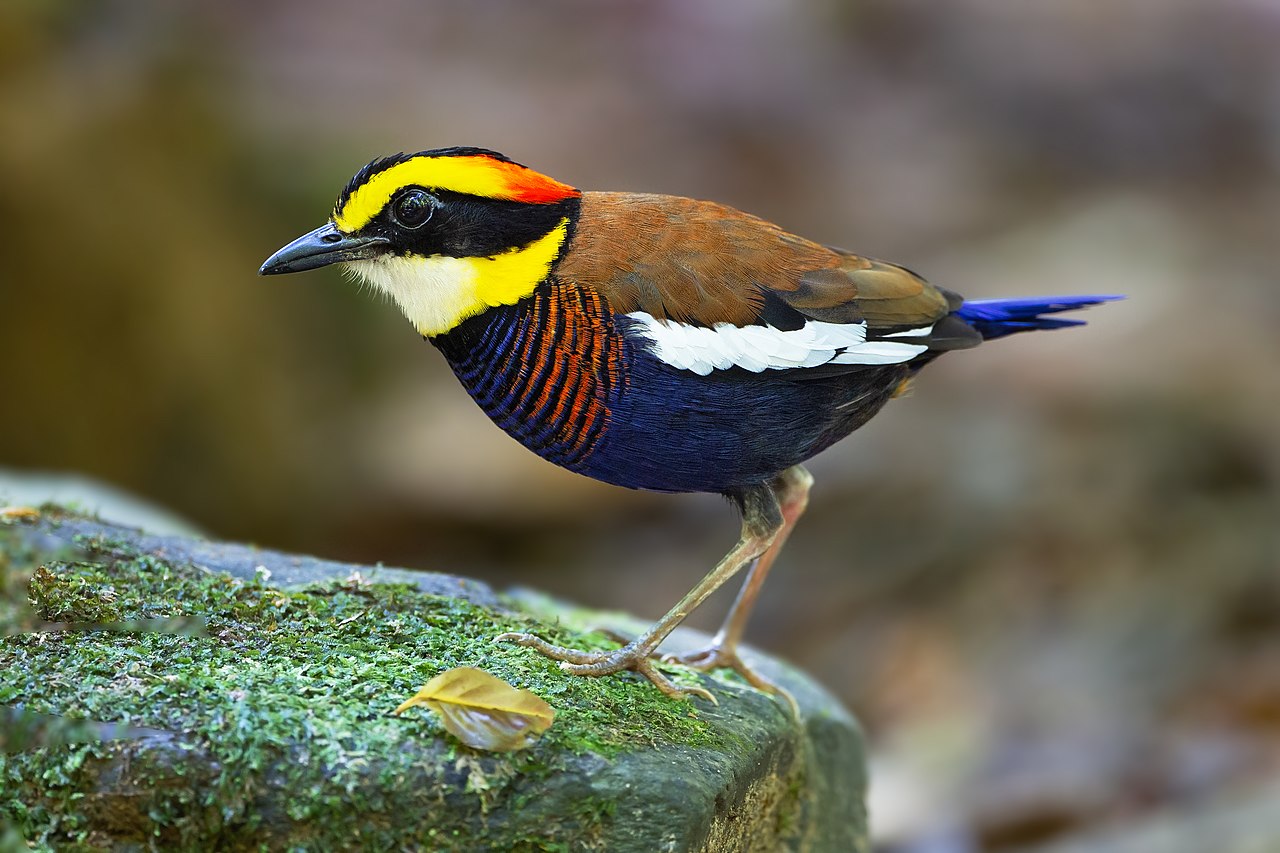
The Malaita cicadabird is a passerine bird in the family Campephagidae that is endemic to the island of Malaita in the Solomon Islands archipelago. It was formerly considered to be a subspecies of the Solomons cicadabird.
Region
Solomon Islands (Malaita)
Typical Environment
Occurs across Malaita in primary and mature secondary rainforest, favoring mid- to upper-canopy strata. It also uses forest edges, tall secondary growth, and selectively logged forest where sufficient canopy cover remains. Riparian forest and ridgelines with mixed broadleaf trees are regularly used. It is less frequent in heavily degraded low shrubs, gardens, or open coconut plantations.
Altitude Range
Sea level to 1200 m
Climate Zone
Tropical
Ease of Keeping
Beginner friendly: 1/5
The Malaita cicadabird is a canopy-dwelling cuckooshrike that specializes in hunting noisy insects like cicadas, which inspired its name. It is restricted to the island of Malaita in the Solomon Islands and was formerly treated as part of the Solomons cicadabird complex. Pairs often keep discreet contact with soft calls while moving through mid to upper forest layers. Habitat loss from logging is a potential concern due to its small range.
Temperament
quiet, shy, and canopy-oriented
Flight Pattern
short rapid wingbeats between perches, with brief glides
Social Behavior
Usually found singly or in pairs, sometimes joining mixed-species foraging flocks. Territorial pairs keep contact with soft notes while moving through the canopy. Nesting is presumed as a small open cup placed high in trees, with both parents involved in care.
Migratory Pattern
Resident
Song Description
Vocalizations include dry, buzzy trills and harsh, cicada-like notes delivered from concealed perches. Calls can be a series of clipped, metallic chacks interspersed with softer contact calls.
Plumage
Males appear slate-grey to dusky above with cleaner grey to pale grey underparts and a smooth, glossy texture; females are browner-grey with faint scaling or barring on the breast and belly. Both sexes show plain wings without strong wing-bars and a slightly glossy head with a subtle mask. The plumage is overall neat and unpatterned compared to many cuckooshrikes, aiding identification by shape and behavior.
Diet
Feeds primarily on insects, especially cicadas, beetles, caterpillars, and other arboreal invertebrates. It gleans prey from leaves and small branches and makes short sallies to snatch flying insects. Occasional small fruits may be taken when insect prey is scarce, but animal prey dominates.
Preferred Environment
Forages in the mid to upper canopy of intact and semi-intact forests, often along edges and gaps where insects are abundant. It uses perches to scan foliage and then moves methodically through branches.