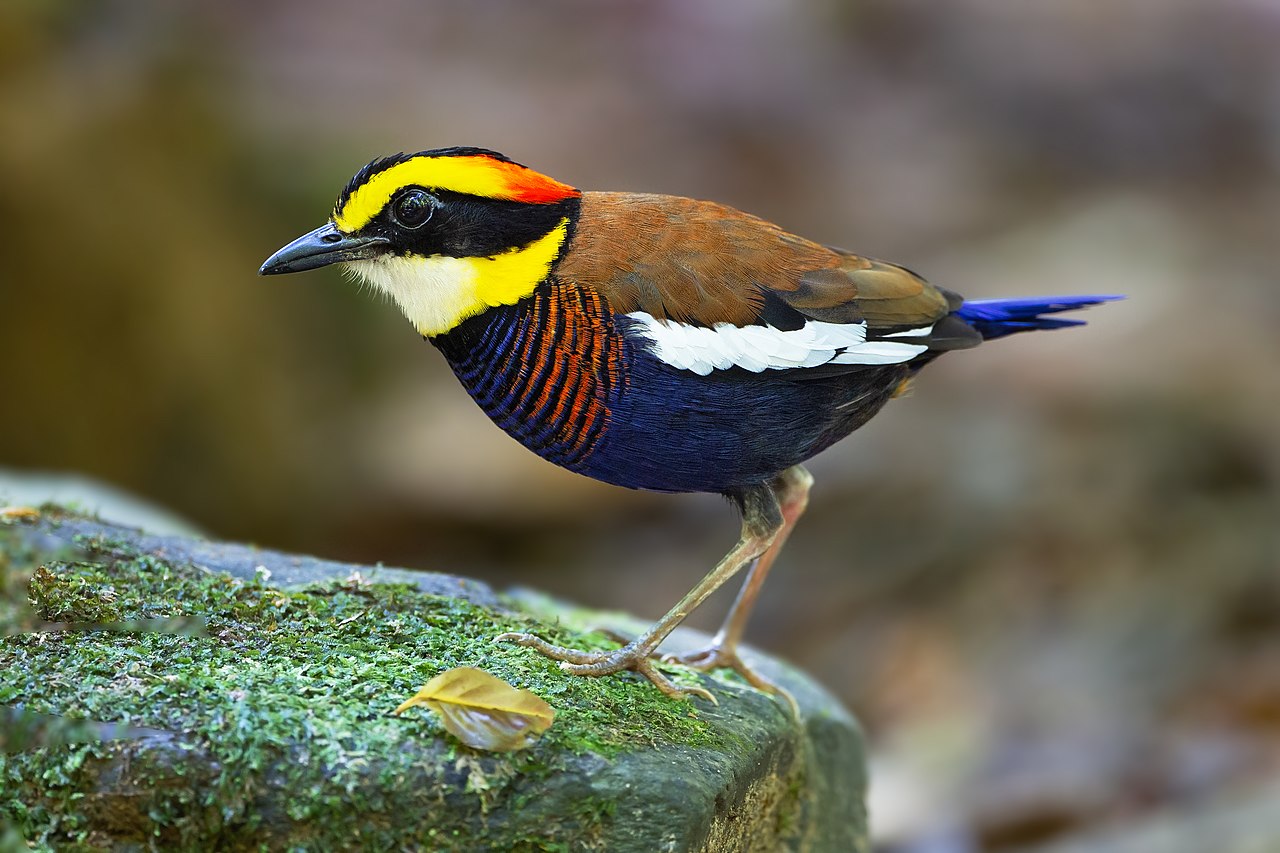
The Malaita white-eye is a species of bird in the family Zosteropidae. It is endemic to Malaita in the Solomon Islands.
Region
Southwest Pacific (Solomon Islands)
Typical Environment
Occurs only on Malaita, where it inhabits lowland and hill forests, forest edges, and secondary growth. It forages from understory to canopy, frequently visiting flowering and fruiting trees. Birds can also appear in gardens, plantations, and lightly disturbed habitats close to forest. It is generally more numerous where continuous tree cover remains.
Altitude Range
0–1300 m
Climate Zone
Tropical
Ease of Keeping
Beginner friendly: 2/5
A small white-eye restricted to Malaita in the Solomon Islands, it is easily recognized by its bold white eye-ring. It often joins mixed-species flocks and forages restlessly in the canopy and midstory. It adapts reasonably well to secondary growth but extensive logging could reduce suitable habitat. Like many white-eyes, it likely aids seed dispersal and pollination.

Temperament
social and active
Flight Pattern
short rapid wingbeats
Social Behavior
Often travels in small, noisy parties and readily joins mixed-species flocks. Pairs likely maintain small territories during breeding, building a neat cup nest suspended in foliage. Outside breeding, it ranges widely while foraging.
Migratory Pattern
Resident
Song Description
Delivers high, thin twitters and sweet, rapid trills interspersed with short whistles. Calls are soft but persistent contact notes that keep groups together while foraging.
Plumage
Olive-green upperparts with yellowish throat and vent; underparts pale grayish-white. Feathers are smooth and sleek, giving a clean, neat appearance typical of white-eyes.
Diet
Consumes small insects, spiders, and other arthropods gleaned from leaves and twigs. Also takes nectar from blossoms and a variety of soft fruits and berries. Occasionally hawks briefly for flying insects between branches.
Preferred Environment
Feeds in the midstory and canopy of forests, along edges, and in secondary growth with flowering and fruiting trees. Will use village gardens and plantations where suitable food plants are present.