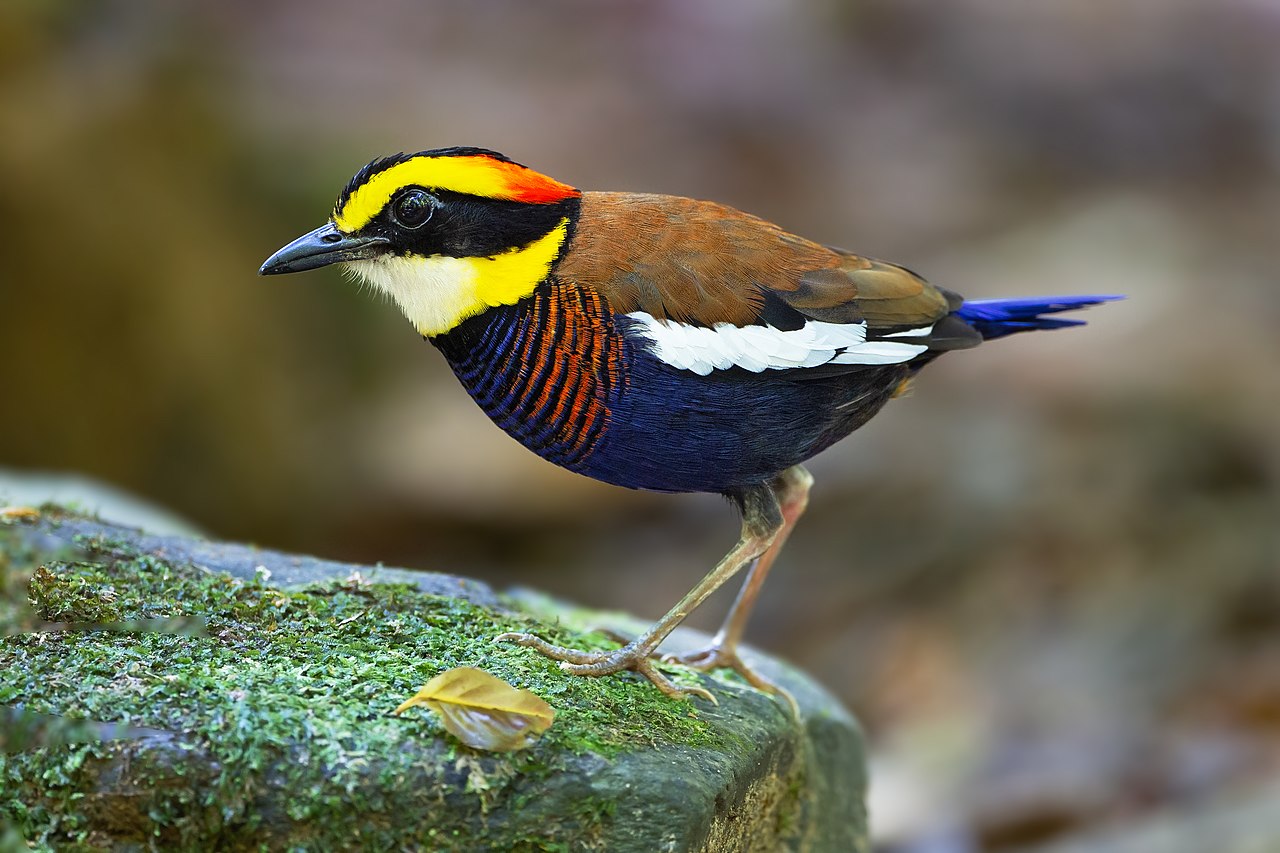
The Malaita fantail is a fantail endemic to Malaita in the Solomon Islands.
Region
Solomon Islands
Typical Environment
Occurs throughout suitable habitats on Malaita Island, favoring lowland and hill forests. It uses primary rainforest as well as secondary scrub, forest edges, and gardens with mature trees. Often forages along riparian corridors and light gaps where insects are abundant. Tends to work the understory to midstory but will also sally into more open spaces along trails and clearings.
Altitude Range
Sea level to 1200 m
Climate Zone
Tropical
Ease of Keeping
Beginner friendly: 1/5
The Malaita fantail is confined to Malaita Island in the Solomon Islands and is almost always seen actively fanning its tail as it hunts insects. It readily uses forest edges and secondary growth, making it more tolerant of moderate habitat disturbance than some forest specialists. Like other fantails, it often follows mixed-species flocks and can be quite confiding. Its delicate cup nest is typically bound with spider silk to a small forked branch.

Temperament
social and active
Flight Pattern
short rapid wingbeats with frequent sallying
Social Behavior
Often seen in pairs or small family groups and commonly associates with mixed-species foraging flocks. Builds a small, neat cup nest bound with spider silk and plant fibers, placed on a horizontal fork. Both parents typically participate in feeding and defending the young.
Migratory Pattern
Resident
Song Description
A series of high, thin trills and twittering notes delivered in short, lively bursts. Calls include sharp chips and soft chattering used to keep contact while foraging. The song carries well in forest understory despite its delicate quality.
Plumage
Typical fantail with compact body, long rounded tail frequently fanned, and generally earthy tones. Upperparts are primarily brown to rufous-brown with paler underparts and subtle contrast between breast and belly. Fine feathering gives a soft, slightly fluffy appearance when the tail is cocked.
Diet
Primarily small flying and crawling insects such as flies, moths, beetles, and ants. Captures prey by sallying from low to mid-level perches and by gleaning from leaves, twigs, and bark. The constantly fanned tail helps flush insects from foliage and improves maneuverability. Will opportunistically take small spiders and other arthropods.
Preferred Environment
Feeds along forest edges, light gaps, and near streams where insect activity is high. Frequently forages in the understory and midstory, moving rapidly through tangles and along trails. Also utilizes secondary growth and tree-rich gardens.