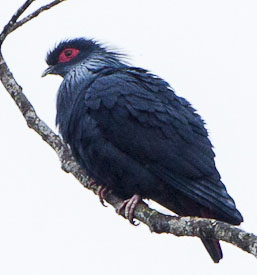
The Macquarie shag, Macquarie Island shag or Macquarie Island cormorant, is a marine cormorant native to Macquarie Island in the Southern Ocean, about halfway between Australia and Antarctica.
Region
Subantarctic Southern Ocean
Typical Environment
Occurs around Macquarie Island and adjacent islets, remaining close to the coast throughout the year. It frequents rocky shorelines, cliff bases, and nearshore kelp forests where it can exploit benthic prey. Breeding colonies are on sea cliffs, stacks, and rocky ledges exposed to strong winds and surf. Roosting and nesting sites are often reused annually and can be densely packed.
Altitude Range
Sea level to 150 m
Climate Zone
Polar
Ease of Keeping
Beginner friendly: 1/5
A blue-eyed shag restricted to the Macquarie Island region, it nests in dense colonies on sea cliffs and rocky headlands. It forages close to shore, using powerful pursuit-dives among kelp beds and reefs. Because its entire population is confined to a few sites, it is highly vulnerable to storms, prey shifts, and human disturbance. It is often considered an indicator of subantarctic marine ecosystem health.
Temperament
social and colonial
Flight Pattern
strong flier with rapid wingbeats, skimming low over waves
Social Behavior
Breeds in tight colonies on cliffs and rocky stacks, constructing nests of seaweed, grass, and guano. Pairs are largely monogamous within a season, with both sexes sharing incubation and chick-rearing. Chicks form small crèches near the nest sites while adults forage nearby.
Migratory Pattern
Resident
Song Description
Generally quiet at sea, but at colonies emits low croaks, grunts, and hisses during displays and territorial interactions. Vocalizations are harsh and guttural rather than musical, with chicks giving high-pitched begging calls.
Plumage
Glossy black upperparts with white underparts; crisp demarcation along the flanks. In breeding condition shows slight iridescent sheen on the black feathers and small facial caruncles. Tail and wings are black; underwing largely white with dark margins.
Diet
Feeds mainly on small benthic fish and invertebrates, including notothenioid fishes, octopus and squid, crabs, and polychaete worms. It is a pursuit-diver, using its wings for propulsion underwater. Typical dives are short but can be repeated rapidly, often to moderate depths. Prey is swallowed underwater or brought to the surface briefly.
Preferred Environment
Nearshore rocky reefs and kelp forests, especially around surge channels and shallow shelves. Forages within a few kilometers of breeding colonies and rarely ranges far offshore. Often hunts in areas with dense Macrocystis kelp where prey is abundant.