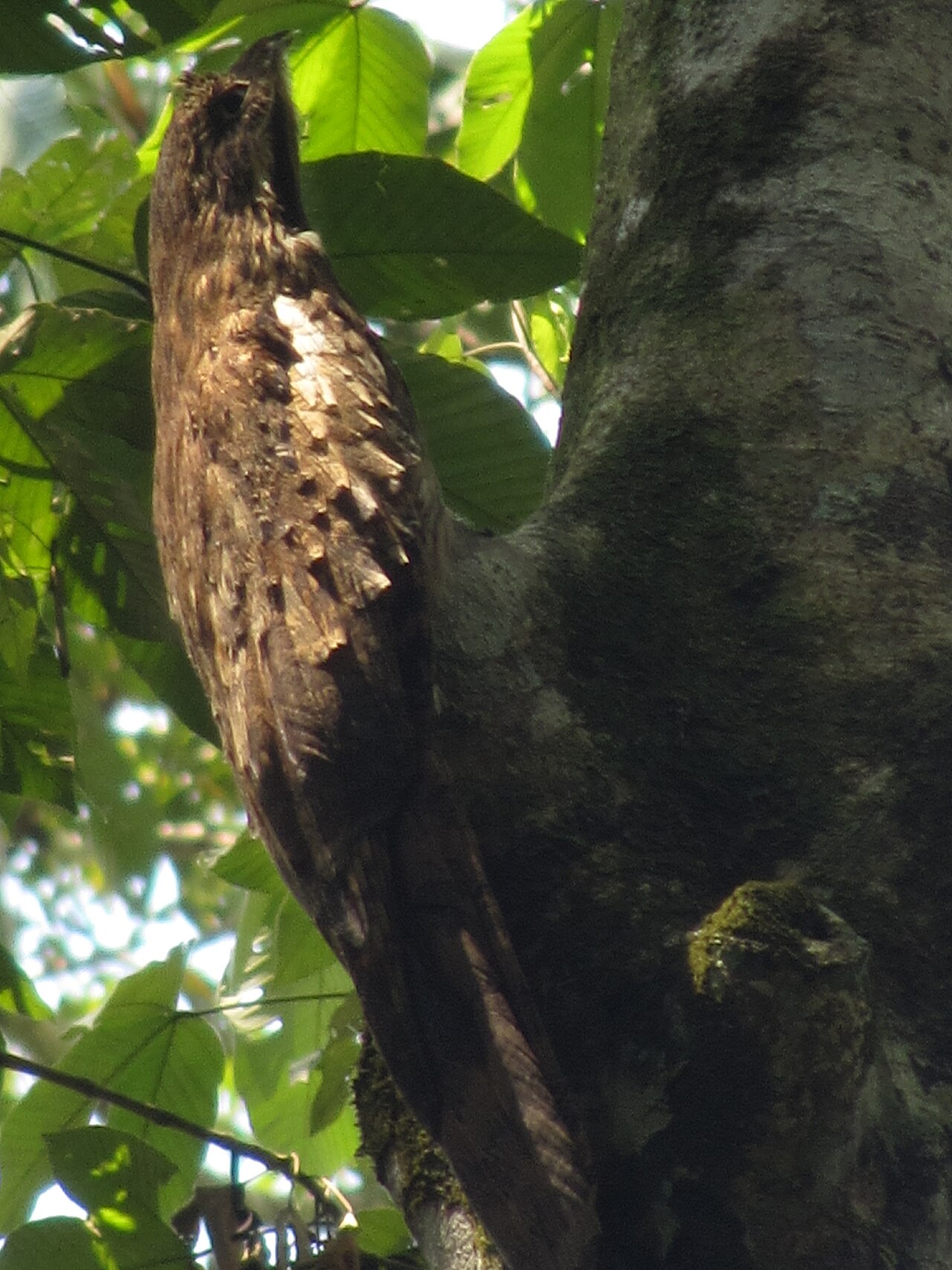
The long-tailed myna is a member of the starling family. It is native to the Bismarck and Solomon archipelagos. It resembles the yellow-faced myna, and the two were formerly considered conspecific.
Region
Melanesia (Bismarck and Solomon Archipelagos)
Typical Environment
Occurs on islands of the Bismarck Archipelago (Papua New Guinea) and the Solomon Islands, inhabiting lowland and hill forests. It frequents forest edges, secondary growth, riverine forest, and coastal woodlands. The species readily uses cultivated areas and coconut plantations, especially where large fruiting trees are present. It is typically most active in the mid- to upper canopy but will descend to lower levels for food.
Altitude Range
Sea level to 1200 m
Climate Zone
Tropical
Ease of Keeping
Beginner friendly: 2/5
The long-tailed myna is a large island starling noted for its conspicuously long tail and loud, far-carrying calls. It often forages high in the canopy at fruiting trees and also visits gardens and coconut plantations. Pairs nest in natural cavities or holes in large trees, where both sexes help rear the young. It closely resembles the Yellow-faced Myna and was once treated as the same species.

Temperament
social and noisy
Flight Pattern
strong flier with short rapid wingbeats
Social Behavior
Usually seen in pairs or small, loose groups, especially at fruiting trees. Breeding pairs are territorial around nest sites, using cavities in large trees for nesting. Both parents participate in nest defense and feeding of nestlings.
Migratory Pattern
Resident
Song Description
Vocal repertoire includes loud whistles, harsh squawks, and chattering notes that carry through the forest. Calls can be varied and are often given in series during social interactions.
Plumage
Glossy black plumage with an iridescent green-purple sheen and a prominent white wing patch; tail notably long and somewhat graduated.
Diet
Primarily consumes fruits and berries, including figs and other soft fruits. Supplements diet with insects and other arthropods, and will take nectar when available. Occasionally eats small vertebrates or takes opportunistic items around villages and plantations.
Preferred Environment
Feeds mainly in the forest canopy and at edges where fruiting trees are abundant. Regularly visits cultivated areas, coconut groves, and gardens to exploit seasonal resources.