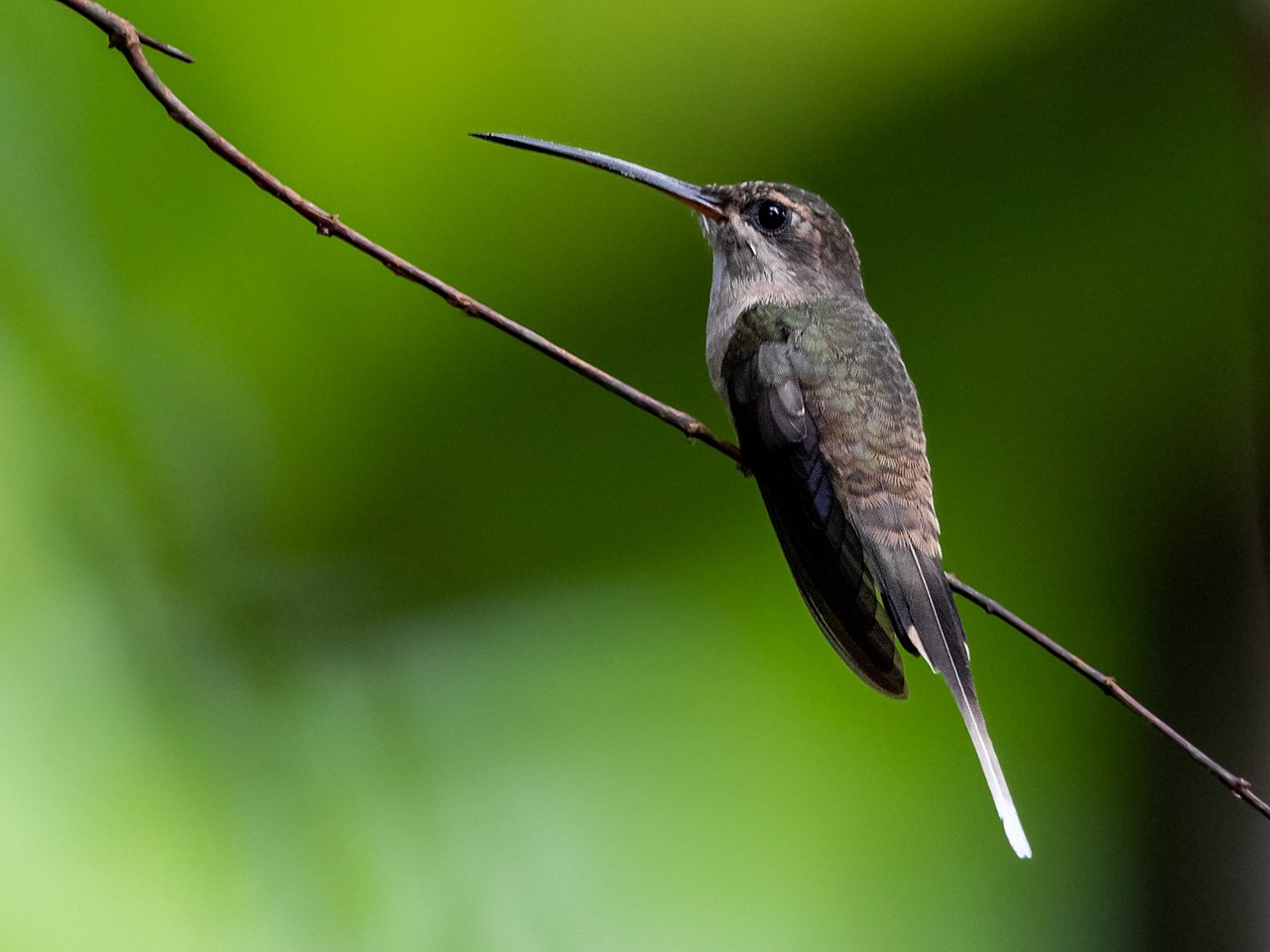
The long-tailed hawk is an African bird of prey in the family Accipitridae. It is the only member of the genus Urotriorchis.
Region
West and Central Africa
Typical Environment
Occurs in lowland and foothill evergreen forests, gallery forests, swamp forests, and mature secondary growth, from Sierra Leone and Ghana east through Nigeria and Cameroon to the Congo Basin and into western Uganda and northern Angola. It keeps to interior and edges of tall forest, rarely venturing into open country. The species also uses forested river corridors and shaded plantations near intact forest. Local presence depends on large trees for nesting and hunting perches.
Altitude Range
Sea level to 1500 m
Climate Zone
Tropical
Ease of Keeping
Beginner friendly: 1/5
This elusive forest raptor is the sole member of the genus Urotriorchis and is named for its notably long tail, which aids maneuverability through dense canopy. It is seldom seen in open areas and is often detected by brief, low, undulating flights between tall trees or by its whistled calls. Habitat loss from deforestation is the primary threat, though the species remains widespread across West and Central Africa.

Temperament
solitary and secretive
Flight Pattern
short rapid wingbeats with brief glides through canopy
Social Behavior
Usually encountered singly or in pairs within large forest territories. Pairs build stick nests high in tall trees, often near forest edges or along rivers. Breeding is thought to be monogamous, with both adults attending the nest and defending it quietly from cover.
Migratory Pattern
Resident
Song Description
Vocalizations are clear, whistled notes and piping calls, often given from concealed perches. Calls may accelerate or descend slightly in pitch and are most frequent at dawn and in the breeding season.
Plumage
Slender forest hawk with very long, narrow tail; wings short and rounded. Upperparts dark grey-brown; head and underparts show rich rufous tones with fine pale barring or streaking in many individuals. Tail is distinctly long with narrow dark and pale bands. Sexes similar, female larger.
Diet
Primarily preys on small to medium-sized birds taken by surprise from concealed perches. Also captures small mammals such as rodents and bats, and occasionally lizards. Hunts with rapid dashes through foliage, using its long tail for agile turns in dense cover.
Preferred Environment
Feeds within the forest interior, along edges, and above streams and clearings where prey movements are concentrated. Often hunts from mid- to upper-canopy perches with good sightlines along gaps.