

The king penguin is the second largest species of penguin, smaller than but somewhat similar in appearance to the emperor penguin.
Region
Subantarctic Islands and Southern Ocean
Typical Environment
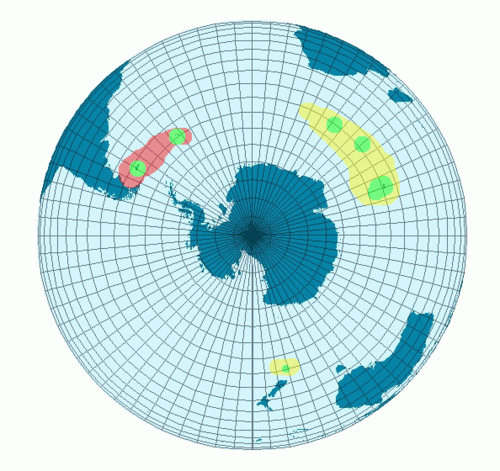
King penguins breed on beaches and open coastal plains of subantarctic islands with access to ice-free shorelines. Major colonies occur on South Georgia, Crozet, Kerguelen, Prince Edward, Heard, and Macquarie Islands. Outside the breeding season they disperse widely across the Southern Ocean, often tracking the Antarctic Polar Front where prey is abundant. They prefer areas with cold, nutrient-rich waters and strong upwellings that concentrate fish and squid.
Altitude Range
Sea level to 150 m
Climate Zone
Polar
Ease of Keeping
Beginner friendly: 1/5
The king penguin is the second largest penguin, smaller than the emperor penguin but similar in appearance, with striking orange-yellow patches on the head and upper chest. It breeds in immense, noisy colonies on subantarctic islands and carries its single egg on its feet under a brood patch. Remarkably deep divers, they routinely reach 100–300 m and can exceed 400 m while pursuing prey in the Southern Ocean.


Close-up of A. p. patagonicus subspecies in St. Andrews Bay, South Georgia, British Overseas Territories, UK

Mounted skeleton of king penguin (Aptenodytes patagonicus)
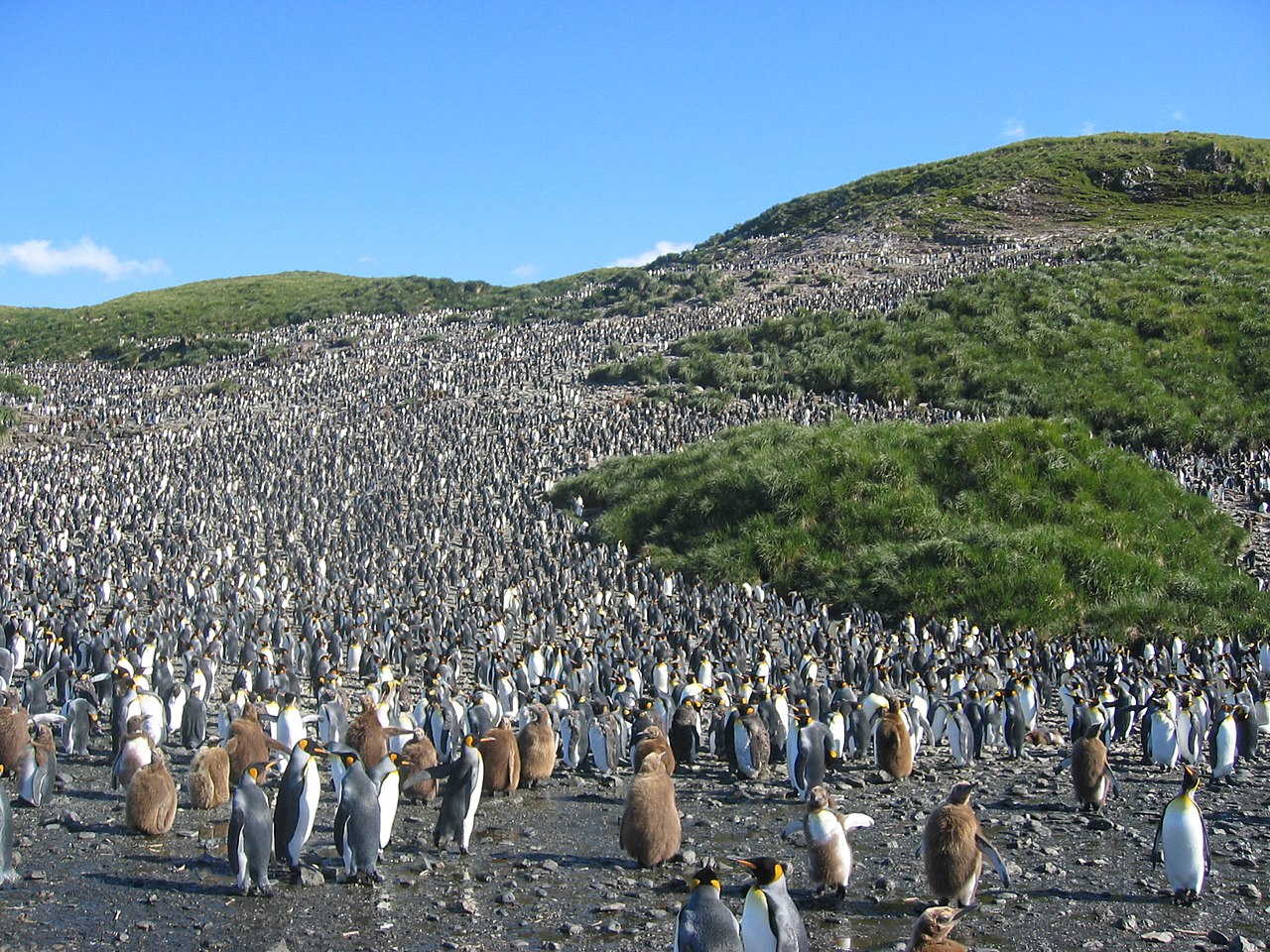
Great colony of king penguins on Salisbury Plain in South Georgia

King penguin chick

King penguin moulting, with pin feathers visible

A pair of king penguins performs a courtship ritual on Salisbury Plain, South Georgia.

Mating king penguins at Macquarie Island

King penguin egg

Close-up of king penguin chick in South Georgia

A crèche of king penguin chicks at Gold Harbour, South Georgia

A pair of king penguin at Edinburgh Zoo in Edinburgh, Scotland

Pesto, a notable king penguin in the Sea Life Melbourne Aquarium
Temperament
social and active
Flight Pattern
flightless; powerful swimmer using rapid flipper strokes
Social Behavior
Breeds in dense colonies that can number tens of thousands of pairs. Typically forms monogamous pairs within a season and lays a single egg, incubated on the feet under a brood pouch. Chicks often gather in crèches while adults forage at sea, and the species follows a protracted 14–16 month breeding cycle.
Migratory Pattern
Resident
Song Description
Vocalizations are loud, trumpeting calls with a distinctive two-voice quality produced by the syrinx. Adults use individualized calls to locate mates and chicks within crowded colonies.
Plumage
Sleek, waterproof plumage with a silvery-grey back, white underparts, and a glossy black head. The upper chest has a golden to orange wash that fades into the white belly.
Diet
Primarily preys on small fish, especially lanternfish (myctophids), supplemented by squid and occasionally krill. It hunts by pursuit diving, using speed and maneuverability to catch schooling prey. Typical dive depths range from 100 to 300 m, with occasional deeper dives beyond 400 m. Foraging often follows oceanographic fronts where prey aggregates.
Preferred Environment
Open oceanic waters of the Southern Ocean, especially near the Antarctic Polar Front and other productive frontal zones. Foraging occurs far from breeding sites, sometimes hundreds of kilometers offshore.


