

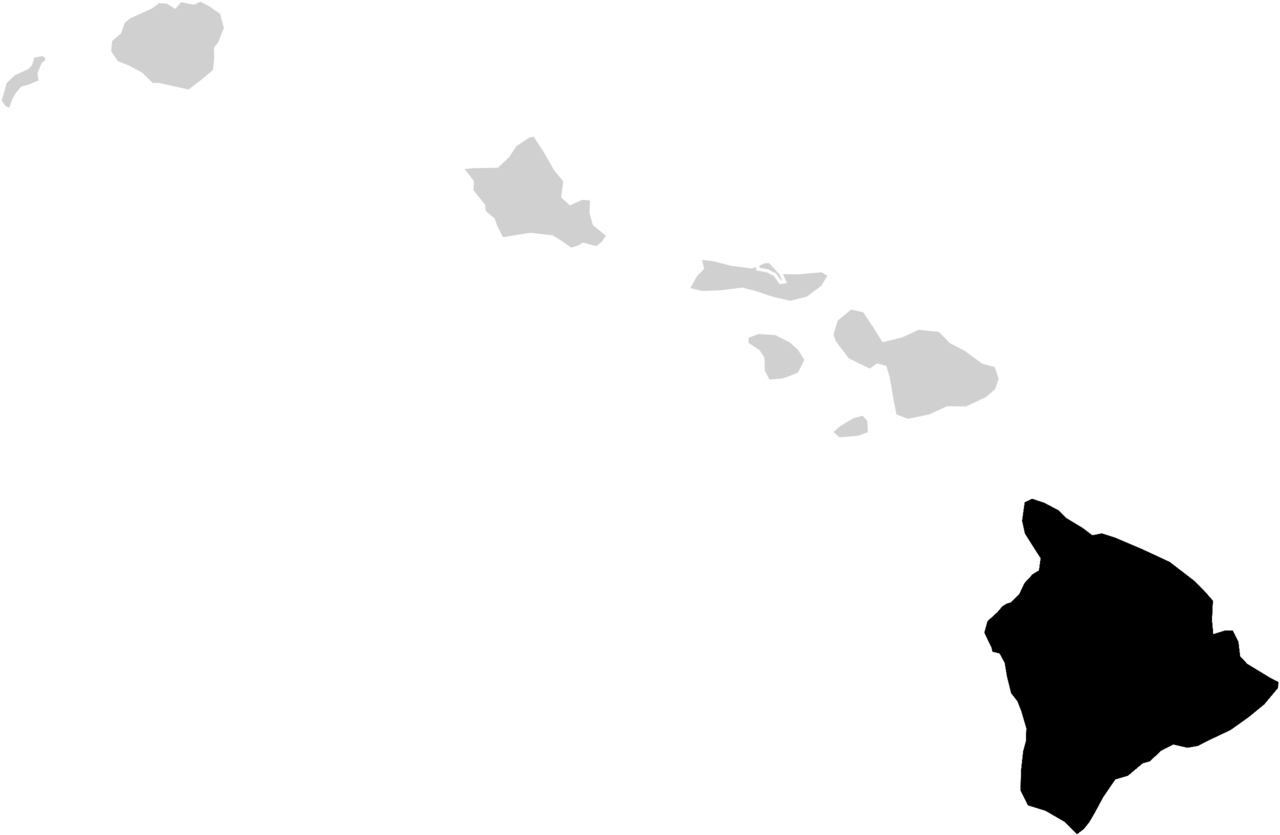
The kioea or kiowea is an extinct species of Hawaiian honeyeater that was endemic to the islands of Hawaii before going extinct around the mid-19th century.
Region
Hawaiian Islands
Typical Environment
Historically associated with native wet and mesic forests dominated by ʻōhiʻa lehua and koa. It likely foraged high in the canopy where flowering trees and lobelioids were abundant. Subfossil evidence suggests it may once have occurred on multiple islands, but historical records place it primarily on Hawaiʻi Island. Habitat degradation and introduced diseases probably contributed to its decline and extinction.
Altitude Range
600–2000 m
Climate Zone
Tropical
Ease of Keeping
Beginner friendly: 1/5
The kioea was a large Hawaiian honeyeater in the endemic family Mohoidae, now entirely extinct. It is the sole member of the genus Chaetoptila, known from only a few museum specimens collected in the mid-19th century. Modern research shows Mohoidae were not true honeyeaters (Meliphagidae) but a separate lineage convergent in nectar-feeding adaptations.




Temperament
solitary and wary
Flight Pattern
short rapid wingbeats with direct, purposeful flights between canopy trees
Social Behavior
Thought to have been primarily solitary or seen in pairs within mature native forest. Nesting was likely in trees with a cup-style nest, as in related Mohoidae, but details were poorly documented before extinction. Territorial behavior around rich flowering trees was probable.
Migratory Pattern
Resident
Song Description
Poorly documented; early accounts mention loud, somewhat harsh calls alongside clear, whistled notes. Vocalizations were likely used to advertise territory and maintain pair contact in dense forest.
Plumage
Olive-brown upperparts with heavily streaked, pale-buff to whitish underparts and a somewhat shaggy, bristly nape. Feathers appear loose and elongated on the neck, giving a slightly rough-textured look. Overall impression is a large, streaky forest bird with a long bill.
Diet
A mixed diet of nectar from ʻōhiʻa lehua and native lobelioids, supplemented by arthropods gleaned from bark and foliage. It likely probed flowers and crevices with its long bill and occasionally took small fruits. Seasonal availability of blossoms probably influenced food choices.
Preferred Environment
Foraged mainly in the mid- to upper canopy of intact native forest, especially where flowering trees were concentrated. Also used forest edges and gaps when nectar sources were abundant.


