

The king quail, also known as the blue-breasted quail, Asian blue quail, Chinese painted quail, or Chung-Chi, is a species of Old World quail in the family Phasianidae. This species is the smallest "true quail", ranging in the wild from southern China, South and Southeast Asia to Oceania, south to southeastern Australia, with 9 different subspecies. A failed attempt was made to introduce this species to New Zealand by the Otago Acclimatisation Society in the late 1890s. It is quite common in aviculture worldwide, where it is sometimes misleadingly known as the "button quail", which is the name of an only very distantly related family of birds, the buttonquails.
Region
South and Southeast Asia to Australia
Typical Environment
Occurs from southern China through the Indian Subcontinent and much of Southeast Asia, extending to New Guinea and southeastern Australia. It inhabits grasslands, scrubby edges, rice paddies, and lightly cultivated fields. The species favors dense, low vegetation near water or damp ground, where it can forage under cover. It adapts well to mosaic agricultural landscapes and can persist in small habitat patches.
Altitude Range
Sea level to 1500 m
Climate Zone
Tropical
Ease of Keeping
Beginner friendly: 4/5
Also called the blue-breasted quail, this is the smallest true quail and is widely kept in aviculture, where it is often misnamed a 'buttonquail' (a different family). Males show striking blue-grey breasts and a black-and-white facial pattern, while females are cryptically mottled for camouflage. It is a ground-dwelling species that prefers dense cover and will often freeze or run rather than take to flight.


Samsonvale, SE Queensland

Captive king quail

King quail eggs and 10-day-old chick
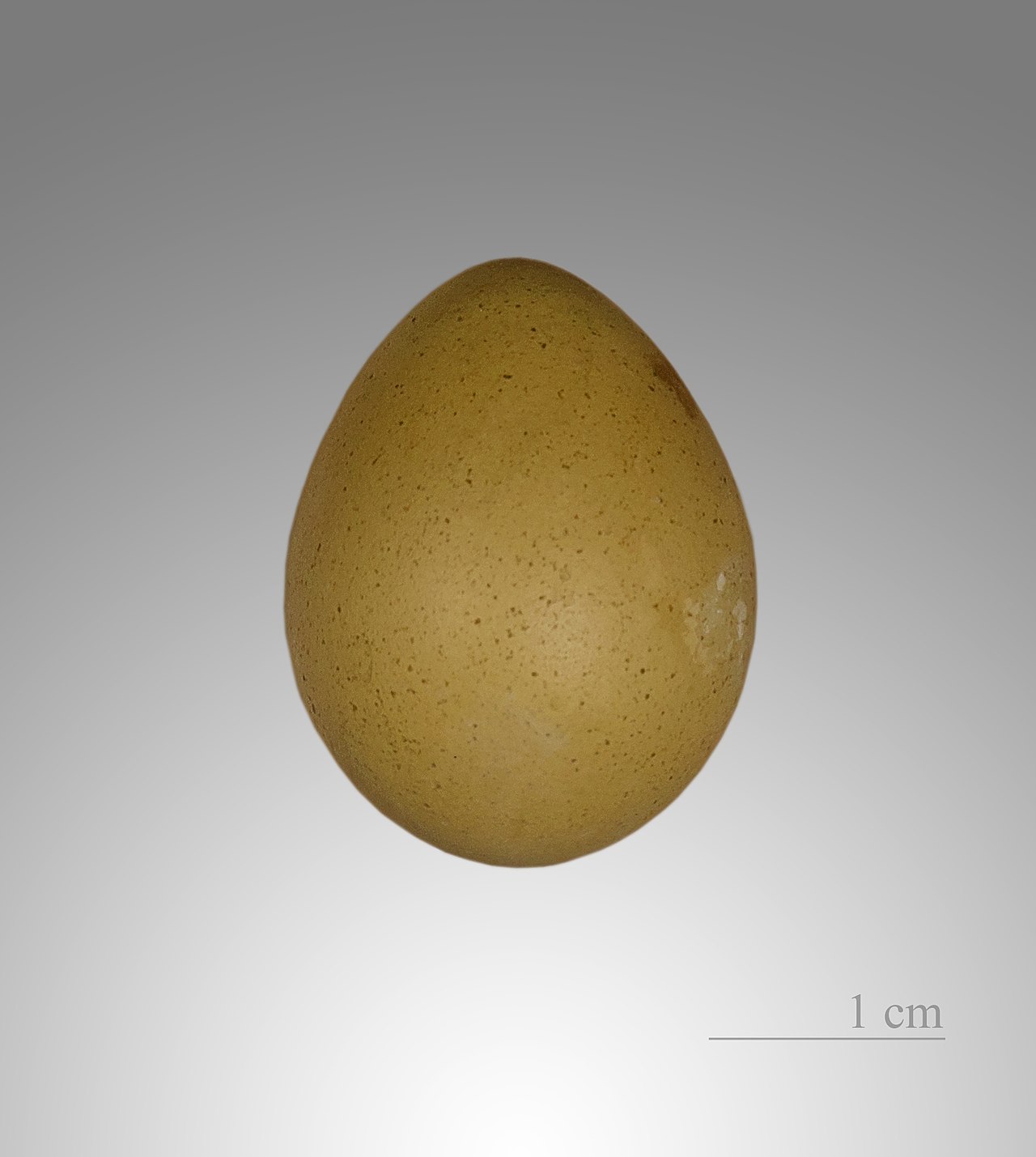
Egg of " Excalfactoria chinensis" – MHNT
Temperament
shy and secretive
Flight Pattern
short rapid wingbeats, low fast dashes
Social Behavior
Usually seen singly, in pairs, or small family coveys. Nests are shallow scrapes lined with grass concealed in thick cover; clutches typically contain 4–10 eggs. Chicks are highly precocial, and adults lead them to foraging areas soon after hatching.
Migratory Pattern
Resident
Song Description
Male gives soft, piping whistles and short trisyllabic notes, often repeated from within cover. Contact calls are thin peeps and soft clucks used to keep pairs or family groups together.
Plumage
Male with blue-grey breast and slate wash on the flanks, rich chestnut underparts, and a black face bordered by white throat lines; female is mottled buff and brown with fine barring for camouflage. Both sexes have short, rounded wings and a compact, domed body with a short tail.
Diet
Feeds on small grass and weed seeds, grains, and green shoots. Supplements with invertebrates such as ants, termites, beetles, and small worms, especially during breeding when protein needs increase. Will also take fallen seeds in agricultural fields and along track edges.
Preferred Environment
Forages on the ground under dense grasses, along field margins, and in lightly flooded paddies. Prefers areas with overhead cover where it can move unseen, often near damp soils rich in invertebrates.


