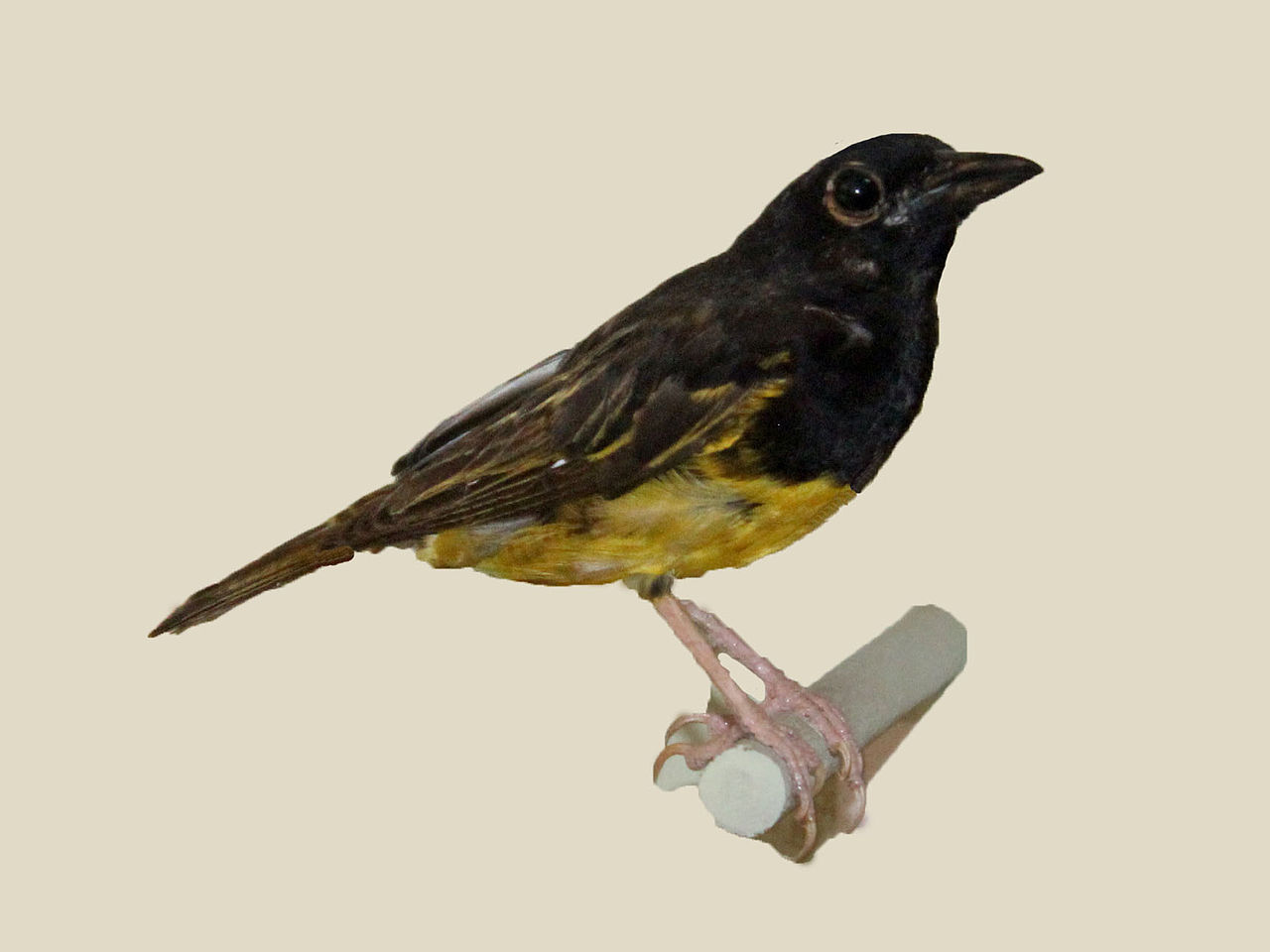
The Kikuyu white-eye is a species of bird in the family Zosteropidae. It was formerly considered a subspecies of montane white-eye. It is found in central Kenya, in the Aberdare Mountains and on Mount Kenya. IUCN categorizes it as of least concern.
Region
East African Highlands
Typical Environment
Occurs in montane evergreen forest, bamboo belts, and ericaceous scrub across the central Kenyan highlands. It is especially frequent at forest edges, in clearings, and within secondary growth where flowering plants are abundant. Birds also venture into highland farms and gardens adjacent to native forest. Often accompanies mixed-species flocks in the mid to upper canopy while gleaning foliage.
Altitude Range
1800–3600 m
Climate Zone
Highland
Ease of Keeping
Beginner friendly: 2/5
This small white-eye is confined to Kenya’s central highlands, notably the Aberdare Mountains and Mount Kenya. It was formerly treated as a subspecies of the Montane White-eye but is now widely recognized as a distinct species. It forages actively in mixed-species flocks and readily visits flowering shrubs for nectar.

Temperament
social and active
Flight Pattern
short rapid wingbeats
Social Behavior
Typically encountered in small, chattering groups and frequently joins mixed-species flocks. Pairs are monogamous during the breeding season, building small cup nests concealed in foliage. Nests are placed in shrubs or small trees at low to mid canopy levels.
Migratory Pattern
Resident
Song Description
A thin, high-pitched series of twitters and trills interspersed with soft warbles. Contact calls are sharp, sibilant ‘tsee’ notes exchanged constantly within moving flocks.
Plumage
Olive-green upperparts with a grayish to slate-colored belly and yellow-tinged throat and vent; clean, bold white eye-ring. Feathers are sleek and close-fitting, giving a neat, compact look.
Diet
Consumes small insects and other arthropods gleaned from leaves and twigs, along with nectar from flowering shrubs and trees. Also takes soft fruits and berries when available. Foraging is agile and methodical, often hanging briefly to probe the undersides of foliage.
Preferred Environment
Feeds primarily in the mid to upper canopy along forest edges, gaps, and secondary growth. Regularly visits flowering ericaceous and other highland shrubs, and will use gardens near native forest.