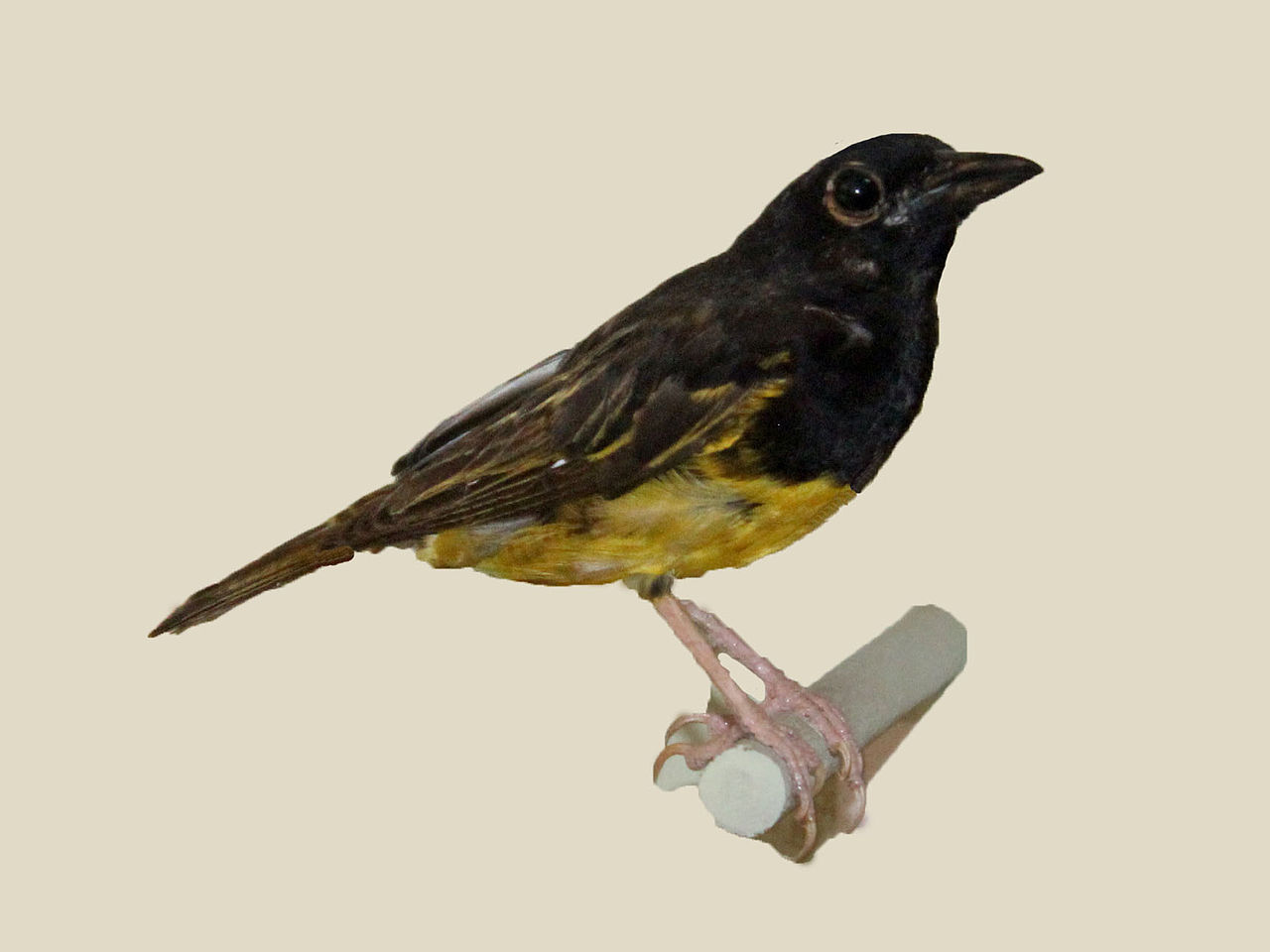
The Kikuyu mountain greenbul, also known as the olive-breasted greenbul, is a species of the bulbul family of passerine birds. It is native to the Lake Victoria region.
Region
East African Highlands
Typical Environment
Occurs in montane evergreen forests, bamboo belts, and adjacent secondary growth and forest edges. Most common in dense midstory and along trails and clearings where fruiting trees and shrubs are available. It also enters highland farms and gardens bordering forest to feed on berries. The species is a local resident in the highlands of central Kenya and northern Tanzania.
Altitude Range
1600–3200 m
Climate Zone
Highland
Ease of Keeping
Beginner friendly: 1/5
Also called the Olive-breasted Greenbul, this montane bulbul is part of the East African mountain greenbul complex and is best identified by voice and its olive-washed underparts. It frequents dense midstory in evergreen forest, bamboo zones, and forest edge. Pairs and small parties often join mixed-species flocks while foraging. It is a year-round resident of the East African highlands.
Temperament
social and active
Flight Pattern
short rapid wingbeats with quick, undulating hops between cover
Social Behavior
Typically seen in pairs or small family groups that often join mixed-species flocks. Territorial during breeding, with cup nests placed low to mid-level in dense vegetation. Both parents participate in nest defense and feeding of young.
Migratory Pattern
Resident
Song Description
Rich, whistled phrases interspersed with chattering notes, delivered from concealed perches. Calls include sharp chips and scolds when alarmed, with a repetitive, mellow song during early morning.
Plumage
Olive-brown upperparts with a slightly darker head and nape; underparts are olive-washed on the breast, shading to yellow-olive on the belly and vent. Throat is paler, sometimes grayish, with subtle mottling. Flight feathers and tail are dusky with olive edging.
Diet
Takes small fruits and berries from shrubs and midstory trees. Gleans insects and other arthropods from foliage, twigs, and bark. Occasionally hawks short distances for flying insects and supplements diet with nectar when available.
Preferred Environment
Feeds primarily in the forest midstory and edge, especially at fruiting bushes and along light gaps. Also forages in secondary growth and highland gardens adjacent to forest.