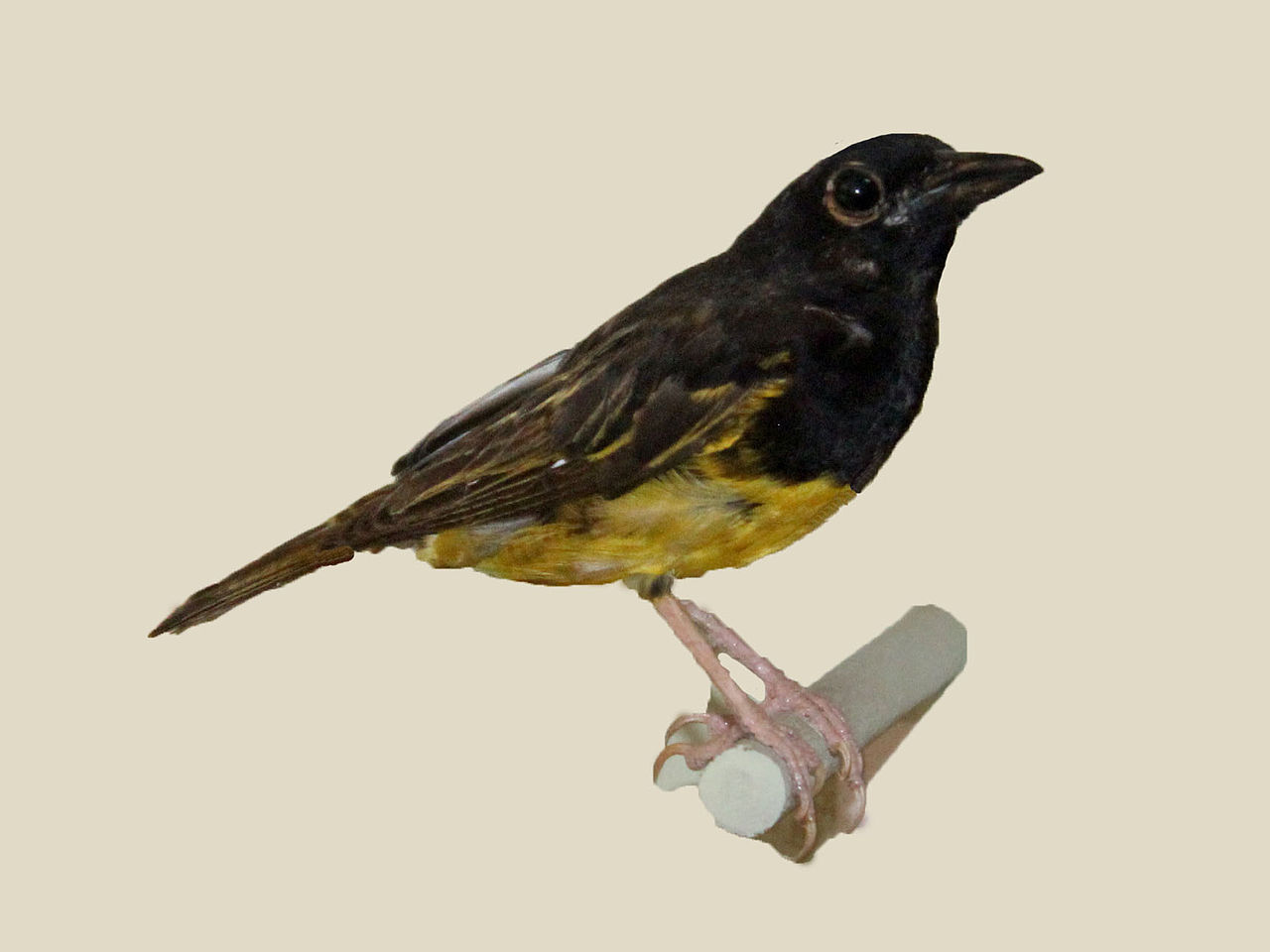
The kikau or western wattled honeyeater is a species of bird in the honeyeater family Meliphagidae. It was considered conspecific with the Fiji wattled honeyeater and the Polynesian wattled honeyeater.
Region
South Pacific (Fiji)
Typical Environment
Occurs on western Fijian islands, especially Viti Levu and nearby archipelagos. It inhabits lowland and foothill forests, secondary growth, coastal scrub and mangroves, and readily uses plantations and village gardens with flowering trees. The species is adaptable, often following seasonal blooms and insect emergences. It frequents forest edges and gaps where nectar sources are abundant. It is common in anthropogenic habitats provided mature nectar-bearing plants are present.
Altitude Range
Sea level to 1000 m
Climate Zone
Tropical
Ease of Keeping
Beginner friendly: 1/5
Also known locally as the kikau, this is the western wattled honeyeater of Fiji and was formerly lumped with the Fiji and Polynesian wattled honeyeaters. It is an energetic nectar- and insect-feeder and an important pollinator of native flowering trees. The small pale wattle at the base of the bill is a key field mark.

Temperament
active and territorial
Flight Pattern
short rapid wingbeats between perches
Social Behavior
Usually found singly, in pairs, or small family groups; often joins mixed-species flocks while foraging. Pairs defend rich nectar sources vigorously from other honeyeaters. The nest is a small cup suspended in foliage, and both parents tend the young. Breeding timing can track flowering peaks.
Migratory Pattern
Resident
Song Description
Vocal and noisy, giving sharp chattering notes, scolds, and ringing whistles. The song is a varied series of repeated phrases with metallic and bubbly elements, often delivered from exposed perches at dawn.
Plumage
Olive-brown upperparts with slightly paler, gray-olive underparts and faint streaking on the throat. The face is grayish with a contrasting paler malar area. Feathers are sleek, with subtle gloss on the head and mantle.
Diet
Takes nectar from a variety of native and introduced flowering trees and shrubs, probing with its decurved bill. Also gleans insects and spiders from foliage and occasionally hawks small flying insects. Will supplement with soft fruits and sugary plant exudates when available.
Preferred Environment
Feeds along forest edges, in canopy gaps, and in flowering coastal vegetation. Common in gardens, plantations, and village areas with abundant blooms such as hibiscus, coconut, and erythrina.