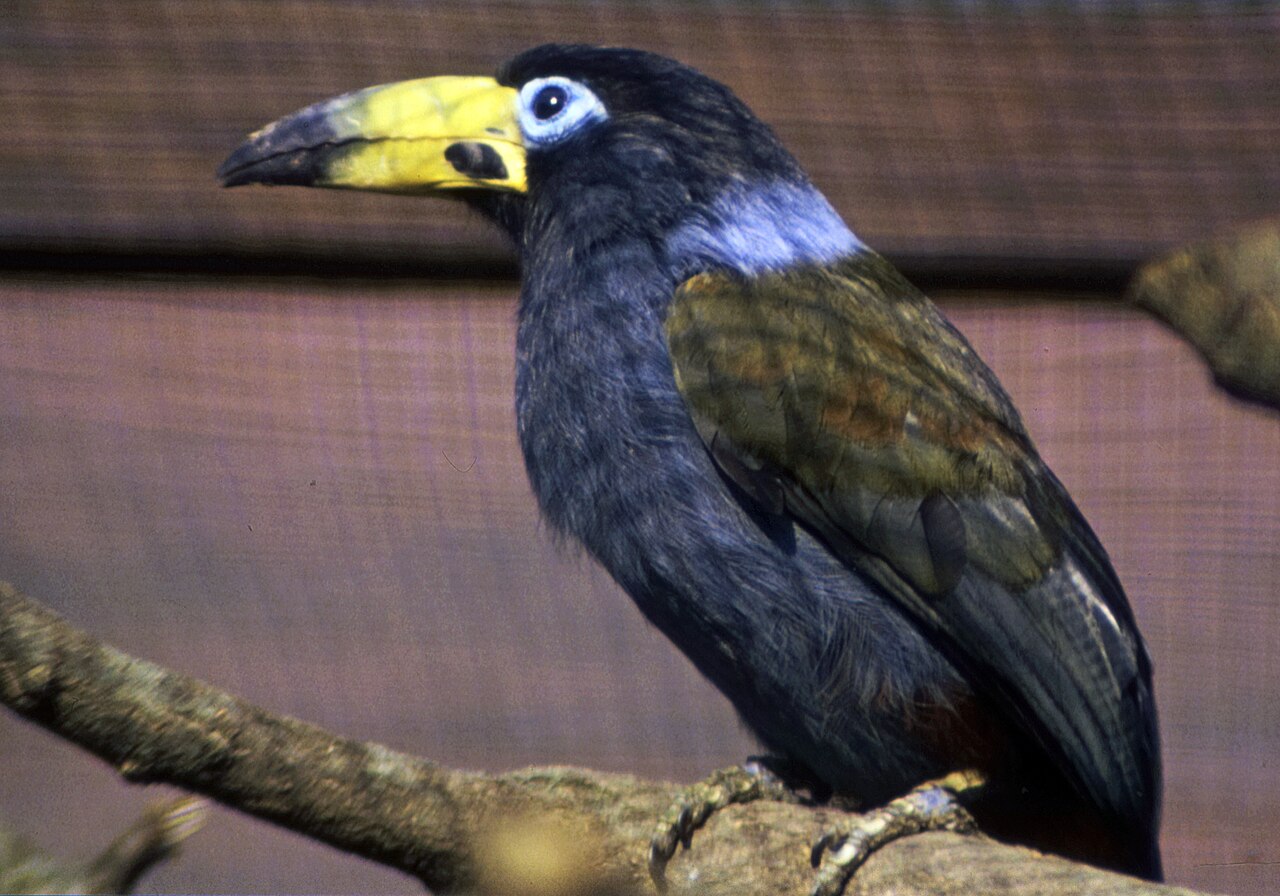
The hooded monarch is a species of bird in the family Monarchidae. It is found on New Guinea. Its natural habitat is subtropical or tropical moist lowland forests.
Region
New Guinea and adjacent islands
Typical Environment
This species inhabits subtropical and tropical moist lowland forests across much of New Guinea, including edges and secondary growth near primary forest. It keeps to shaded interiors, riparian corridors, and vine tangles, where it moves methodically through foliage. Birds are most often found from the understory up to the mid-canopy. It may occur in selectively logged forest as long as sufficient cover remains.
Altitude Range
Sea level to 1200 m
Climate Zone
Tropical
Ease of Keeping
Beginner friendly: 1/5
The hooded monarch is a New Guinea endemic flycatcher of shaded lowland rainforest. It often forages quietly in the understory and midstory, making it easier to hear than to see. Pairs build neat, cup-shaped nests slung in forked twigs. Its crisp, high whistles help distinguish it from similar monarch flycatchers.

Temperament
shy and unobtrusive
Flight Pattern
short rapid wingbeats with brief sallies
Social Behavior
Usually seen singly or in pairs within dense forest, occasionally joining mixed-species flocks. Both sexes participate in nest building and rearing of young. The nest is a small, neat cup suspended from a forked twig, often well hidden among leaves.
Migratory Pattern
Resident
Song Description
Song consists of clear, thin whistles delivered in short phrases. Calls include sharp, high-pitched notes and soft chips used during foraging.
Plumage
Compact monarch flycatcher with a contrasting dark hood and cleaner, paler underparts, and warmer brown to olive-brown upperparts. Wings show a subtle pale panel; tail is fairly short. Feathers are sleek, giving a smooth, neat appearance.
Diet
Primarily hunts small insects such as beetles, flies, caterpillars, and spiders. It gleans from leaves and twigs and makes short sallies to snatch prey mid-air. Foraging is deliberate, with frequent pauses to scan foliage. It may follow mixed-species flocks to exploit disturbed insects.
Preferred Environment
Feeds in the shaded understory and midstory of lowland rainforest, along stream margins, and in dense vine tangles. Also uses semi-open edges and secondary growth adjacent to intact forest where cover remains.