
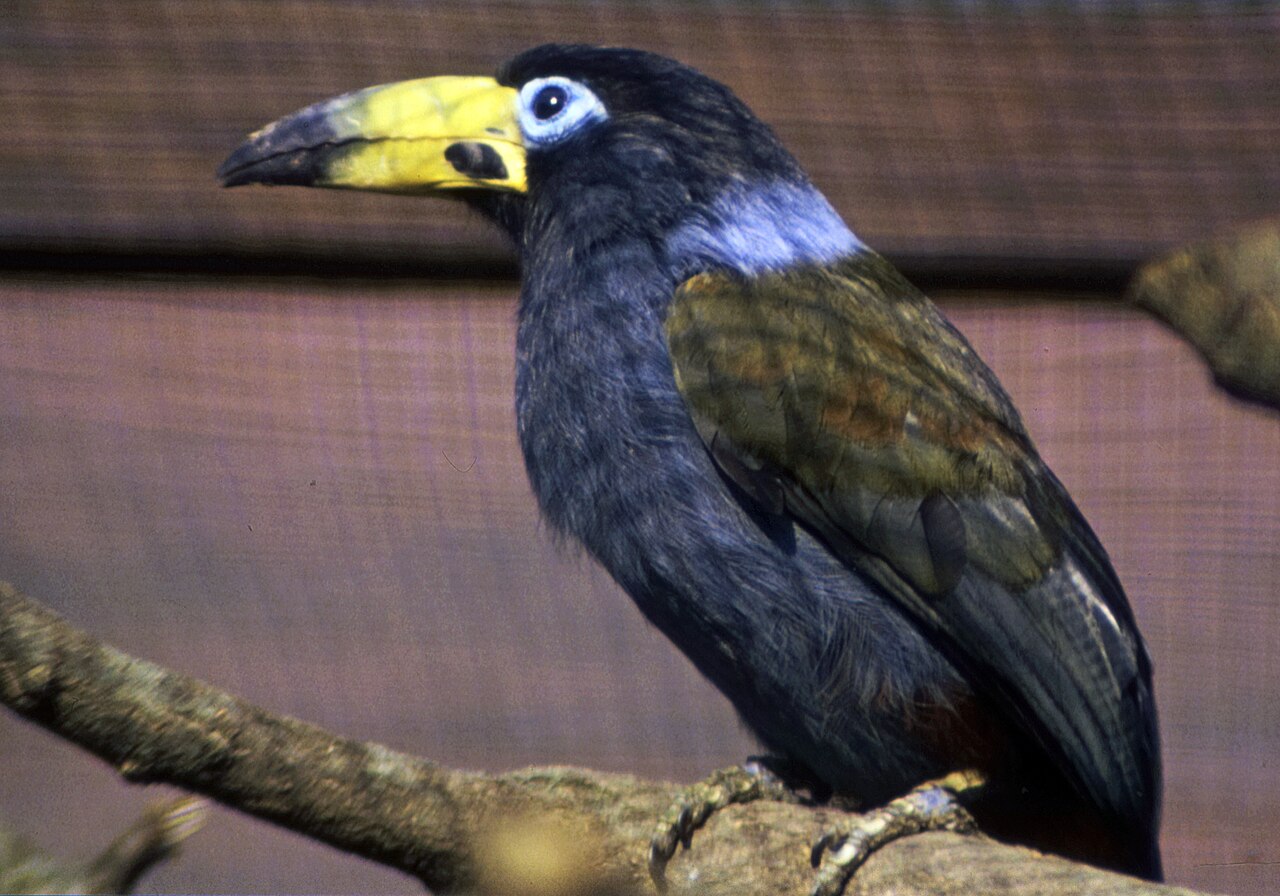
The hooded mountain toucan is a species of bird in the toucan family Ramphastidae. It is found in Bolivia and Peru.
Region
Andes Mountains
Typical Environment
Occurs on the humid eastern slopes of the central and southern Peruvian Andes south into northern Bolivia (notably La Paz and Cochabamba). It inhabits mature cloud forest, mossy montane forest, and edges with abundant fruiting trees. The species also uses bamboo (Chusquea) thickets and forested ravines, and occasionally ventures into second-growth near intact forest. It is typically found in the mid to upper canopy but will descend to lower strata when foraging.
Altitude Range
1500–3200 m
Climate Zone
Highland
Ease of Keeping
Beginner friendly: 1/5
This mountain toucan of the Andes is a key seed disperser, moving the seeds of many cloud-forest trees across long distances. It often travels in small, noisy groups and may make short altitudinal movements to follow fruiting trees. Its striking hooded head and multicolored bill make it one of the most distinctive birds of Andean cloud forests.


Temperament
social and active
Flight Pattern
short rapid wingbeats with undulating flights between trees
Social Behavior
Usually seen in pairs or small, loose groups moving along ridgelines and forest edges. It nests in tree cavities, with both sexes sharing incubation and chick-rearing duties. Territorial calling and bill-clattering occur near nest or favored fruiting trees.
Migratory Pattern
Resident
Song Description
Vocalizations are loud, carrying yelps and barking notes given in series, often at dawn. Calls can include resonant, hollow yips interspersed with rattling or clucking sounds during group contact.
Plumage
Slate-blue to bluish-gray underparts with olive upperparts, a chestnut rump, and red undertail coverts. The head and throat form a distinct black 'hood' bordered subtly by paler lines. The bill is long and laterally compressed, typically bicolored with contrasting dark and yellowish tones.
Diet
Primarily frugivorous, taking a wide variety of fleshy fruits and berries from the canopy. It also consumes insects, small lizards, and occasionally eggs or nestlings, especially when fruit is scarce. Seeds are often regurgitated intact, aiding forest regeneration.
Preferred Environment
Feeds mostly in the mid to upper canopy at fruiting trees, along forest edges, and on ridgelines. It also forages in bamboo patches and may descend to lower strata when pursuing arthropods.


