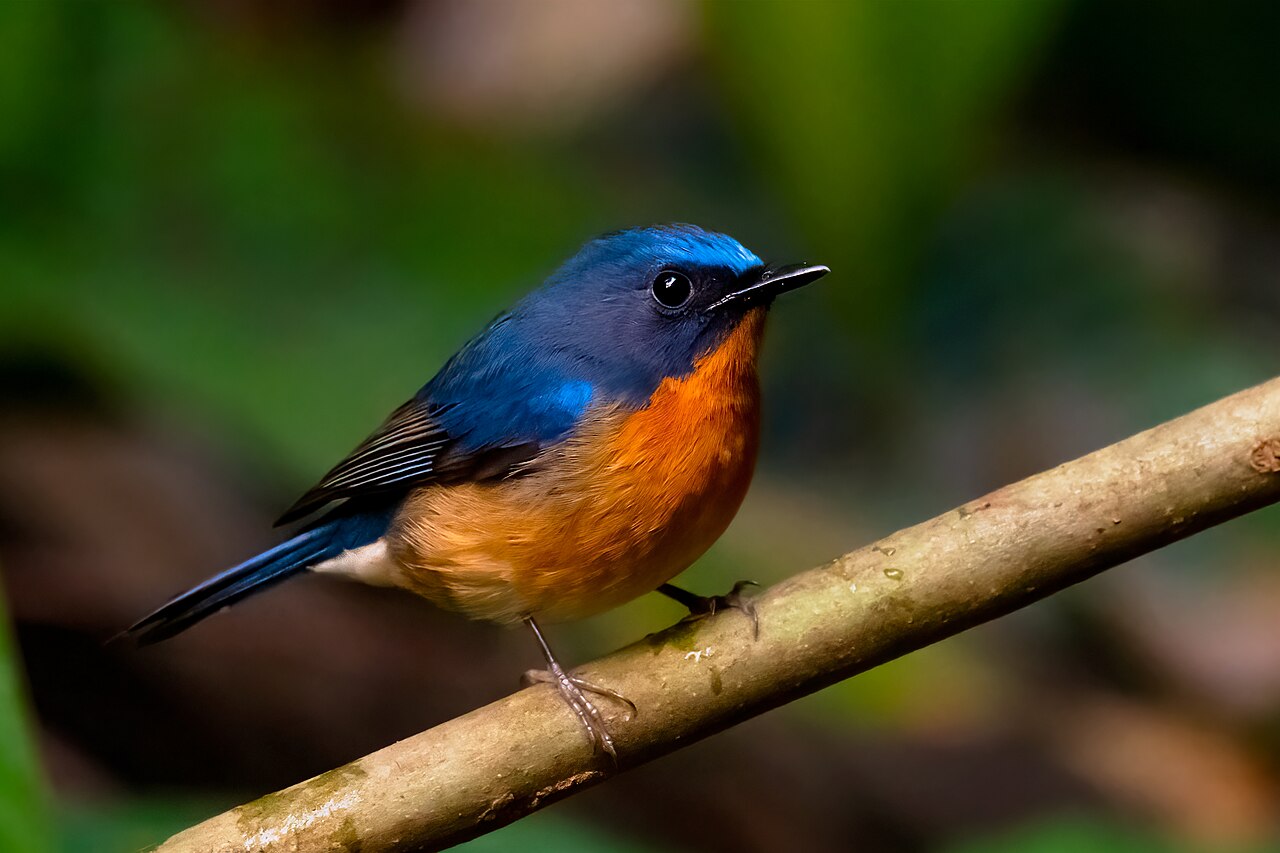
Hildebrandt's starling is a species of starling in the family Sturnidae. It forms a superspecies with and has previously been included in the same species as Shelley's starling, a migratory species ranging from Ethiopia and Somalia to Kenya. Both of these species have also been combined into a superspecies with the chestnut-bellied starling of West Africa. It was originally placed in the now defunct genus Notauges. The species is named for Johann Maria Hildebrandt, a German collector who was the first European to obtain specimens.
Region
East Africa
Typical Environment
Primarily found in Kenya and northern Tanzania, with concentrations in open Acacia-Commiphora bushland, dry savanna, and lightly wooded grasslands. It frequents ranchlands, cultivated areas, and settlement edges, adapting well to human-modified landscapes with scattered trees. Birds perch conspicuously on thorn trees, fence posts, and wires and descend to the ground to feed. Nests are typically in tree cavities or holes in dead limbs and occasionally in man-made structures.
Altitude Range
600–2200 m
Climate Zone
Tropical
Ease of Keeping
Beginner friendly: 2/5
Named for the German naturalist Johann Maria Hildebrandt, this glossy starling is common in East African savannas. It often forages near livestock or along roadsides, snatching insects flushed by movement. It forms a superspecies with Shelley's starling and is sometimes confused with the Superb Starling, but lacks the latter’s white breast band.


Immature bird in Kenya
Temperament
social and active
Flight Pattern
short rapid wingbeats with direct, fast flight
Social Behavior
Usually seen in pairs or small family groups, joining loose flocks where food is plentiful. Breeding pairs nest in natural cavities, lining the chamber with grass and feathers. Both sexes share incubation and chick-rearing duties.
Migratory Pattern
Resident
Song Description
A varied mix of clear whistles, trills, and harsh chatters delivered from exposed perches. Calls can be loud and ringing, sometimes incorporating brief mimicry of other species.
Plumage
Iridescent blue-green head and upperparts with a glossy violet-blue breast and rich rufous-orange underparts; wings are dark with metallic sheen and the tail is glossy blue-green.
Diet
Takes a wide range of insects such as beetles, grasshoppers, termites, and caterpillars, supplemented with fruits and berries when available. It will seize prey flushed by livestock or vehicles and occasionally gleans from foliage. In some seasons it samples nectar or soft plant matter.
Preferred Environment
Feeds mainly on the ground in open savanna, bushy grasslands, and at the margins of farms and settlements. Often forages along tracks, short-grass grazed areas, and beneath scattered thorn trees.