

The common hill partridge, necklaced hill partridge, or simply hill partridge is a species of bird in the pheasant family found in Asia.
Region
Himalayan foothills and southern China to northern Southeast Asia
Typical Environment
Occurs from Nepal and northeastern India through Bhutan and Myanmar into southern China (notably Yunnan and Guangxi), with extensions into northern Laos and northern Vietnam. It inhabits subtropical and montane evergreen broadleaf forests, mixed oak–rhododendron woods, and dense bamboo thickets. Birds favor steep, forested slopes with abundant leaf litter and understory cover, and will use secondary growth and forest edges when undisturbed. They are typically secretive and remain close to dense cover, flushing only when approached closely.
Altitude Range
300–2600 m
Climate Zone
Subtropical
Ease of Keeping
Beginner friendly: 2/5
Also called the common or necklaced hill partridge, it is a shy ground-dwelling pheasant of Asian forests. Pairs often duet with clear whistled calls at dawn and dusk, making them easier to hear than to see. Its distinctive white throat bordered by a black "necklace" helps separate it from other hill partridges. Local hunting and habitat loss can affect some populations, but the species remains widespread overall.

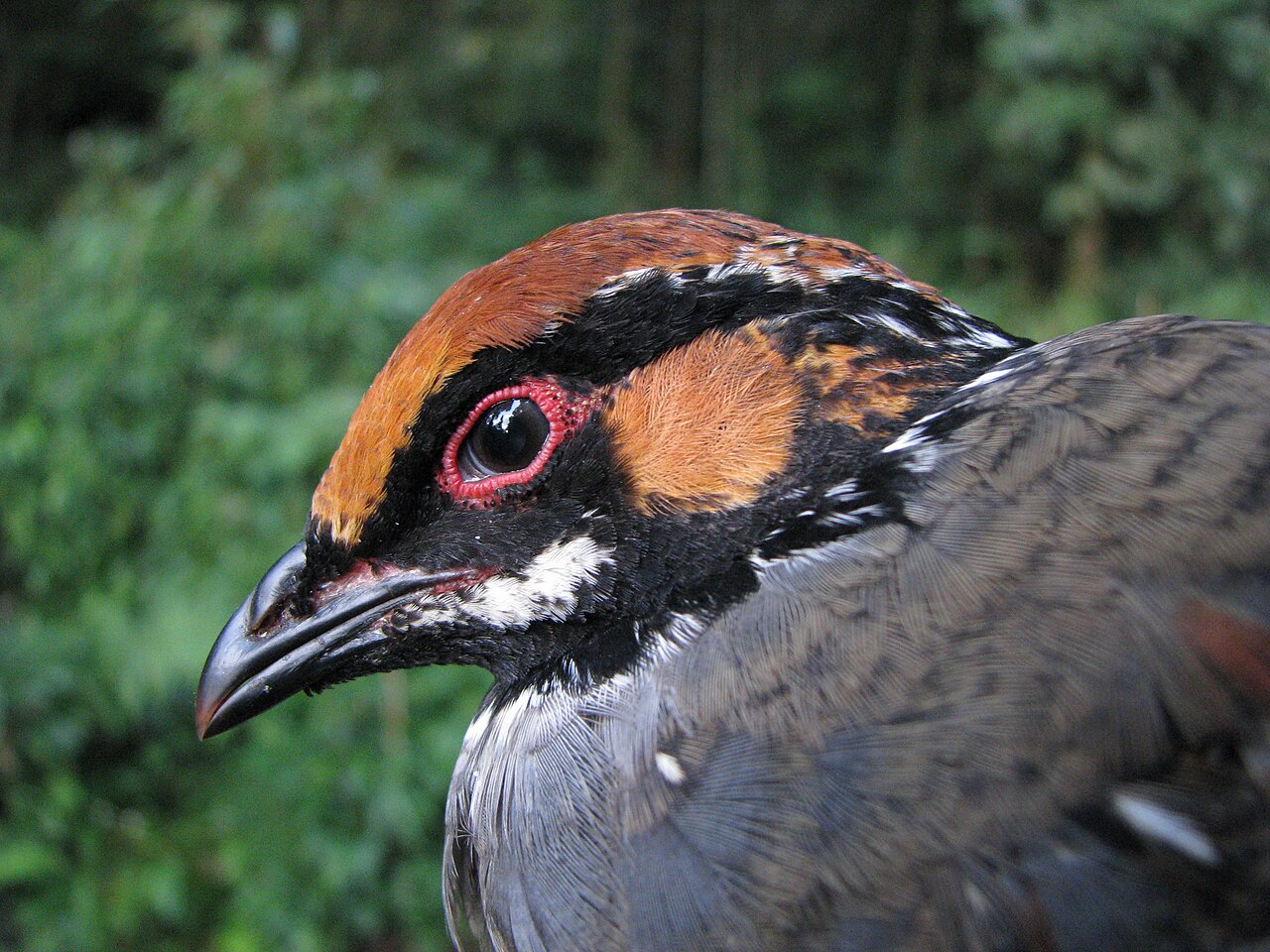
A male from Arunachal Pradesh, India

At Deoria Tal
Temperament
shy and secretive
Flight Pattern
short rapid wingbeats with explosive flushes into cover
Social Behavior
Usually encountered in pairs or small family coveys that keep to dense understory. Ground-nesting, with a simple leaf-lined scrape hidden in thick vegetation. Breeding tends to occur in spring to early summer, and pairs are thought to be largely monogamous.
Migratory Pattern
Resident
Song Description
The call is a clear, whistled series often given as antiphonal duets between mates. Notes rise and fall in pitch and carry surprisingly far through forested valleys. Soft clucking contact calls are used while foraging.
Plumage
Finely patterned brown upperparts with rufous and black barring on the wings, greyish breast with subtle scaling, and paler belly. The throat is white, sharply bordered by a narrow black collar that forms a distinctive 'necklace'. The crown and nape show warm chestnut tones, contrasting with the grey face and neck sides.
Diet
Forages on the ground for a mixed diet of seeds, fallen fruits and berries, tender shoots and bamboo seeds, as well as insects, grubs, and other small invertebrates. It scratches through leaf litter to uncover hidden prey and plant matter. Diet composition shifts seasonally with fruiting and insect availability.
Preferred Environment
Feeds in dense understory of evergreen and mixed forests, especially along bamboo thickets, forest edges, and shaded gullies. Often uses game trails and quiet forest paths, retreating quickly to cover when disturbed.


