
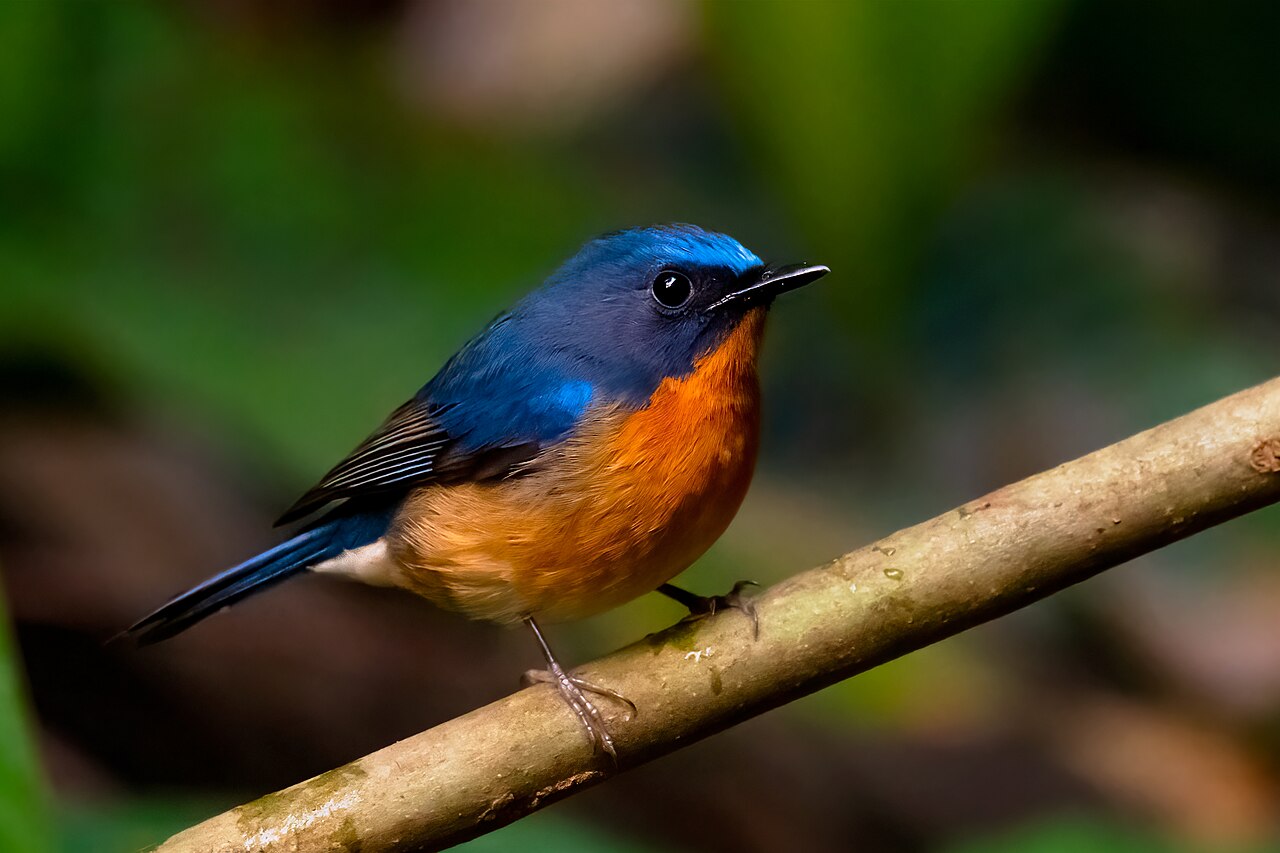
The hill blue flycatcher is a species of bird in the family Muscicapidae. It is found in southern China, northeastern India and Southeast Asia.
Region
South and Southeast Asia
Typical Environment
Occurs from northeastern India and northern Myanmar through southern China to mainland Southeast Asia, with populations in hill and lower montane forests. Prefers evergreen and mixed forests, forest edges, bamboo thickets, and gullies near streams. It is typically found in the shaded understory and midstory, using low to mid-level perches to forage. In some parts of its range it makes short altitudinal movements following seasonal changes and food availability.
Altitude Range
200–2200 m
Climate Zone
Subtropical
Ease of Keeping
Beginner friendly: 1/5
A bright, forest-dwelling flycatcher of the Old World, males show striking cobalt-blue upperparts with a warm orange throat and breast, while females are more subdued brown with bluish tones. It often hunts by sallying from low perches to snatch insects mid-air or from foliage. The species favors shaded ravines and streamside thickets in hill and montane forests and can be quite skulking. Its clear, melodious whistles carry surprisingly far through dense forest.


female

Female

Hill blue flycatcher
Temperament
shy and unobtrusive
Flight Pattern
short rapid wingbeats with quick sallies from perches
Social Behavior
Usually solitary or in pairs, especially during breeding. Nests are placed in tree cavities, earthen banks, or crevices lined with moss and rootlets. Pairs are monogamous during the breeding season and defend small territories in suitable forest patches.
Migratory Pattern
Partial migrant
Song Description
A series of clear, sweet, whistled phrases delivered at a leisurely pace, often from a concealed perch. Calls include thin seee and soft tick notes used during foraging and contact.
Plumage
Male with vivid blue head, mantle, and tail; rich orange throat and breast grading to whitish belly. Female mostly brown-olive above with a bluish tail and wings, duller orange wash on the breast, and paler underparts.
Diet
Primarily small insects such as flies, beetles, moths, caterpillars, and other arthropods. It employs sallying and hover-gleaning to take prey from foliage and the air. Occasionally picks invertebrates from the ground or streamside leaf-litter. May supplement diet with small berries when insect availability is low.
Preferred Environment
Feeds in shaded understory and along stream corridors within hill and lower montane forests. Often forages from low horizontal perches, making short dashes to capture prey and returning to the same perch.


