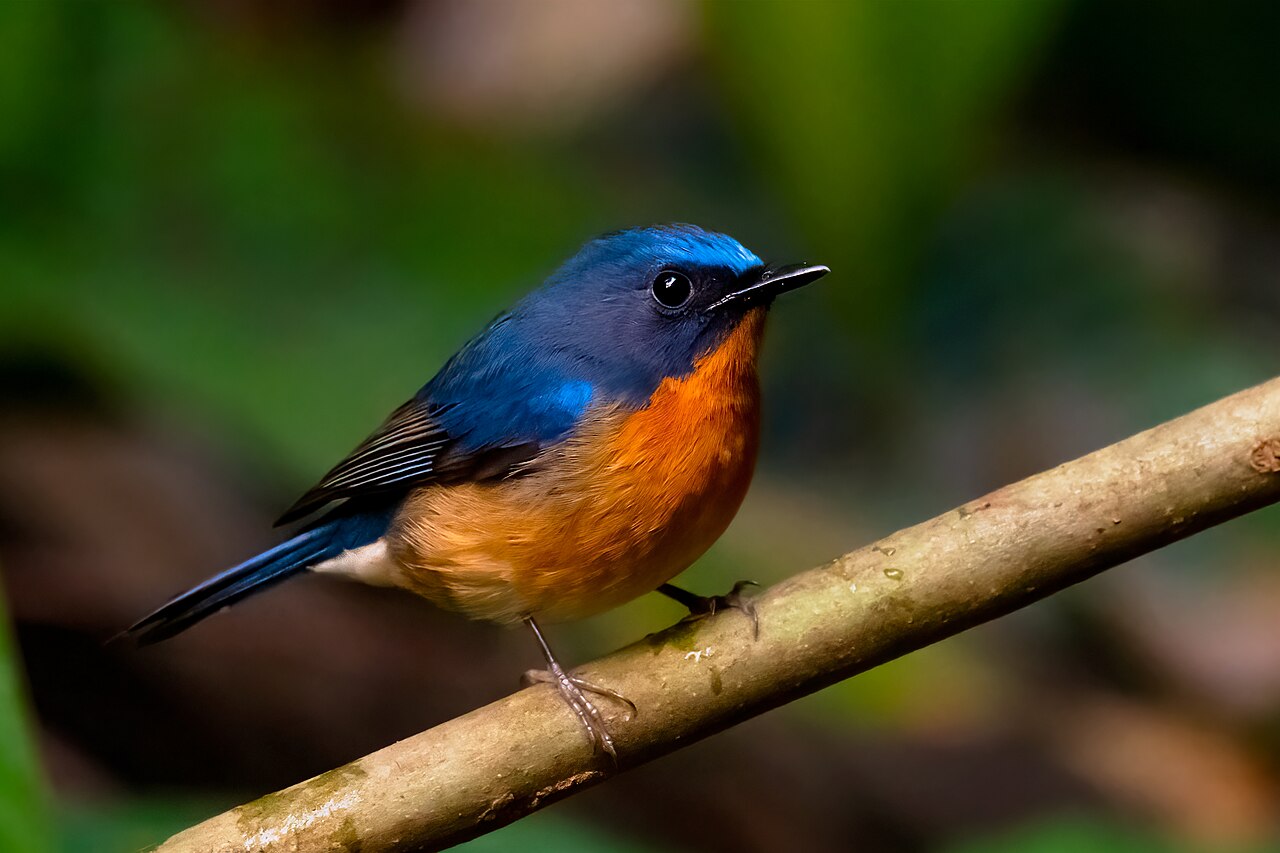
The highland lark is a species of small passerine bird in the lark family Alaudidae found in Africa from Guinea to west Sudan. It was formerly treated as a subspecies of the rufous-naped lark.
Region
West Africa and the Sahel
Typical Environment
Occurs in upland and montane savannas, grassy plateaus, and lightly wooded slopes from Guinea east through Mali and Burkina Faso to western Sudan. It favors open grassland with scattered shrubs, lateritic plains, and fallow fields near highland villages. The species often uses recently burned or grazed patches where ground cover is short. During the dry season it may shift locally to areas with greener swards.
Altitude Range
600–2200 m
Climate Zone
Highland
Ease of Keeping
Beginner friendly: 1/5
The highland lark is a small Alaudidae lark of upland grasslands from Guinea east to western Sudan. It was formerly treated as a subspecies of the rufous-naped lark, but is now recognized by many authorities as distinct based on range and vocal differences. It performs conspicuous display flights over open slopes and helps control insect populations in farm-adjacent savannas.
Temperament
solitary and territorial
Flight Pattern
short rapid wingbeats with fluttering display flights
Social Behavior
Typically seen singly or in pairs, becoming loosely gregarious outside the breeding season. Nests on the ground in a grass-lined cup tucked beneath a tuft for cover. Pairs defend small territories and perform elevated song flights during courtship.
Migratory Pattern
Resident
Song Description
A rich series of trills and clear whistles delivered from low perches or in buoyant display flights. Song is most frequent at dawn and late afternoon, carrying well across open slopes.
Plumage
Streaked brown upperparts with darker mantle streaking and paler fringes, giving a mottled, camouflaged look; underparts buff to whitish with fine streaks on the breast.
Diet
Feeds on a mix of grass seeds and small invertebrates, including beetles, ants, termites, and grasshoppers. Insects are especially important during the breeding season to provision chicks. It picks items from bare ground and short turf and will probe among grass bases for hidden prey.
Preferred Environment
Forages on short-grass patches, edges of tracks, and recently burned or grazed areas where visibility is high. It also uses fallow fields and lightly shrubby savanna near upland settlements.