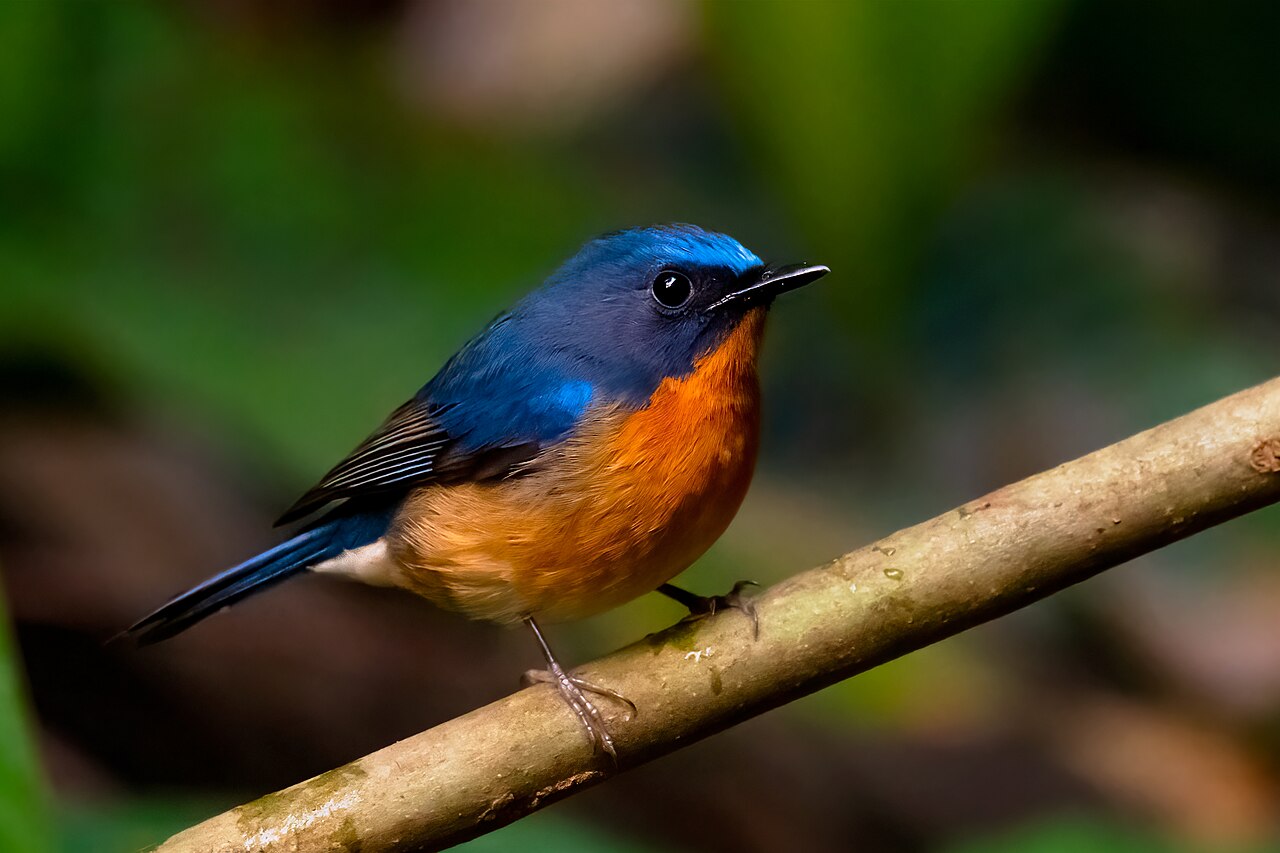
The highland guan is a species of bird in the family Cracidae. It is found in the highlands of El Salvador, Guatemala, Honduras, southern Mexico, and Nicaragua.
Region
Mesoamerican Highlands
Typical Environment
Occurs in montane cloud forest, humid oak–pine forest, and mature evergreen forest edges. It favors dense, mid- to upper-story vegetation with abundant fruiting trees and epiphytes. The species uses both primary and well-developed secondary forest, but declines sharply with heavy disturbance. Riparian ravines and steep slopes with continuous canopy are frequently used.
Altitude Range
900–3000 m
Climate Zone
Highland
Ease of Keeping
Beginner friendly: 2/5
The highland guan is the sole member of the genus Penelopina, a montane cracid specialized for life in Central American cloud forests. It is an important seed disperser for many native trees, helping maintain forest regeneration. Shy and wary, it is often detected by its deep booming display calls at dawn. Habitat loss and hunting pressure have reduced many local populations.


Male (blue-black) and female (brown)
Temperament
shy and wary
Flight Pattern
short rapid wingbeats with brief glides
Social Behavior
Usually seen singly, in pairs, or in small family groups. Likely monogamous, nesting in a simple stick platform placed in trees or dense tangles. Roosts above ground in the canopy and may use traditional sites repeatedly.
Migratory Pattern
Resident
Song Description
A deep, resonant booming or drumming display at dawn and dusk, often carrying far through the forest. Also gives low grunts, clucks, and soft whistles during contact or alarm.
Plumage
Male mostly glossy black with subtle bluish sheen; female browner with fine barring on underparts and warmer rufous tones on wings. Both sexes have soft, loose body feathers typical of guans, with a slightly shaggy neck. The tail is long and rounded, aiding maneuverability in dense forest.
Diet
Primarily feeds on fruits and drupes from native trees and shrubs, swallowing whole and dispersing seeds. Also takes tender leaves, buds, and flowers, and occasionally supplements with invertebrates. Diet varies seasonally with fruit availability.
Preferred Environment
Forages mostly in the mid to upper canopy, moving methodically along branches to pluck fruit. Will descend to lower strata or edges when certain trees are fruiting and sometimes visits forest gaps and ravines.