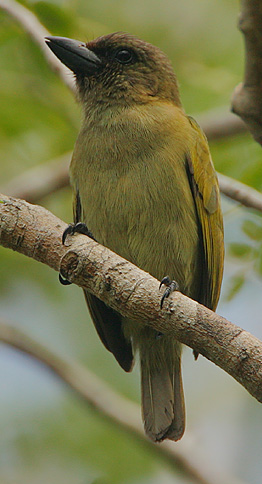
The greater yellow finch is a species of bird in the family Thraupidae. It is found in Argentina and Chile. Its natural habitats are subtropical or tropical high-altitude shrubland, temperate grassland, and heavily degraded former forest.
Region
Southern Andes
Typical Environment
Found from central to southern Andes of Argentina and Chile, occupying open temperate and high Andean zones. It frequents puna-like grasslands, shrubby slopes, rocky outcrops, and edges of degraded woodlands. Birds also use pastures, roadside verges, and human-altered clearings where seeds are abundant. In winter, some descend to lower elevations and more sheltered valleys.
Altitude Range
800–4000 m
Climate Zone
Highland
Ease of Keeping
Beginner friendly: 2/5
The greater yellow-finch is a bright, ground-feeding tanager commonly seen in open, windswept Andean habitats of Argentina and Chile. Males are noticeably more vivid yellow than females, which are browner and more streaked. It often forms small flocks outside the breeding season and can make short altitudinal movements in winter. It is sometimes confused with smaller yellow-finches, but its bulkier build and brighter yellow tones help separate it.


Temperament
social and active
Flight Pattern
short rapid wingbeats with an undulating flight
Social Behavior
Outside the breeding season it forms small flocks that forage on the ground and low shrubs. During breeding, pairs defend small territories and nest in cavities, rock crevices, banks, or sheltered nooks in human structures. The nest is a cup of grasses and fibers, and both parents attend the young.
Migratory Pattern
Partial migrant
Song Description
A bright, twittering series of trills and tinkling notes delivered from exposed perches. Calls are sharp chips and twinks used to keep contact within flocks. The song accelerates and varies in pitch, giving a lively, metallic quality.
Plumage
Male bright yellow below with olive to brownish, lightly streaked upperparts; female duller, grey-brown above with a yellow wash beneath. Both sexes show a neat, compact finch shape with a stout conical bill.
Diet
Primarily seeds of grasses and herbs, supplemented by buds and small berries when available. During the breeding season it takes small insects and other invertebrates to meet protein demands. It often husks seeds with its stout bill and forages by hopping on open ground.
Preferred Environment
Open grasslands, shrubby steppe, rocky slopes, and weedy field margins. It also exploits disturbed areas and roadside verges where seed-bearing plants are abundant.