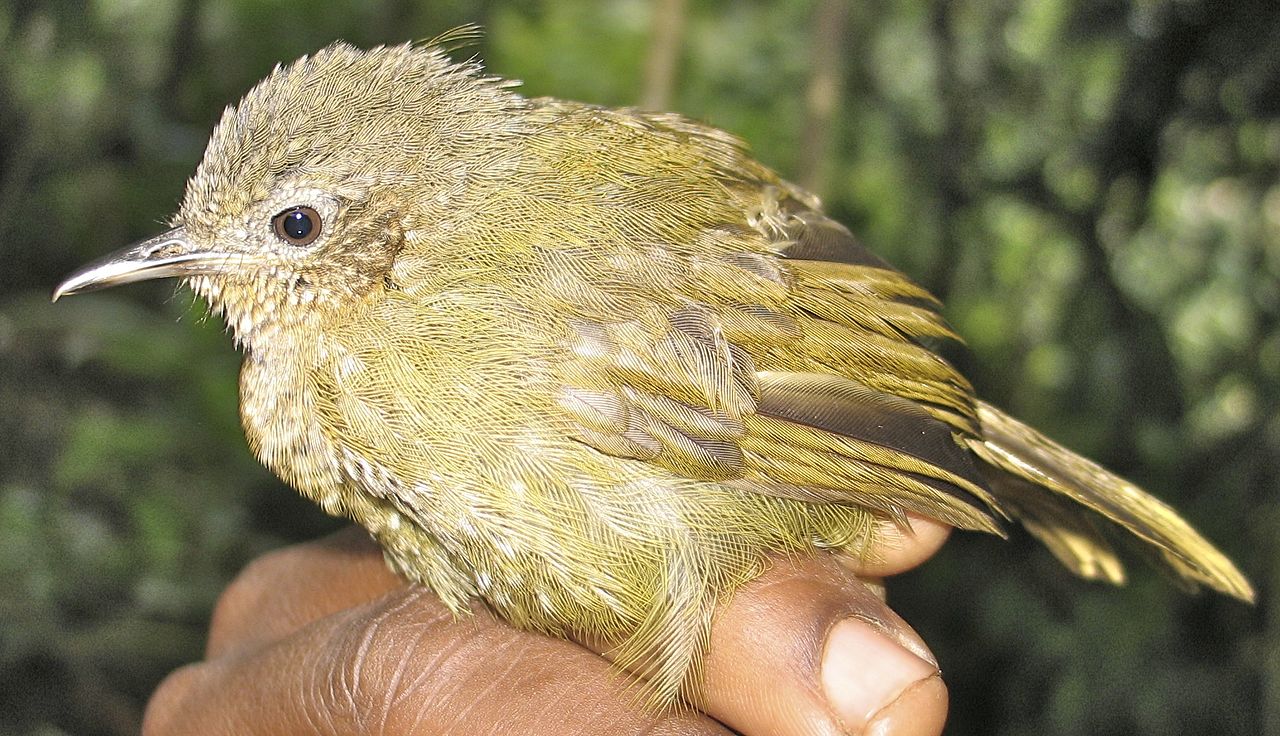
Grauer's cuckooshrike is a little known species of bird in the family Campephagidae. It is endemic to the Democratic Republic of the Congo. It is found in mid-elevation montane forests, where it can be locally common. Similar to other species endemic to the eastern Democratic Republic of the Congo, it is rarely reported due to ongoing armed conflict in the Albertine Rift.
Region
Albertine Rift, East-Central Africa
Typical Environment
This species inhabits mid-elevation montane and submontane evergreen forests in the eastern Democratic Republic of the Congo. It favors mature forest with a well-developed canopy but also uses tall secondary growth and forest edges. Birds typically forage from the mid-story to the canopy, sometimes along ridges and in valleys with tall trees. It can be locally common where intact habitat persists but is patchily distributed due to deforestation and disturbance.
Altitude Range
1000–2400 m
Climate Zone
Highland
Ease of Keeping
Beginner friendly: 1/5
Grauer's cuckooshrike is a scarce Albertine Rift endemic named after the German zoologist Rudolf Grauer. It keeps to mid-elevation montane forests and is easily overlooked due to its quiet demeanor and canopy habits. Survey work is hampered by regional instability, so the species is probably underreported and its true status may be poorly known.
Temperament
quiet, secretive, and canopy-dwelling
Flight Pattern
short rapid wingbeats between trees; capable of strong, direct flights across gaps
Social Behavior
Usually found singly, in pairs, or small family groups, and frequently joins mixed-species flocks in the canopy. Likely monogamous, with a small cup nest placed high in a tree. Territorial calling is subdued, and birds often forage methodically through foliage.
Migratory Pattern
Resident
Song Description
Vocalizations are soft and unobtrusive: thin, high-pitched whistles and sibilant tseep notes given at intervals. A quiet, short series of whistles may be delivered from a concealed perch.
Plumage
A medium-sized, fairly plain cuckooshrike with smooth, satiny gray upperparts and paler gray underparts; wings and tail darker with subtle pale edging. Female tends to be slightly browner or duller with faint scalloping or mottling below. Both sexes show a slender, slightly hooked bill and a long tail.
Diet
Primarily feeds on arthropods such as caterpillars, beetles, and orthopterans, gleaned from leaves, twigs, and bark. It occasionally sallies to snatch prey in short flights. Small berries and other soft fruits may be taken opportunistically, especially when insect prey is scarce.
Preferred Environment
Forages in the mid-story to the canopy of montane evergreen forest, along forest edges, and in tall secondary growth. Often accompanies mixed-species flocks where it searches methodically through foliage and outer branches.