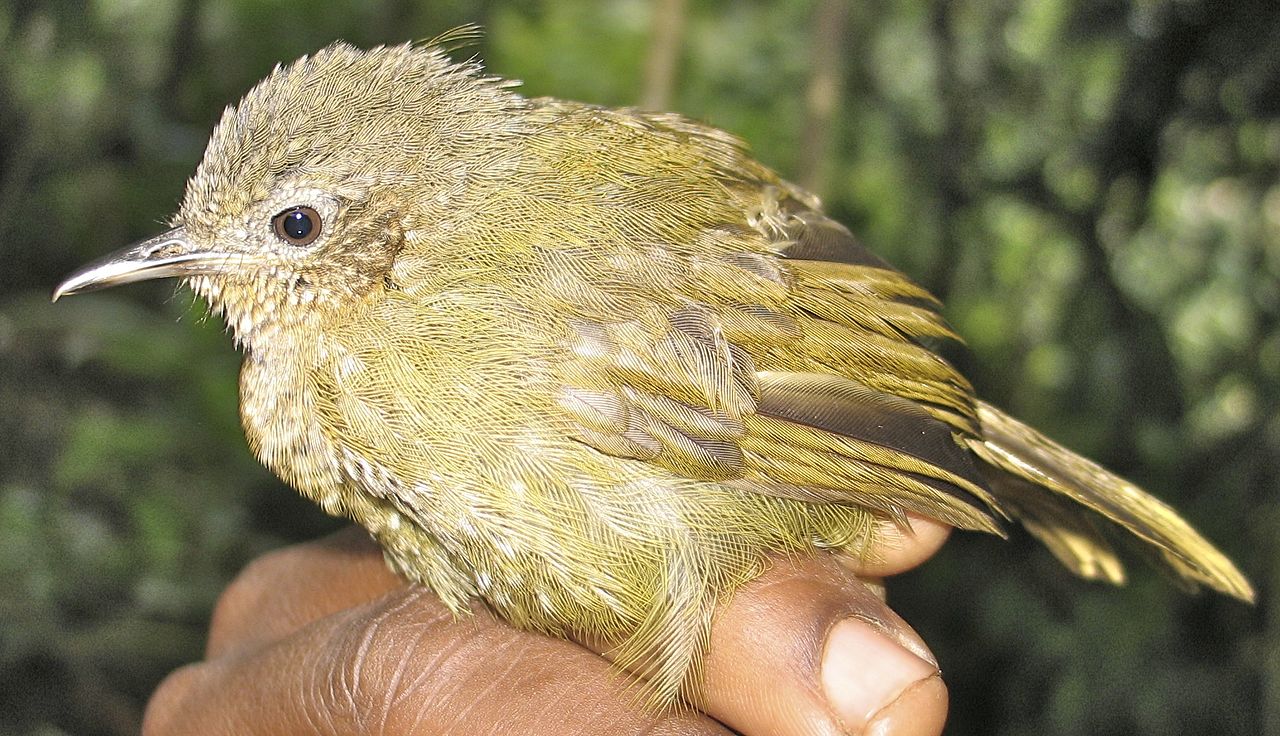
The grasshopper sparrow is a small New World sparrow. It belongs to the genus Ammodramus, which contains three species that inhabit grasslands and prairies. Grasshopper sparrows are sometimes found in crop fields and they will readily colonize reclaimed grassland. In the core of their range, grasshopper sparrows are dependent upon large areas of grassland where they avoid trees and shrubs. They seek out heterogenous patches of prairie that contain clumps of dead grass or other vegetation where they conceal their nest, and also contain barer ground where they forage for insects, spiders, and seeds. Grasshopper sparrows are unusual among New World sparrows in that they sing two distinct song types, the prevalence of which varies with the nesting cycle. The primary male song, a high trill preceded by a stereotyped series of short chips, is reminiscent of the sounds of grasshoppers and is the origin of this species' name. Like some other birds of the central North American grasslands, this species also moves around a lot, not only via annual migrations, but individuals frequently disperse between breeding attempts or breeding seasons. Grasshopper sparrows are in steep decline across their range, even in the core of the breeding distribution in the tallgrass prairies of the central Great Plains. The Florida grasshopper sparrow is highly endangered.
Region
North and Central America and the Caribbean
Typical Environment
Breeds across prairies and open grasslands of North America, including tallgrass and mixed-grass prairies, pastures, hayfields, and reclaimed grasslands. In winter it occupies open grasslands, savannas, dry fields, and weedy fallows in the southern United States, Mexico, the Caribbean, and parts of Central America. It avoids areas with significant shrub or tree encroachment and prefers heterogeneous grass structure. Nests are concealed at the base of grasses, often forming a partial dome of woven vegetation. They readily colonize restored or reclaimed grasslands when structure and management are suitable.
Altitude Range
0–2000 m
Climate Zone
Temperate
Ease of Keeping
Beginner friendly: 1/5
This secretive grassland sparrow gets its name from the male’s primary song, a high, insect-like trill that resembles a grasshopper. It nests on the ground in dense grass clumps but forages in nearby sparser patches, favoring a mosaic of vegetation. The species shows two distinct song types that vary with the breeding cycle. While the species is globally not at immediate risk, some populations—most notably the Florida grasshopper sparrow—are highly endangered.


Late-July grasshopper sparrow territory with nest at the Konza Prairie showing preferred patchiness of vegetation including low ground for foraging and denser patches in which to conceal nests.
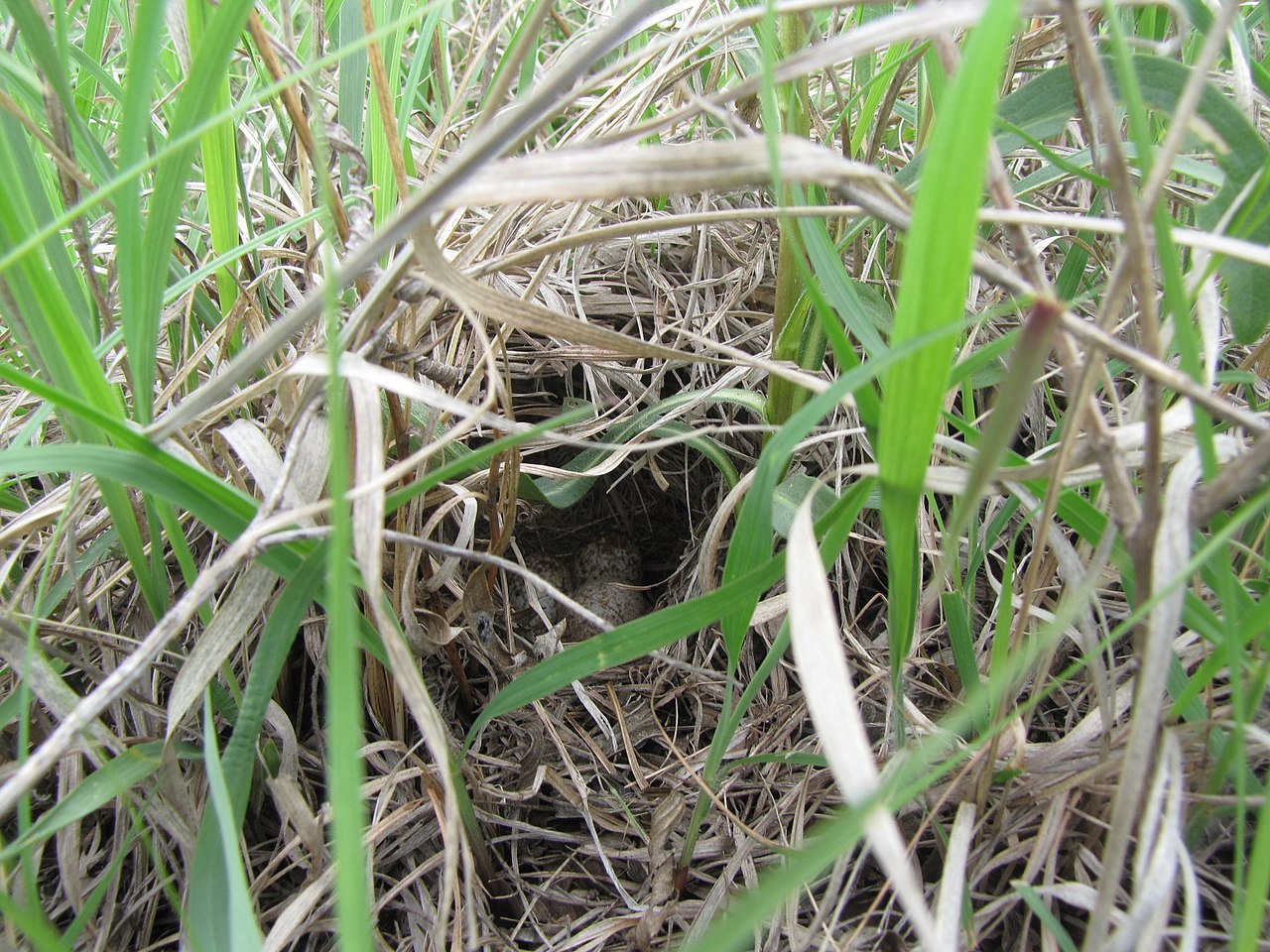
Well-concealed grasshopper sparrow nest showing domed structure and side entrance

Nestling grasshopper sparrow within an hour or so of hatching (handled as part of permitted research) at the Konza Prairie, Kansas.

Grasshopper sparrow nest with four cowbird eggs & one host egg

Grasshopper sparrow singing


Temperament
secretive and skulking
Flight Pattern
short rapid wingbeats; low, fluttering flight over grass
Social Behavior
During breeding, males sing from low perches and defend territories; nests are built on the ground and are well concealed in grass clumps. The female primarily incubates while both parents feed the young. After breeding, birds may form small loose flocks and often disperse between breeding attempts or seasons.
Migratory Pattern
Seasonal migrant
Song Description
Primary song is a thin, insect-like buzz preceded by a few sharp chips, reminiscent of a grasshopper’s trill. A secondary, more complex song is used in different social contexts during the breeding cycle. Calls include dry ticks and chips given from cover.
Plumage
Streaked brown and buff upperparts with a flat-crowned look, a pale median crown stripe bordered by darker lines, and a clean buffy breast with minimal streaking on the flanks. The nape is grayish with fine streaking, and the back shows fine black and buff streaks. The tail is short with pale outer edges, and the underparts are buff to whitish.
Diet
Eats a mix of insects and seeds, shifting toward insects—especially grasshoppers, crickets, and beetles—during the breeding season. Spiders and other small arthropods are also taken, and nestlings are fed mostly protein-rich invertebrates. Outside the breeding season, seeds of grasses and forbs become important.
Preferred Environment
Forages mostly on or near the ground in short to moderate-height grasses with patches of bare soil. Seeks heterogeneous swards where movement and prey capture are easier. In winter, uses weedy fields, prairies, and lightly grazed pastures.