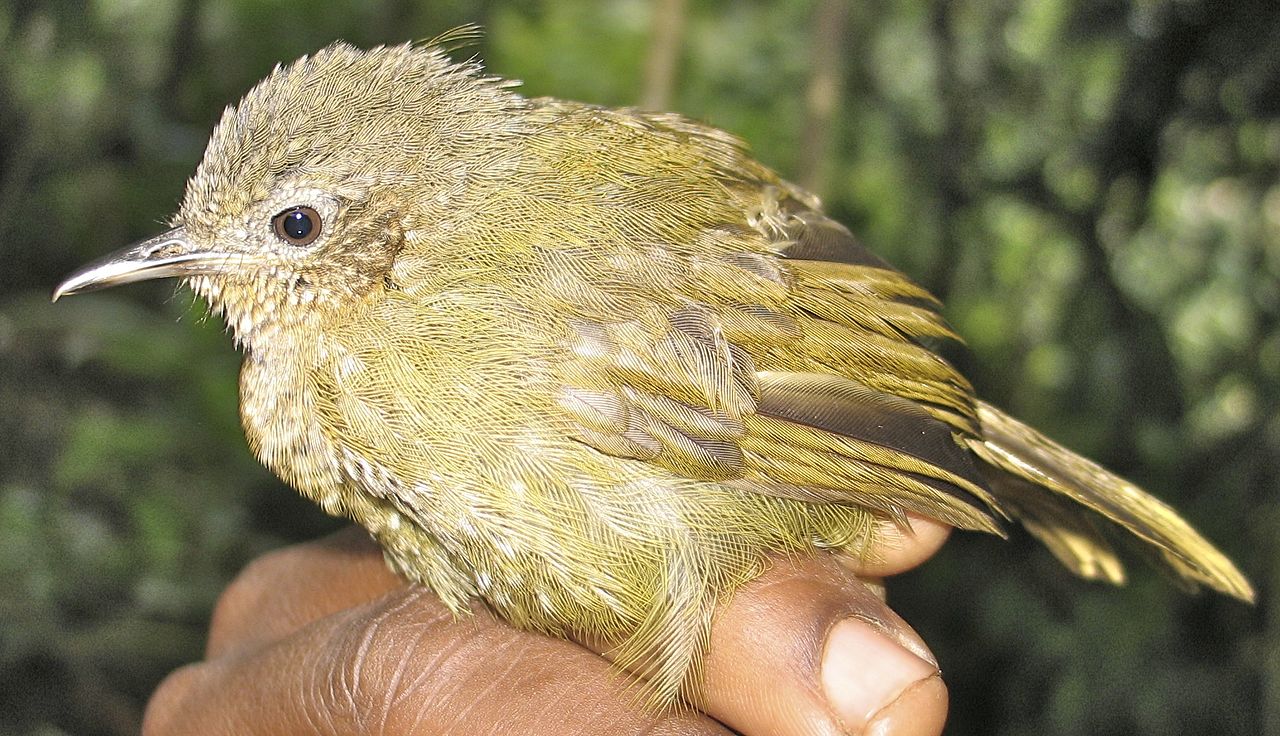
The grass-green tanager is a small South America bird in the tanager family Thraupidae. It is the only member of the genus Chlorornis.
Region
Northern and central Andes
Typical Environment
Found in humid montane and cloud forests from western Venezuela through the Andes of Colombia and Ecuador into northern Peru. It favors mossy, epiphyte-rich forests, forest edges, and mature secondary growth. Birds typically use the midstory to canopy, often near fruiting trees. They are regularly seen accompanying mixed-species flocks moving along forested slopes and ravines.
Altitude Range
1500–3300 m
Climate Zone
Highland
Ease of Keeping
Beginner friendly: 1/5
The grass-green tanager is the sole member of the genus Chlorornis and is notable for its remarkably uniform leaf-green plumage that blends seamlessly into mossy cloud forests. It often joins mixed-species flocks and forages among epiphytes and bromeliads. Despite its bright color, it can be surprisingly hard to spot in dense foliage.


Temperament
social and active
Flight Pattern
short rapid wingbeats between trees; quick, direct dashes through the canopy
Social Behavior
Usually in pairs or small family groups and frequently joins mixed-species flocks with other Andean tanagers and bush-tanagers. Nests are placed in dense vegetation or mossy tangles, with both adults participating in care. Territorial behavior is modest, especially where food is abundant.
Migratory Pattern
Resident
Song Description
Song consists of thin, high-pitched whistles and sibilant notes delivered from the mid-canopy. Calls are soft tseet or seee contact notes that carry poorly in wind but travel within dense foliage.
Plumage
Mostly uniform, velvety grass-green with slightly darker green wings and tail; plumage looks mossy in shaded forest.
Diet
Feeds on a mix of small fruits and berries, supplemented by arthropods gleaned from leaves, moss, and bromeliads. It methodically searches epiphyte-laden branches and probes into moss mats for insects and spiders. At fruiting trees it often swallows small berries whole and may wipe the bill after feeding.
Preferred Environment
Midstory to canopy of humid cloud forests, especially in areas rich in epiphytes. Frequently forages along forest edges, in treefall gaps, and at fruiting shrubs along slopes and stream corridors.