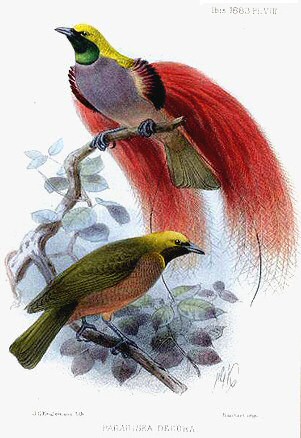
The golden-winged parakeet is a species of bird in subfamily Arinae of the family Psittacidae, the African and New World parrots. It is found in Bolivia, Brazil, French Guiana, Guyana, Suriname, and Venezuela.
Region
Amazon Basin and the Guianas
Typical Environment
Occurs widely across lowland rainforest, riverine woodland, and forest edges from Venezuela and the Guianas through northern and central Amazonian Brazil to northern Bolivia. It favors tall evergreen forest but readily uses secondary growth, gallery forest, and savanna mosaics with scattered trees and palms. Frequently visits fruiting trees in clearings and along rivers, and may enter agroforestry areas. Roosts communally in cavities or dense foliage near feeding sites.
Altitude Range
0–1200 m
Climate Zone
Tropical
Ease of Keeping
Beginner friendly: 2/5
This small Amazonian parakeet is aptly named for the bright yellow patch on the bend of its wing, which flashes in flight. It often forms noisy flocks that commute between roosts and feeding sites. Pairs commonly nest in tree cavities and are also known to use arboreal termite mounds. Despite habitat loss in parts of its range, it remains widespread and locally common.


Temperament
social and active
Flight Pattern
short rapid wingbeats
Social Behavior
Usually seen in pairs or small to medium-sized flocks, becoming larger at abundant food sources. Pairs maintain contact calls while foraging in the canopy. Nests in natural tree cavities and often in arboreal termite mounds, lining chambers with plant material. Both parents participate in nest defense and chick provisioning.
Migratory Pattern
Resident
Song Description
Vocalizations are high-pitched, sharp chattering notes and squeaks, often given in rapid series during flight. At roosts and feeding trees, flocks produce continuous, lively twittering calls.
Plumage
Mostly bright green with a conspicuous golden-yellow patch on the wing coverts; flight feathers darker with bluish tones. Tail is tapered and green. Underparts are slightly paler green.
Diet
Feeds primarily on fruits, seeds, and berries, including those of palms and various forest trees. Also takes flower buds and nectar when available. Will exploit cultivated or wild fruiting trees near human settlements. Foraging is mainly by gleaning in the upper canopy, with short flights between crowns.
Preferred Environment
Most often in canopy and forest edges, along rivers, and in secondary growth with fruiting trees. Also uses seasonally flooded forest and savanna woodlands with palms.