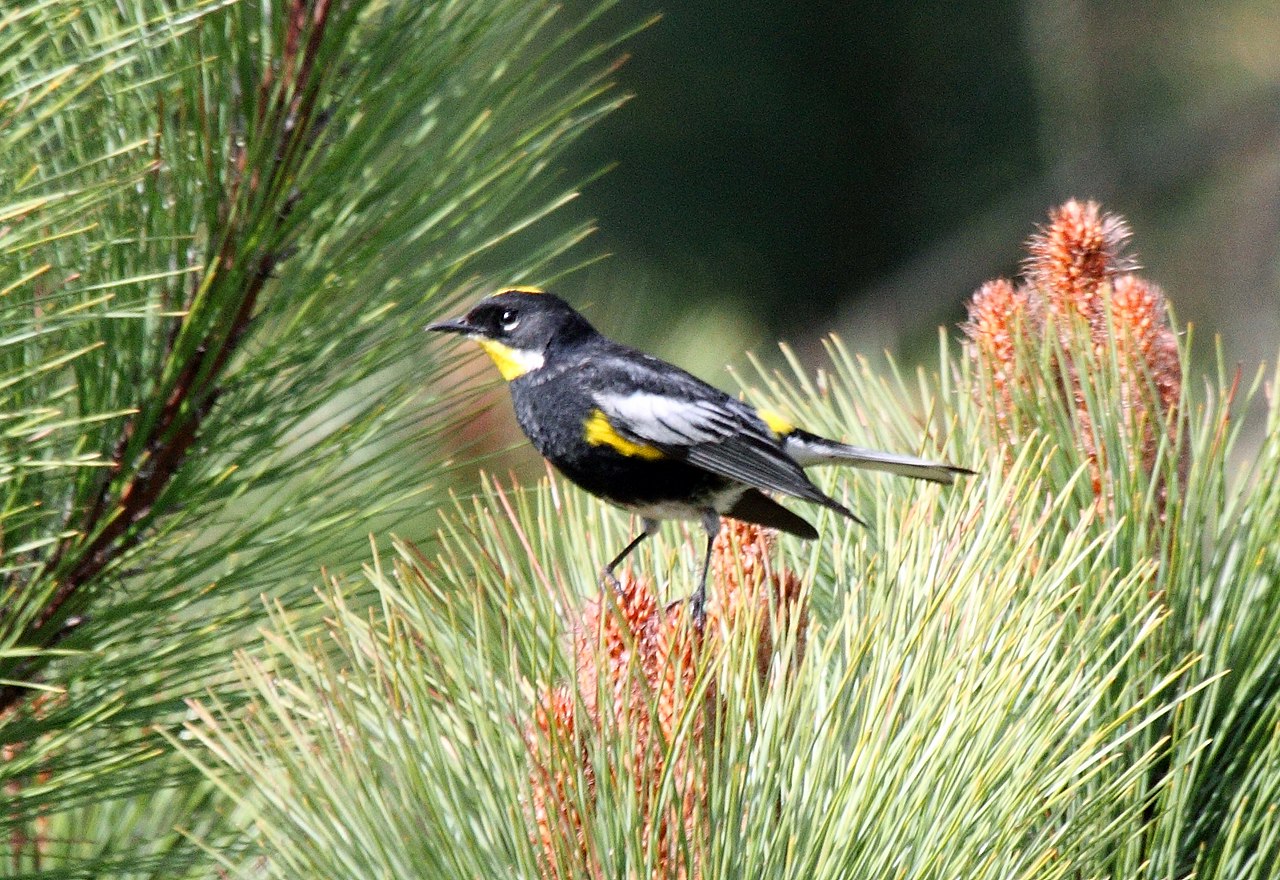
The golden-winged tody-flycatcher is a species of bird in the family Tyrannidae, the tyrant flycatchers. It is found in Colombia, Ecuador, and Peru.
Region
Northern Andes and western Amazonian foothills
Typical Environment
Found from southern Colombia through eastern Ecuador into northern Peru, mainly along humid foothill forests and adjacent lowlands. It favors secondary growth, vine tangles, bamboo patches, and forest edges, often near streams or clearings. The species is typically local but can be fairly common where suitable dense understory persists. It usually keeps within low to mid understory strata, moving methodically through thickets.
Altitude Range
300–1500 m
Climate Zone
Subtropical
Ease of Keeping
Beginner friendly: 1/5
A tiny tyrant flycatcher that skulks in dense understory tangles, it is often detected by its high, thin calls before being seen. It occurs on Andean foothill slopes and adjacent lowlands of Colombia, Ecuador, and Peru. Like many tody-flycatchers, it builds a small, globular hanging nest with a side entrance. Its bright golden wing panel is a key field mark in the dim forest understory.


Temperament
skulking and active
Flight Pattern
short rapid wingbeats with brief sallies
Social Behavior
Usually found singly or in pairs, often accompanying mixed-species flocks moving through the understory. Pairs maintain small territories and communicate with thin contact notes. Nests are typically small, globular, hanging structures placed in dense vegetation with a side entrance.
Migratory Pattern
Resident
Song Description
Song and calls are high-pitched, thin, insect-like notes, often a short series of tsee or seee phrases. Vocalizations carry surprisingly well in dense growth but can be easily overlooked among insect sounds.
Plumage
Compact, short-tailed flycatcher with olive-green upperparts and yellow underparts; wings show a striking golden patch formed by bright edged coverts. The crown and face are dusky-olive with a subtle pale lore line; tail dark with faint edging. Plumage appears smooth and sleek, aiding quick, precise movements in tangles.
Diet
Feeds mainly on small arthropods such as flies, beetles, ants, and tiny caterpillars. It gleans prey from leaves and twigs, hover-gleans briefly, and makes short sallies to snatch insects mid-air. Foraging is deliberate but continuous, focusing on dense tangles and bamboo stems.
Preferred Environment
Prefers understory of humid foothill forests, thickets, vine tangles, and bamboo stands. Often forages along edges, streamside vegetation, and regenerating second growth where insect activity is high.