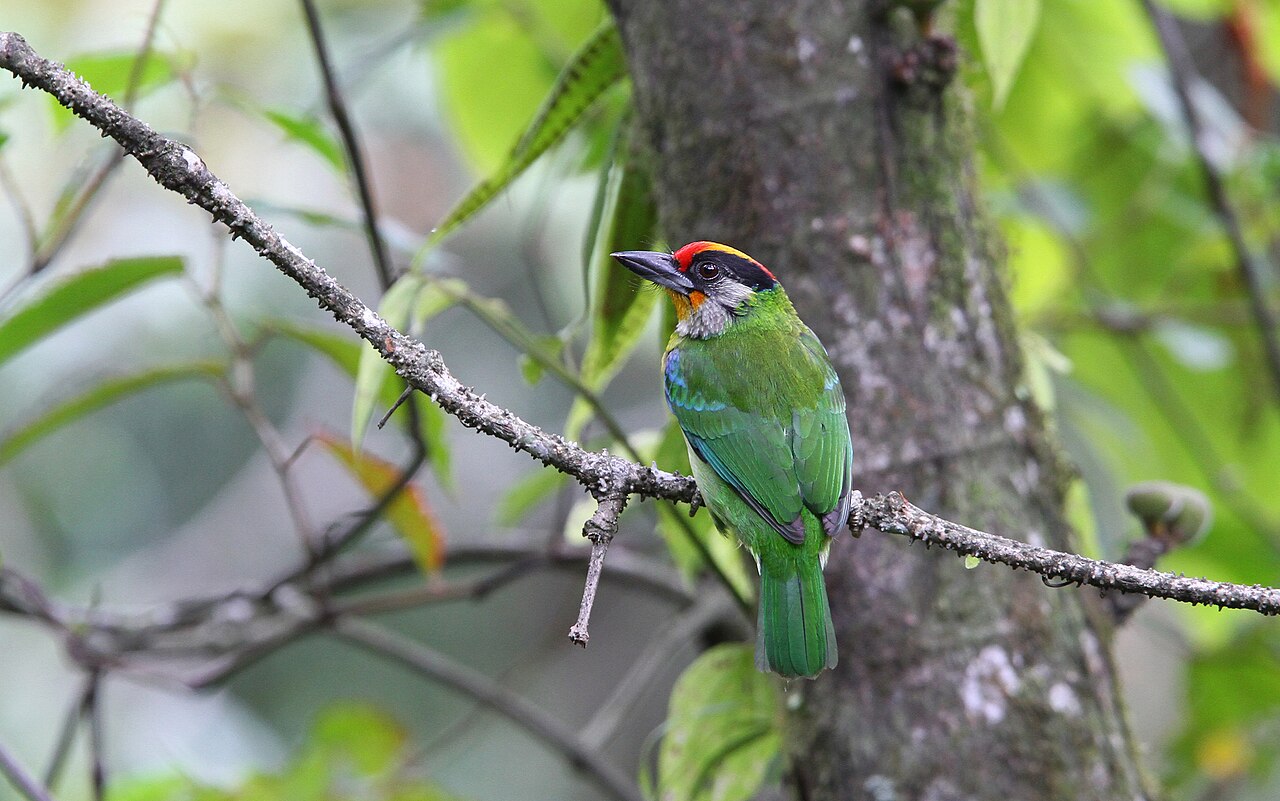
The golden-tailed sapphire is a species of hummingbird in the family Trochilidae. It is found in Bolivia, Brazil, Colombia, Ecuador, Peru, and Venezuela.
Region
Western and central Amazon Basin and adjacent Andean foothills
Typical Environment
Occurs in northern South America from Colombia and Venezuela south through Ecuador and Peru into northern Bolivia and western Brazil. It is most often found along forest edges, clearings, riparian thickets, and secondary growth, but also visits flowering trees in plantations and gardens. The species uses a range of vertical strata, from understory flowers to canopy blooms. It tolerates moderate habitat disturbance as long as nectar sources are available.
Altitude Range
Sea level to 1800 m
Climate Zone
Tropical
Ease of Keeping
Beginner friendly: 1/5
A small hummingbird of the lowland and foothill tropics, the golden-tailed sapphire is named for its distinctively bronzy-golden tail that flashes in sunlight. It frequents forest edges, second growth, and gardens, where it aggressively defends nectar sources. Like most hummingbirds, it supplements nectar with tiny insects for protein. It is widespread and locally common across northern and western Amazonia and adjacent Andean foothills.


Temperament
territorial and active
Flight Pattern
short rapid wingbeats with agile hovering
Social Behavior
Typically solitary at flowers, where males defend feeding territories aggressively against other hummingbirds. Courtship involves display flights and chases near rich nectar sources. The nest is a small cup of plant down and spider silk, placed on a horizontal branch or fork, and the female alone incubates and raises the young.
Migratory Pattern
Resident
Song Description
Vocalizations are high, thin chips and short buzzy trills given during foraging and territorial encounters. Wing hum is prominent at close range and may be used as an acoustic signal during displays.
Plumage
Iridescent green to blue‑green upperparts with a bright, metallic sheen; underparts glittering blue to blue‑green in males, duller greenish with pale tones in females. Tail distinctly bronzy to golden, contrasting with the body. Wings are dusky with narrow, pointed primaries typical of hummingbirds.
Diet
Feeds primarily on nectar from a variety of flowering trees, shrubs, and epiphytes, favoring tubular blossoms. It also captures small insects and spiders by hawking in midair or gleaning from foliage to obtain essential proteins. Individuals often revisit reliable nectar sources and may follow flowering cycles seasonally.
Preferred Environment
Forages along forest edges, in clearings, second growth, riverine thickets, and human-modified habitats such as gardens and plantations. Often uses perches with good visibility near flowering plants to survey and defend resources.