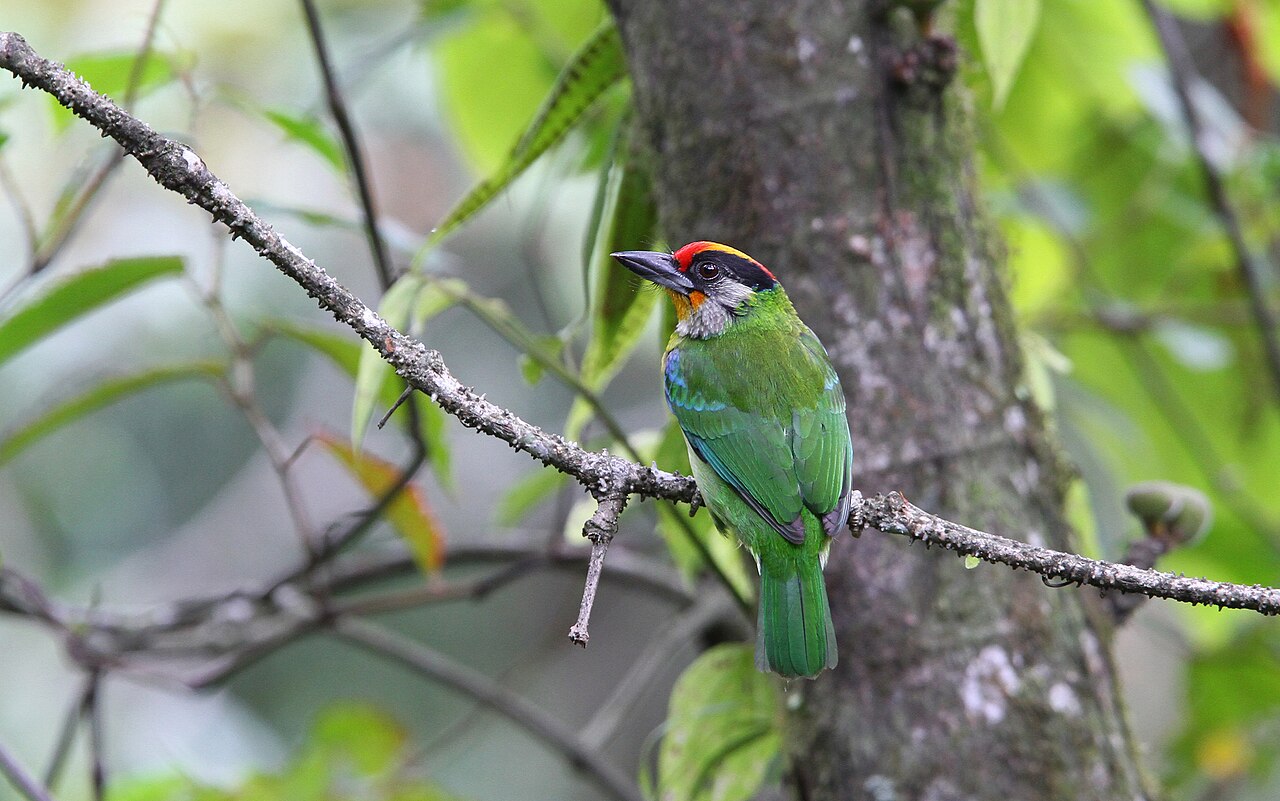
The golden-tailed woodpecker is a species of bird in the family Picidae. Its specific name commemorates the 5th Earl of Abingdon. It belongs to a species complex that includes the Knysna woodpecker to the south of its range, and the mostly allopatric Mombasa woodpecker to the northeast, with which it perhaps hybridizes.
Region
Southern and Eastern Africa
Typical Environment
Occurs widely in savanna and woodland mosaics, including miombo, mopane, and acacia woodlands, as well as riparian fringes and wooded edges. It favors areas with mature trees and plenty of dead limbs for foraging and nesting. The species avoids dense closed forests and true deserts but tolerates thickets, termitaria groves, and well-treed gardens in rural settlements. It is generally sedentary within territories but may make local movements following food availability.
Altitude Range
Sea level to 1800 m
Climate Zone
Tropical
Ease of Keeping
Beginner friendly: 1/5
Named for the 5th Earl of Abingdon, this African woodpecker is best recognized by its golden-yellow tail. It forms a species complex with the Knysna and Mombasa woodpeckers and may hybridize where ranges approach. Its drumming is relatively soft and infrequent compared to many temperate woodpeckers, relying more on vocal calls for communication.


Female preening after daybreak


Temperament
solitary and territorial
Flight Pattern
undulating flight with short rapid wingbeats between glides
Social Behavior
Usually seen singly or in pairs maintaining year-round territories. Pairs excavate nest cavities in dead or soft-wood limbs; both sexes participate in nesting duties. They may join mixed-species flocks occasionally while foraging but typically remain discreet within their home range.
Migratory Pattern
Resident
Song Description
A series of sharp, piping kik notes that may accelerate or rise slightly in pitch, often delivered from a perch. Drumming is soft and short, used less frequently than vocal calls.
Plumage
Olive-green upperparts heavily speckled or barred with pale spots; underparts whitish to buff with dark barring and spotting. Tail distinctly golden-yellow with darker barring. Crown red in males and dark with pale spots in females; both sexes show a streaked face and spotted mantle.
Diet
Feeds mainly on ants, termites, and their larvae, gleaned from bark, dead wood, and cavities. Probes under bark scales and into soft or decayed wood, sometimes hammering lightly to expose insect galleries. Will take other small arthropods opportunistically.
Preferred Environment
Forages on trunks, branches, and dead snags within open woodland and savanna, especially where dead limbs are abundant. Also uses edges of forests, riparian trees, and occasionally large trees in rural gardens or orchards.