
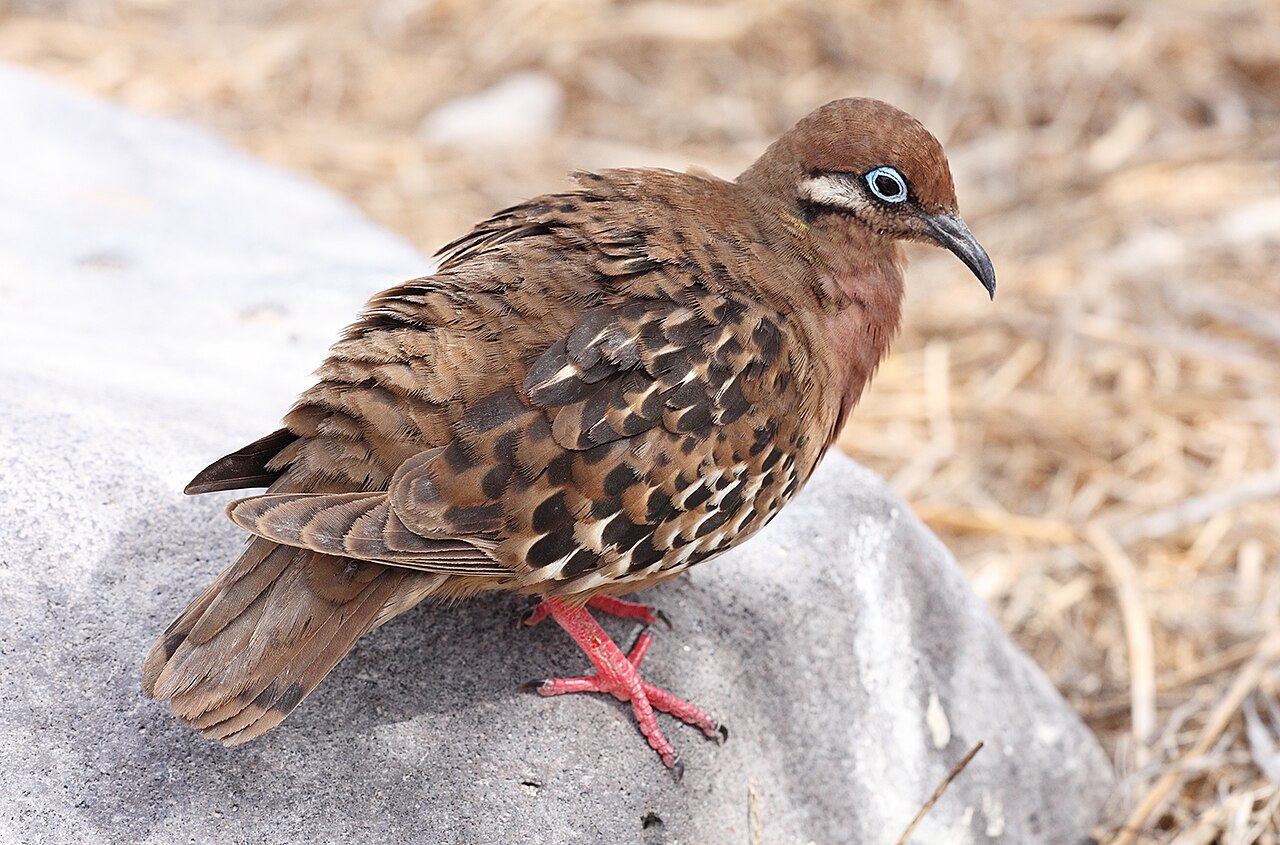
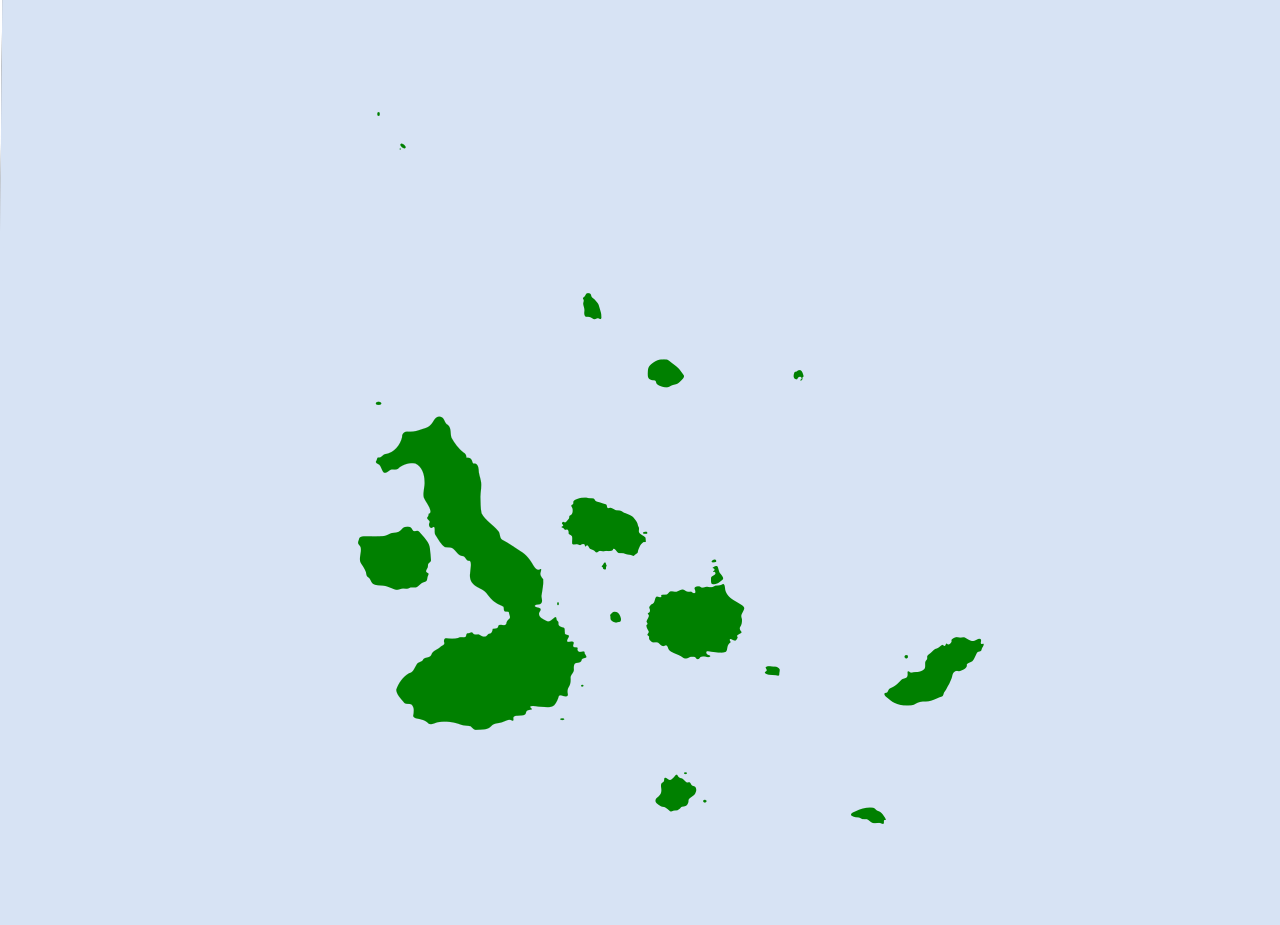
The Galápagos dove is a species of bird in the family Columbidae. It is endemic to the Galápagos Islands. It is fairly common and is found in a wide range of open and semi-open habitats, especially in the arid lowlands of the archipelago.
Region
Galápagos Archipelago
Typical Environment
Occurs across most of the Galápagos Islands, most abundant in arid lowlands with sparse scrub and cactus. Prefers open, stony ground, lava fields, coastal dunes, and the Opuntia cactus zone. It also frequents edges of human settlements for spilled grain and freshwater. Individuals may wander upslope into more humid zones when resources are scarce, but they remain primarily a lowland species.
Altitude Range
Sea level to 1000 m
Climate Zone
Tropical
Ease of Keeping
Beginner friendly: 1/5
This ground-foraging dove is easily recognized by its vivid blue eye-ring and bright red legs. It is remarkably tame on remote islands and often approaches people. Galápagos doves play an important role in dispersing seeds of native plants, especially prickly pear cacti (Opuntia). They build simple twig nests low in shrubs or within cactus pads.


Galapagos dove on Genovesa Island

Galapagos dove on Española Island

Temperament
generally tame and ground-oriented
Flight Pattern
fast, direct flight with rapid wingbeats
Social Behavior
Often seen singly, in pairs, or small loose groups while feeding on the ground. Typically monogamous; pairs maintain small territories around nest sites. Nests are shallow twig platforms placed low in shrubs or within Opuntia cacti, and both sexes share incubation and chick rearing.
Migratory Pattern
Resident
Song Description
Soft, mournful cooing phrases delivered from low perches or the ground. Calls include gentle hoo-woo sequences and harsher notes when alarmed.
Plumage
Warm rufous-brown overall with black-spotted wing coverts and a subtle iridescent sheen on the neck. Underparts are paler with a pinkish wash on the breast and lightly scaled neck feathers.
Diet
Primarily consumes seeds and fruits from native shrubs and cacti, especially Opuntia. Also takes fallen berries, grass seeds, and occasionally small invertebrates such as beetles and ants. Will sip moisture and feed on cactus pulp during dry periods.
Preferred Environment
Forages on open ground in arid scrub, lava fields, and coastal flats, often beneath cacti and thorny bushes. Readily visits paths and settlement edges for scattered grain and freshwater.


