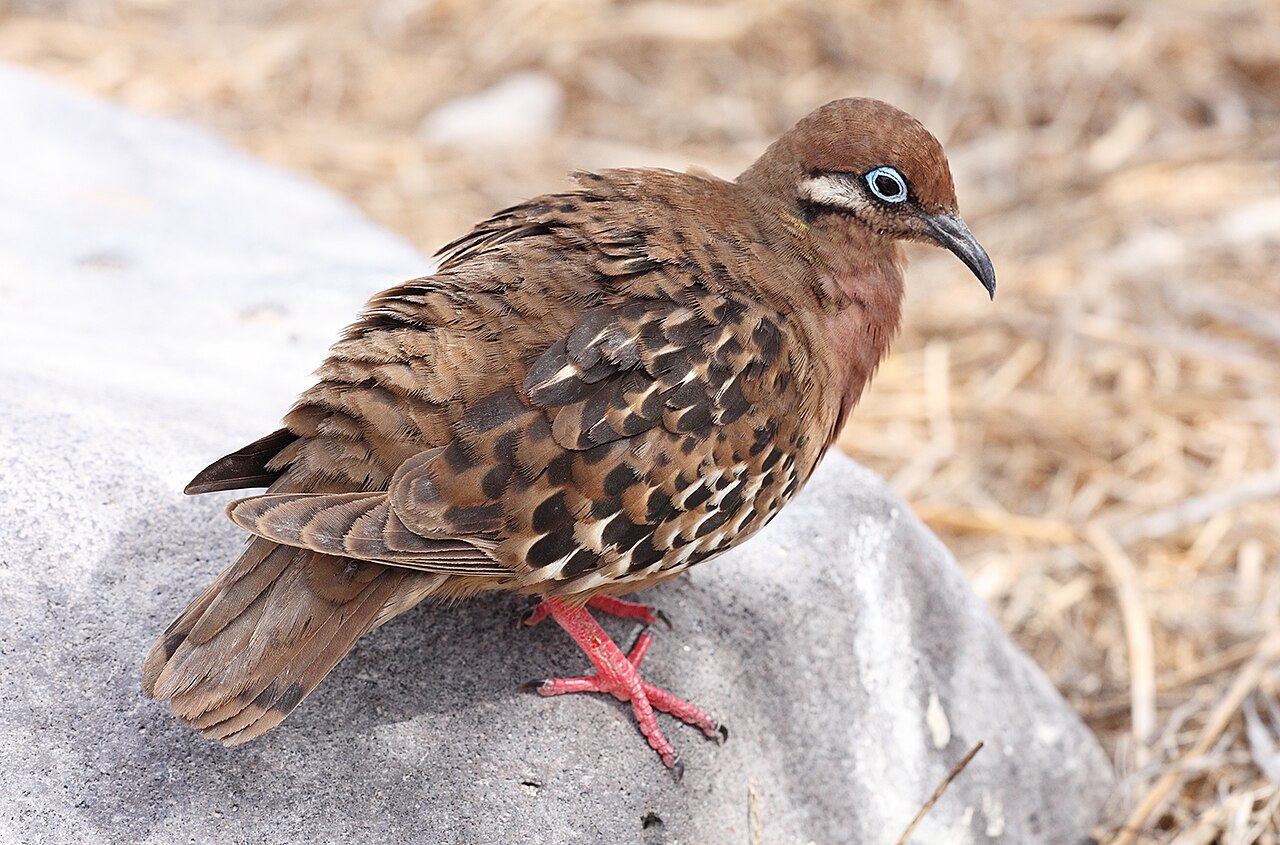
The Galapagos crake, also called the Galapagos rail and Darwin's rail, is a vulnerable species of rail in subfamily Rallinae of family Rallidae, the rails, gallinules, and coots. It is endemic to the Galápagos Islands. It resembles its sister species, the black rail of the Americas, from which it diverged 1.2 million years ago.
Region
Galápagos Islands
Typical Environment
Occurs on several of the larger Galápagos Islands, favoring humid highland zones with dense ground cover. It frequents bracken and fern thickets, Scalesia and Miconia shrub zones, seeps, marshy meadows, and stream edges. Birds also forage along field margins and pastures where cover remains, avoiding fully open ground. The species is highly terrestrial and usually stays under cover, moving quietly through vegetation.
Altitude Range
Sea level to 1700 m
Climate Zone
Tropical
Ease of Keeping
Beginner friendly: 1/5
Also called the Galápagos rail or Darwin's rail, this small, secretive rail is endemic to the Galápagos Islands and resembles its sister species, the black rail. It diverged from the black rail roughly 1.2 million years ago. It is a reluctant flier, slipping through dense vegetation on foot. Control of invasive mammals on several islands has benefited its recovery in recent years.


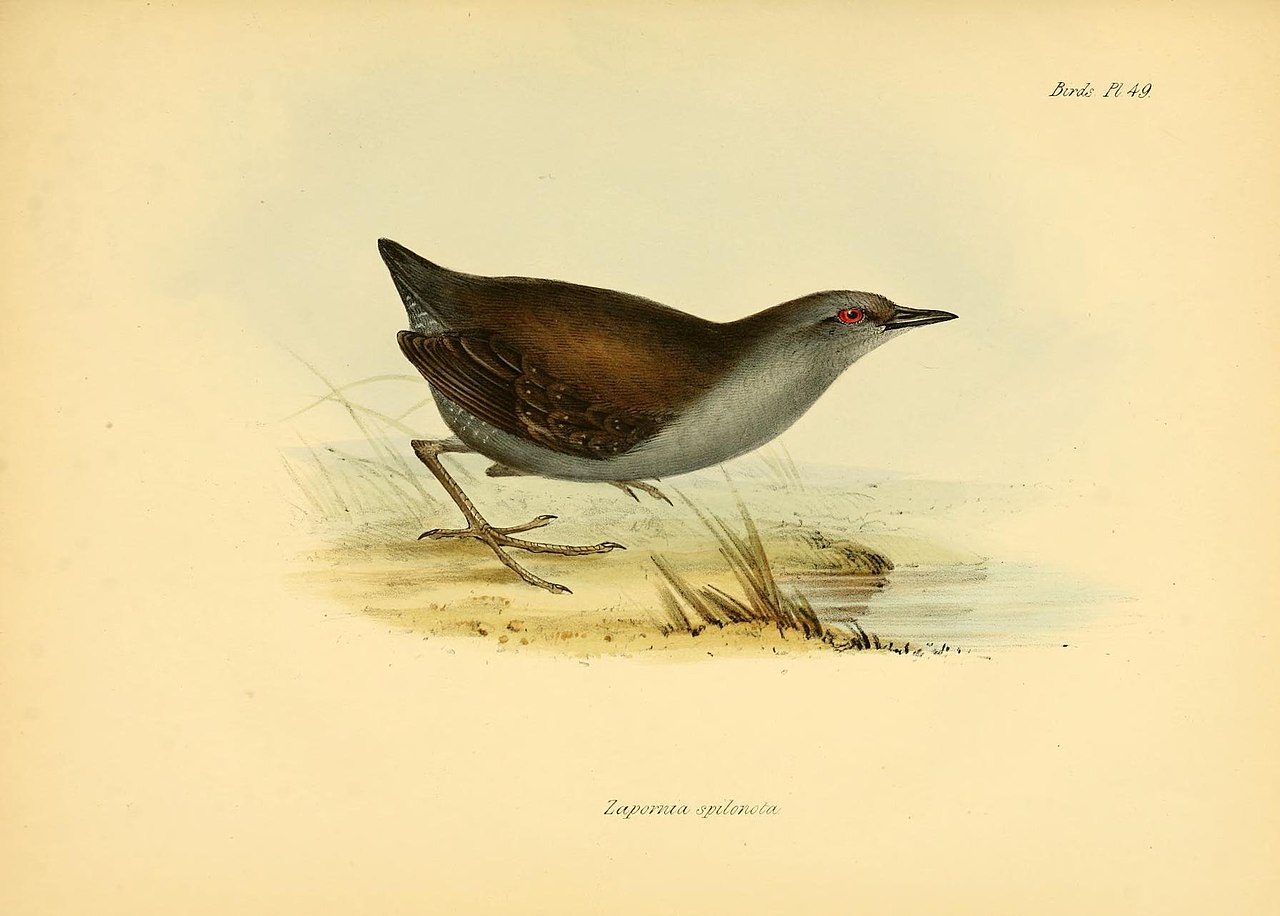
Illustration of L. spilonota.

Temperament
shy and secretive
Flight Pattern
short rapid wingbeats; reluctant to fly
Social Behavior
Typically in pairs or small family groups, maintaining contact with soft calls from cover. Nests are well-concealed on or near the ground, often domed structures woven from grasses and fern fronds. Both parents are believed to share incubation and chick-rearing duties, with breeding coinciding with wetter periods.
Migratory Pattern
Resident
Song Description
A series of sharp tik or kik notes that may accelerate into a rapid trill. Pairs often duet, giving antiphonal sequences that carry through dense vegetation.
Plumage
Sooty-gray head and underparts with warm brown to rufescent upperparts; flanks finely barred black and white. Feathers are soft and sleek, aiding movement through dense vegetation.
Diet
Eats a mix of invertebrates such as insects, spiders, snails, isopods, and small worms. Also takes seeds, tender shoots, and the occasional small berry. Foraging is mostly gleaning and probing in leaf litter and soft soil under cover.
Preferred Environment
Feeds along the edges of marshy patches, seepages, and in fern and shrub thickets where moisture keeps the ground soft. Will use lightly grazed pastures and agricultural margins if dense ground cover is present.