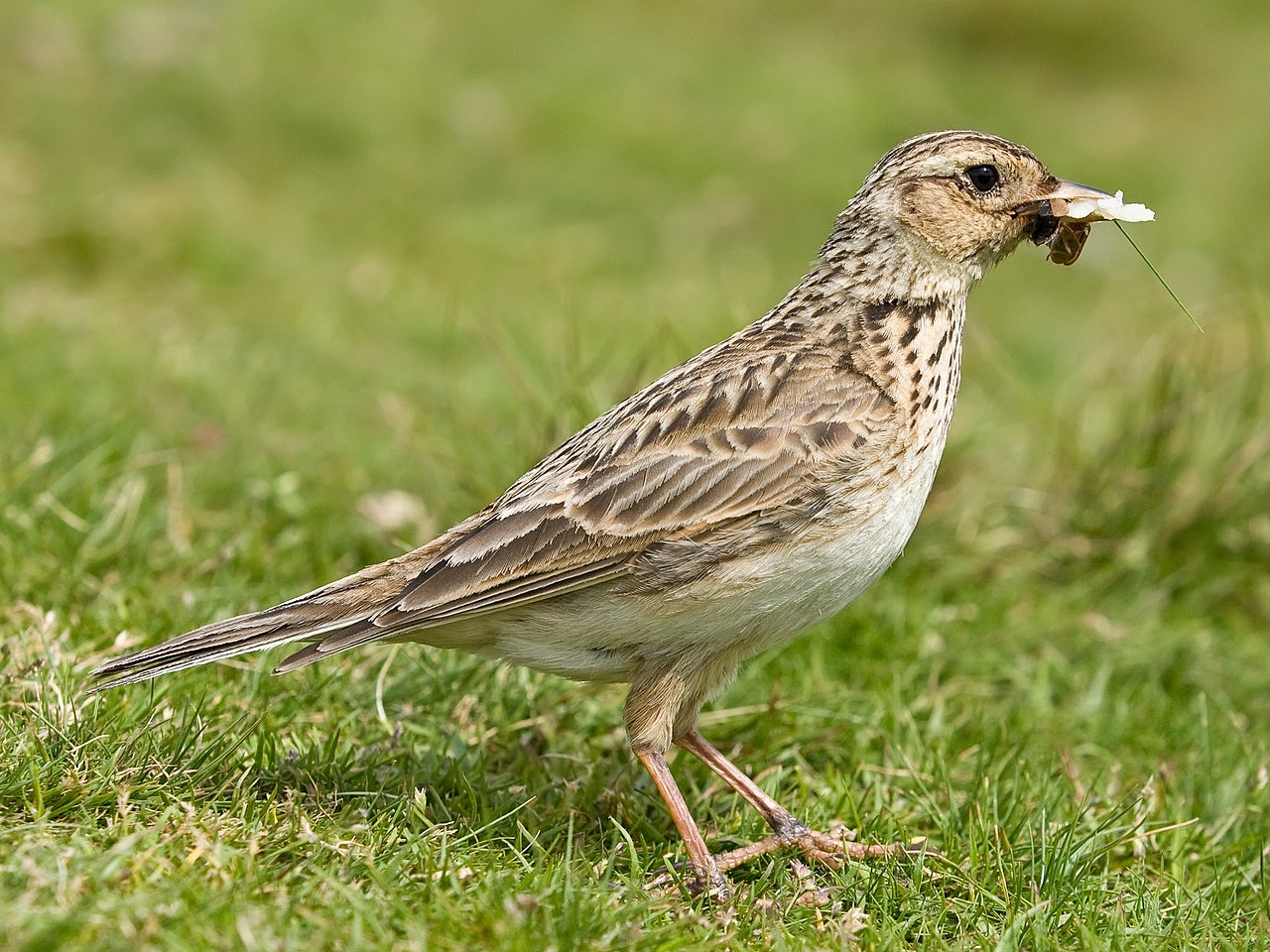
The Eurasian nuthatch or wood nuthatch is a small passerine bird found throughout the Palearctic and in Europe. Like other nuthatches, it is a short-tailed bird with a long bill, blue-gray upperparts and a black eye-stripe. It is a vocal bird with a repeated loud dwip call. There are more than 20 subspecies in three main groups; birds in the west of the range have orange-buff underparts and a white throat, those in Russia have whitish underparts, and those in the east have a similar appearance to European birds, but lack the white throat.
Region
Palearctic (Europe to East Asia)
Typical Environment
Occupies mature deciduous and mixed woodlands with abundant old trees for nesting cavities. Common in oak and beech forests in the west, and also uses coniferous and mixed taiga farther east. Frequently visits parks, large gardens, and orchards. Avoids extensive treeless habitats and very dense, uniform plantations. Nests in natural holes or old woodpecker cavities, often modified with mud.
Altitude Range
Sea level to 2500 m
Climate Zone
Temperate
Ease of Keeping
Beginner friendly: 1/5
Eurasian nuthatches can climb down tree trunks headfirst, a trick few birds can manage. They often plaster mud around a natural cavity to adjust the entrance to their size and deter predators. In autumn they wedge seeds into bark crevices and hammer them open, and they cache food for winter.


Female S. e. europaea in Sweden

An individual of the subspecies Sitta europaea caesia in flight.

Eating seeds in Hungary



![Nuthatches are more reluctant to occupy a nest box than other tree hole nesting birds.[18]](https://upload.wikimedia.org/wikipedia/commons/thumb/0/0f/Sitta_europaea_-England_-nest_box-8-4c.jpg/1280px-Sitta_europaea_-England_-nest_box-8-4c.jpg)
Nuthatches are more reluctant to occupy a nest box than other tree hole nesting birds.[18]

Egg

Eurasian nuthatch eating seeds in France (Lot)

Feeding her chick by shelling sunflower seeds
Temperament
solitary and territorial
Flight Pattern
short rapid wingbeats
Social Behavior
Typically forms long-term pairs that defend all-purpose territories year-round. Nests in cavities, narrowing the entrance with mud to exclude larger competitors and predators. Stores seeds and nuts in bark crevices, remembering cache sites through winter.
Migratory Pattern
Partial migrant
Song Description
Loud, ringing whistles and repeated piping notes; the common call is a sharp, repeated dwip or twit. Males deliver a clear, accelerating series of whistles in spring, often from prominent perches. Calls carry well through woodland.
Plumage
Blue-grey upperparts with clean, smooth mantle and back; underparts range from whitish to warm orange-buff depending on subspecies. Prominent black eye-stripe contrasts with pale face and often a whitish throat in western populations. Flanks can show chestnut tones; undertail coverts rufous.
Diet
Feeds mainly on insects and spiders in spring and summer, gleaned from bark and foliage. In autumn and winter it switches to seeds, nuts, and acorns, often wedging them in bark and hammering them open. Regularly caches surplus food and retrieves it later. Will visit bird feeders for peanuts and sunflower seeds.
Preferred Environment
Forages along trunks and large branches, frequently moving headfirst down bark to probe crevices others miss. Favours mature broadleaf trees but also works along mixed forest edges and large garden trees.