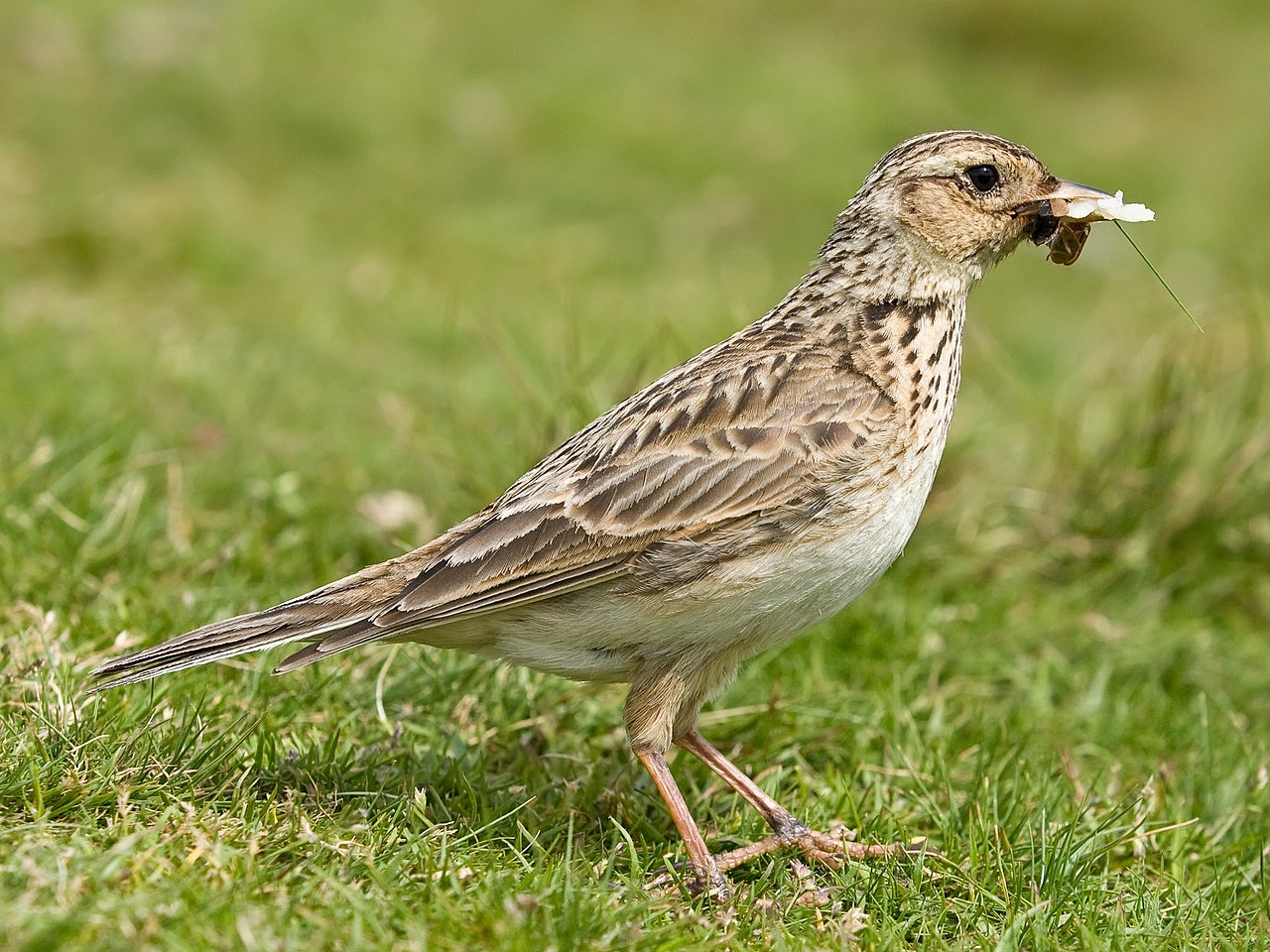
The Eurasian skylark is a passerine bird in the lark family, Alaudidae. It is a widespread species found across Europe and the Palearctic with introduced populations in Australia, New Zealand and on the Hawaiian Islands. It is a bird of open farmland and heath, known for the song of the male, which is delivered in hovering flight from heights of 50 to 100 metres. The sexes are alike. It is streaked greyish-brown above and on the breast and has a buff-white belly.
Region
Europe and the Palearctic (introduced in Australia, New Zealand, and Hawaii)
Typical Environment
Occupies open habitats such as farmland, meadows, pastures, heathland, steppe, and coastal dunes. It favors low, patchy vegetation with scattered tussocks for nesting and cover, avoiding dense forests and urban centers. In agricultural landscapes it uses cereal fields, set‑aside, and field margins, shifting to stubbles and fallow after harvest. In introduced ranges it thrives in grazed pasture and open volcanic or coastal grasslands.
Altitude Range
Sea level to 2000 m
Climate Zone
Temperate
Ease of Keeping
Beginner friendly: 1/5
Famed for its prolonged, exuberant song delivered during a high hovering flight, the Eurasian skylark has inspired poets and composers for centuries. Populations have declined in parts of Western Europe due to intensive agriculture and loss of mixed farmland. It has been successfully introduced to New Zealand, Australia, and Hawaii, where it occupies open grasslands and pastures.


Alauda arvensis - MHNT
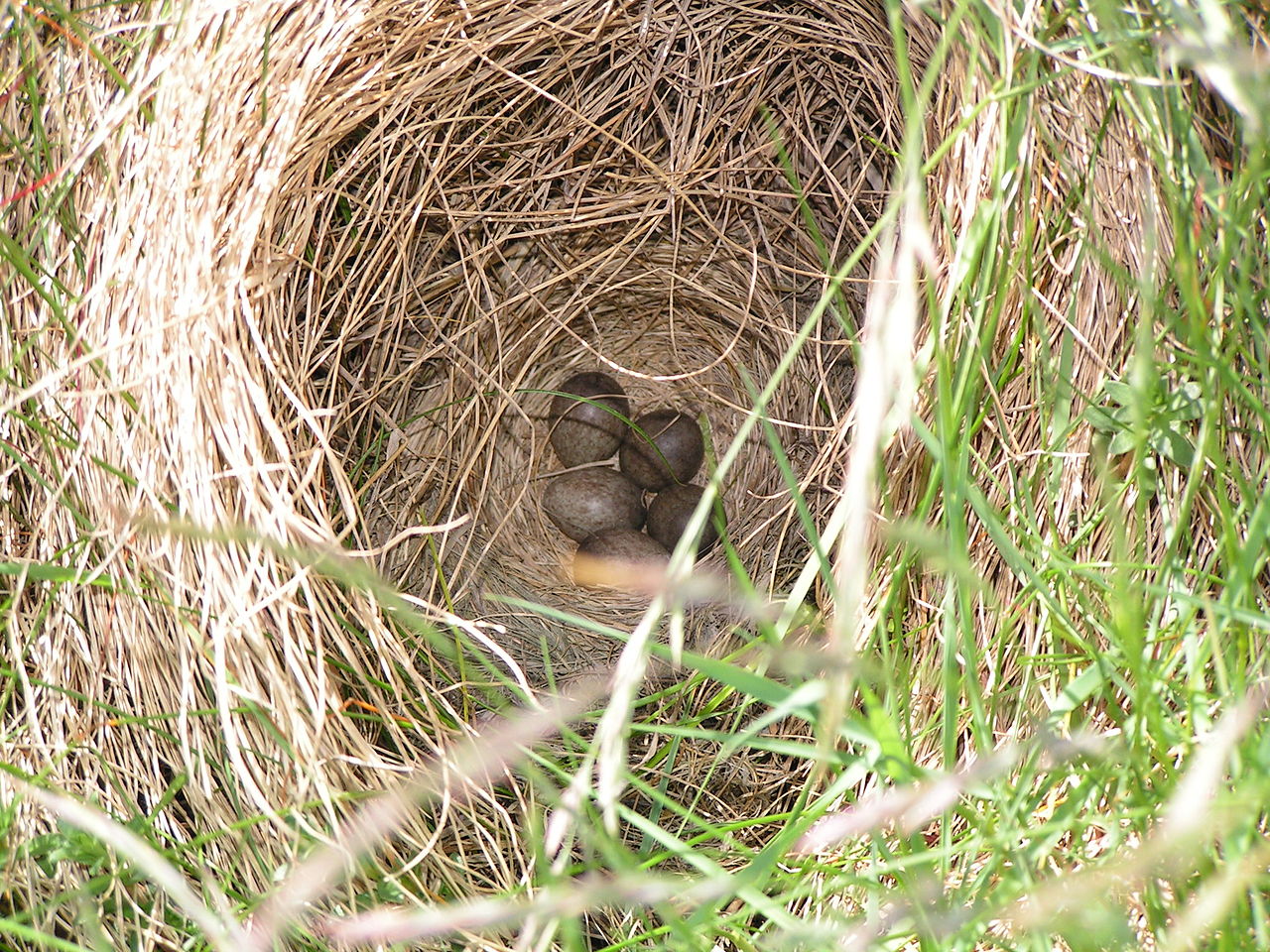
Nest

Skylark singing

Eurasian skylark pictured in the coat of arms of Leivonmäki
Temperament
solitary and territorial
Flight Pattern
short rapid wingbeats with buoyant hovering songflights
Social Behavior
During breeding, males defend territories and perform sustained songflights over open ground; nests are shallow ground cups hidden in vegetation. Pairs are seasonally monogamous, with 2–3 broods in good years. Outside the breeding season, they form loose flocks, often feeding with other seed-eating birds in farmland.
Migratory Pattern
Partial migrant
Song Description
A rich, continuous cascade of varied trills, whistles, and warbles delivered for minutes while hovering high above the ground. Calls include a thin 'tsip' and softer contact notes. The song is far-carrying and often given from dawn through midday in fair weather.
Plumage
Densely streaked brown upperparts with a streaked buff breast and pale buff-white belly; fine, soft feathering with a small erectile crest.
Diet
Feeds on a mix of seeds and green plant matter outside the breeding season, including grasses, cereal grains, and weed seeds. During breeding it consumes more invertebrates—beetles, caterpillars, flies, spiders, and other small arthropods—especially for nestlings. Forages by walking and pecking on the ground, gleaning from low vegetation and stubble.
Preferred Environment
Open fields, meadows, and pasture with short to moderate vegetation and scattered cover. Frequently uses field margins, fallow plots, and stubble after harvest, and may visit coastal grasslands and dunes.