
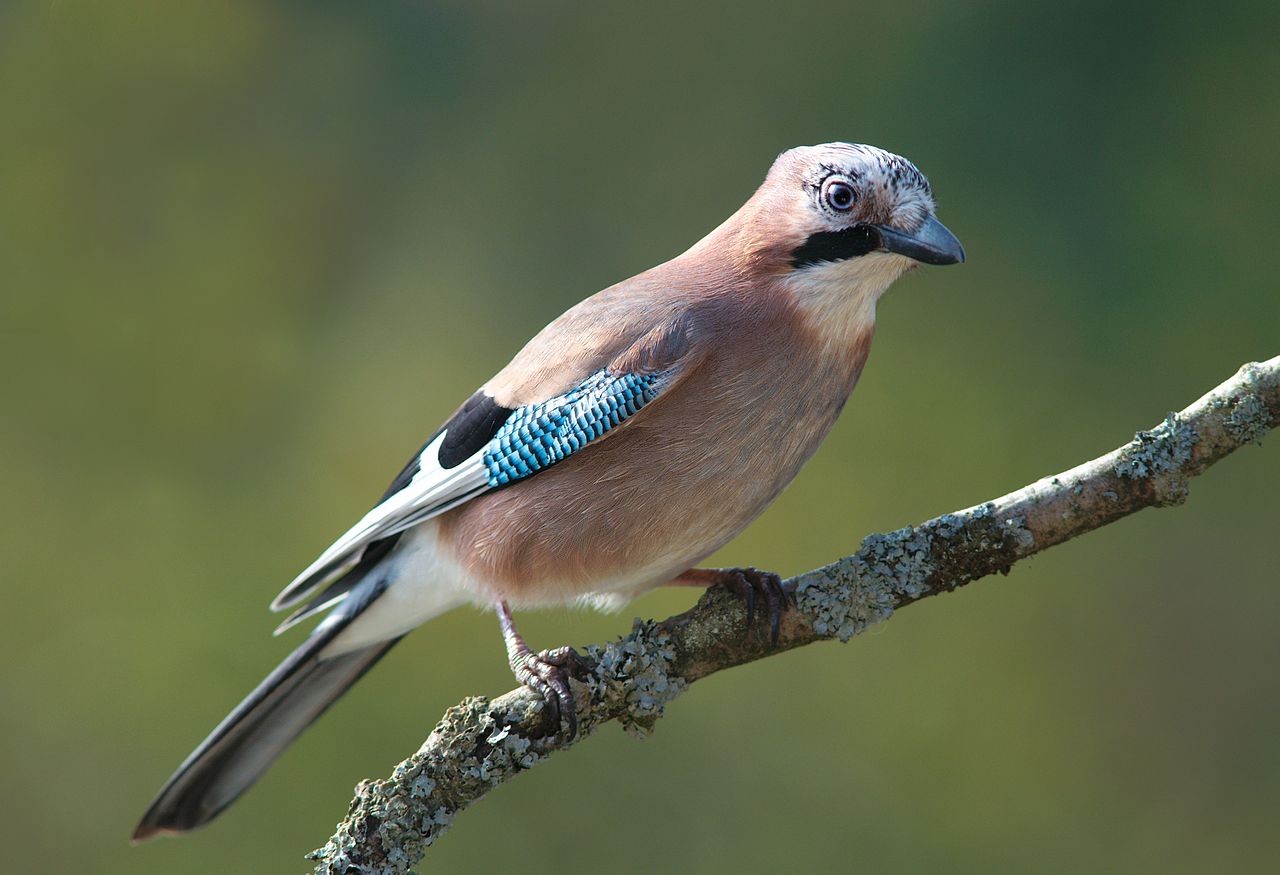
The Eurasian jay, also known simply as the jay without any epithets in the United Kingdom and Ireland, is a species of passerine bird in the crow family Corvidae. It has pinkish brown plumage with a black stripe on each side of a whitish throat, a bright blue panel on the upper wing and a black tail. The Eurasian jay is a woodland bird that occurs over a vast region from western Europe and north-west Africa to the Indian subcontinent and farther to the eastern seaboard of Asia and down into south-east Asia. Across this vast range, several distinct racial forms have evolved which look different from each other, especially when comparing forms at the extremes of its range.
Region
Palearctic (Europe to East Asia)
Typical Environment
Prefers mixed and deciduous woodlands, especially those with oak, but also uses coniferous stands, hedgerows, orchards, parks, and large gardens. Common at forest edges and in mosaics of woodland and farmland. Frequently visits urban green spaces where cover and food are available. Uses dense shrubs and mid-canopy for concealment and nesting.
Altitude Range
Sea level to 2500 m
Climate Zone
Temperate
Ease of Keeping
Beginner friendly: 2/5
Eurasian jays are accomplished mimics, often imitating other birds and even human-made sounds. They cache thousands of acorns each autumn, inadvertently helping to regenerate oak forests. Secretive in dense woodland, they become bolder around gardens and parks, especially where food is offered.


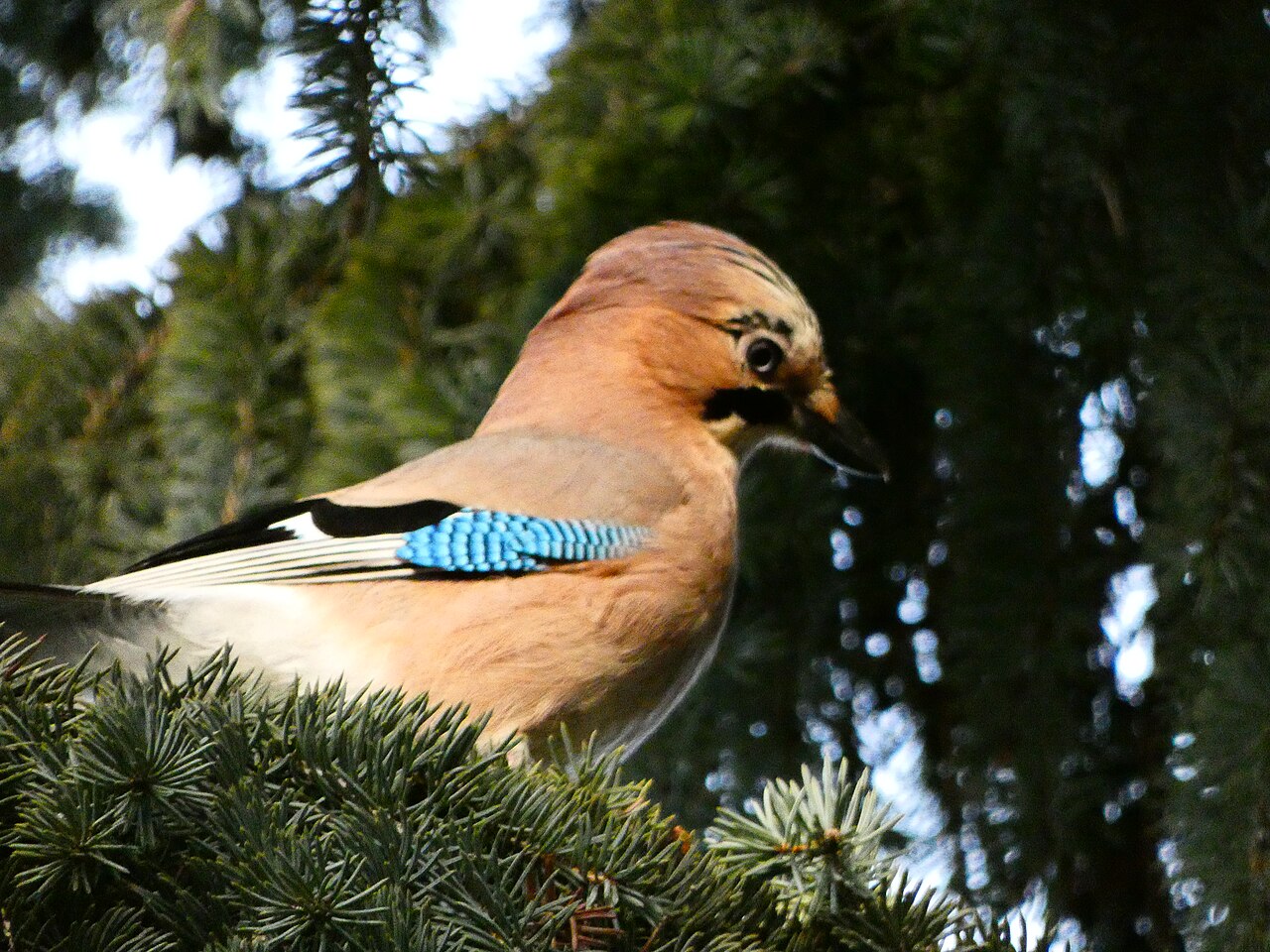
Eurasian Jay in a tree


Temperament
wary and intelligent, but bold near food sources
Flight Pattern
short, bounding flight with broad wingbeats and brief glides
Social Behavior
Typically seen in pairs or family groups and strongly territorial in the breeding season. Monogamous, nesting in trees or large shrubs with both parents provisioning the young. Outside breeding, may form loose flocks and engages in extensive food caching, especially acorns.
Migratory Pattern
Partial migrant
Song Description
Best known for harsh, rasping screeches used as alarms. Also produces quiet, varied chattering and can mimic calls of other birds and sounds from its environment.
Plumage
Overall pinkish-buff body with a whitish throat flanked by a bold black moustachial stripe; crown finely streaked black and white. Striking barred bright-blue lesser wing coverts, black primaries, and a white rump with a black tail. Wings show white patches in flight.
Diet
Feeds heavily on acorns and other nuts, seeds, and berries, supplemented by insects, spiders, and other invertebrates. Will take eggs and nestlings opportunistically and occasionally small vertebrates. Caches food in soil and leaf litter, retrieving stores through memory and landmark cues.
Preferred Environment
Forages in woodland canopy and on the forest floor, especially near oak stands. Regularly visits forest edges, hedgerows, and gardens with mature trees and feeders.


