The Eurasian blackcap is a bird usually known simply as the blackcap. It is a common and widespread typical warbler. It has mainly olive-grey upperparts and pale grey underparts, and differences across the five subspecies are small. Both sexes have a neat coloured cap to the head, black in the male and reddish-brown in the female. The male's typical song is a rich musical warbling, often ending in a loud high-pitched crescendo, but a simpler song is given in some isolated areas, such as valleys in the Alps. The blackcap's closest relative is the garden warbler, which looks quite different but has a similar song.
Region
Western Palearctic
Typical Environment
Breeds widely from Iberia and the British Isles across most of Europe into western Asia, with populations also around the Mediterranean basin. Winters mainly in southern Europe, North Africa, and the Middle East, with a growing number remaining in milder parts of western and central Europe. Occupies deciduous and mixed woodlands, scrub, hedgerows, orchards, parks, and well-vegetated gardens. Prefers dense understorey for nesting but forages from shrub layer to mid-canopy.
Altitude Range
0–2000 m
Climate Zone
Temperate
Ease of Keeping
Beginner friendly: 1/5
The Eurasian blackcap is a widespread warbler whose males have a black cap and females a chestnut-brown one. Its rich, fluting song often ends in a bright crescendo and is a familiar sound in European woodlands and gardens. Increasing numbers now overwinter in western Europe, aided by garden feeding, and the species has been important in studies of migratory orientation and rapid behavioral change.


Male S. a. heineken in the Canary Islands, Spain

Adult female in Sweden showing reddish brown cap
![Left graph shows likelihood of individual blackcaps being seen in a garden plotted against date, right graph shows likelihood plotted against air temperature.[28]](https://upload.wikimedia.org/wikipedia/commons/thumb/c/c4/Blackcap-in_winter.jpg/500px-Blackcap-in_winter.jpg)
Left graph shows likelihood of individual blackcaps being seen in a garden plotted against date, right graph shows likelihood plotted against air temperature.[28]

Deciduous woodland is the preferred breeding habitat.

Eggs, Collection Museum Wiesbaden, Germany

The eggs normally take about 11 days to hatch.

Young chicks begging for food. These are still largely unfeathered.
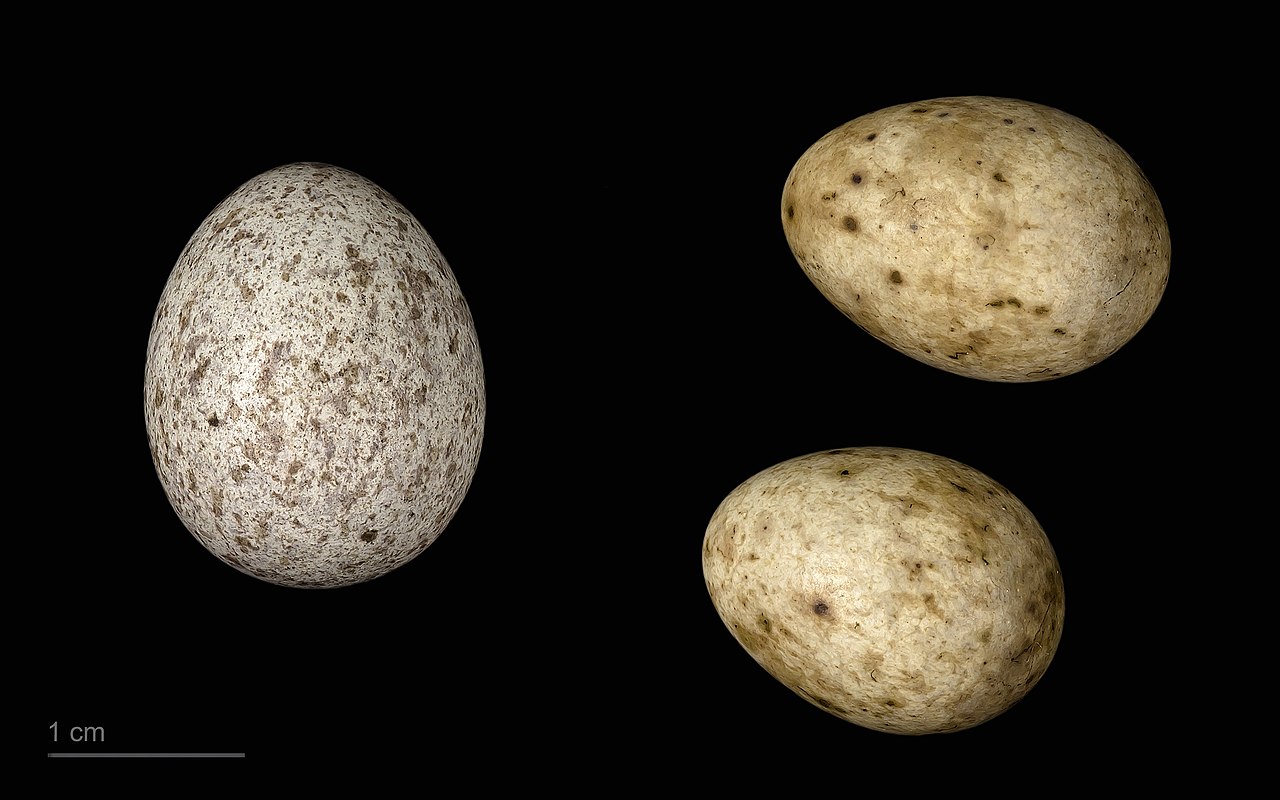
Cuculus canorus bangsi in a clutch of Sylvia atricapilla – MHNT

Male eating an olive from a tree in France in December

The common cuckoo is an occasional brood parasite of the blackcap.

The English poet John Clare described the blackcap as the "March Nightingale".


Temperament
active and somewhat skulking
Flight Pattern
short rapid wingbeats with darting, low flights through cover
Social Behavior
Primarily solitary or in pairs during breeding, with males singing to defend territories and often building several starter nests to attract a mate. Nests are placed low in shrubs or brambles; both parents feed the chicks. Outside the breeding season, may join loose mixed-species foraging groups and visit garden feeders.
Migratory Pattern
Seasonal migrant
Song Description
A rich, melodious warble that often culminates in a bright, ringing crescendo; phrases are fluid and varied. The common call is a sharp, scolding ‘tac-tac’ and softer contact notes when foraging.
Plumage
Olive-grey upperparts with pale grey underparts; neat solid-colored cap; smooth, unbarred wings and clean underparts.
Diet
In breeding season it takes insects and other small invertebrates, including caterpillars, spiders, and beetles gleaned from foliage. In late summer and autumn, berries and soft fruits (such as elder, blackberry, and ivy) become important. In winter it readily consumes fruits and can visit feeders for fat, suet, and fruit offered in gardens.
Preferred Environment
Forages within dense shrubs, bramble patches, woodland edges, and hedgerows, working methodically through foliage. Also feeds in parks and gardens, moving between cover and open perches to sally or glean.