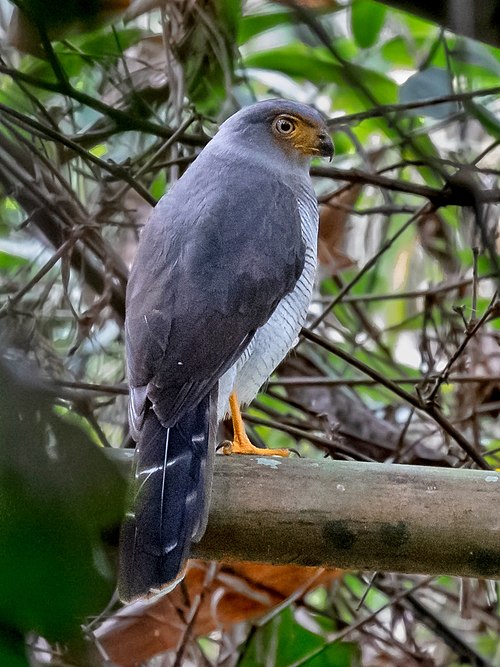
The Crozet shag, also known as the South Georgia cormorant, is a marine cormorant native to the Crozet, Prince Edward and Marion islands in the South Atlantic Ocean.
Region
Subantarctic Indian Ocean
Typical Environment
Found around the Crozet and Prince Edward (Marion and Prince Edward) Islands, inhabiting rugged coasts with offshore kelp beds and rocky stacks. It breeds on sea cliffs, offshore islets, and coastal ledges exposed to strong winds and surf. Foraging occurs in nearshore waters, channels, and over kelp forests where prey is abundant. Birds remain close to their colonies year-round, using local waters for feeding.
Altitude Range
Sea level to 200 m
Climate Zone
Polar
Ease of Keeping
Beginner friendly: 1/5
This blue‑eyed shag breeds in tight cliff colonies and forages close to shore, diving with powerful strokes to chase fish among kelp beds. During breeding, adults show a vivid cobalt eye-ring and prominent orange-yellow facial caruncles. It is largely sedentary, remaining around its natal islands year‑round and returning to traditional nest ledges each season.
Temperament
social and colonial
Flight Pattern
strong flier with rapid wingbeats close to the water
Social Behavior
Breeds in dense colonies on cliff ledges, often reusing the same nest sites. Pairs are monogamous within a season and build nests from seaweed, grasses, and guano. Courtship includes mutual head-shaking and bill displays.
Migratory Pattern
Resident
Song Description
Generally quiet at sea but vocal at colonies, where birds emit grunts, croaks, and hissing calls. Males give deeper, rasping notes during displays, while females respond with shorter grunts.
Plumage
Glossy black upperparts with clean white underparts; in breeding condition the face shows dark cheeks contrasting with the white throat and belly.
Diet
Primarily small schooling fishes and benthic fish, supplemented by crustaceans and occasional cephalopods. It is a pursuit diver, using powerful kicks to chase prey underwater. Foraging dives are typically shallow to mid-depth but can be repeated rapidly in bouts. Prey is often swallowed at the surface after short surfacings.
Preferred Environment
Nearshore waters with extensive kelp beds, rocky reefs, and tidal currents that aggregate prey. Frequently feeds just beyond the surf line and in channels between islets.