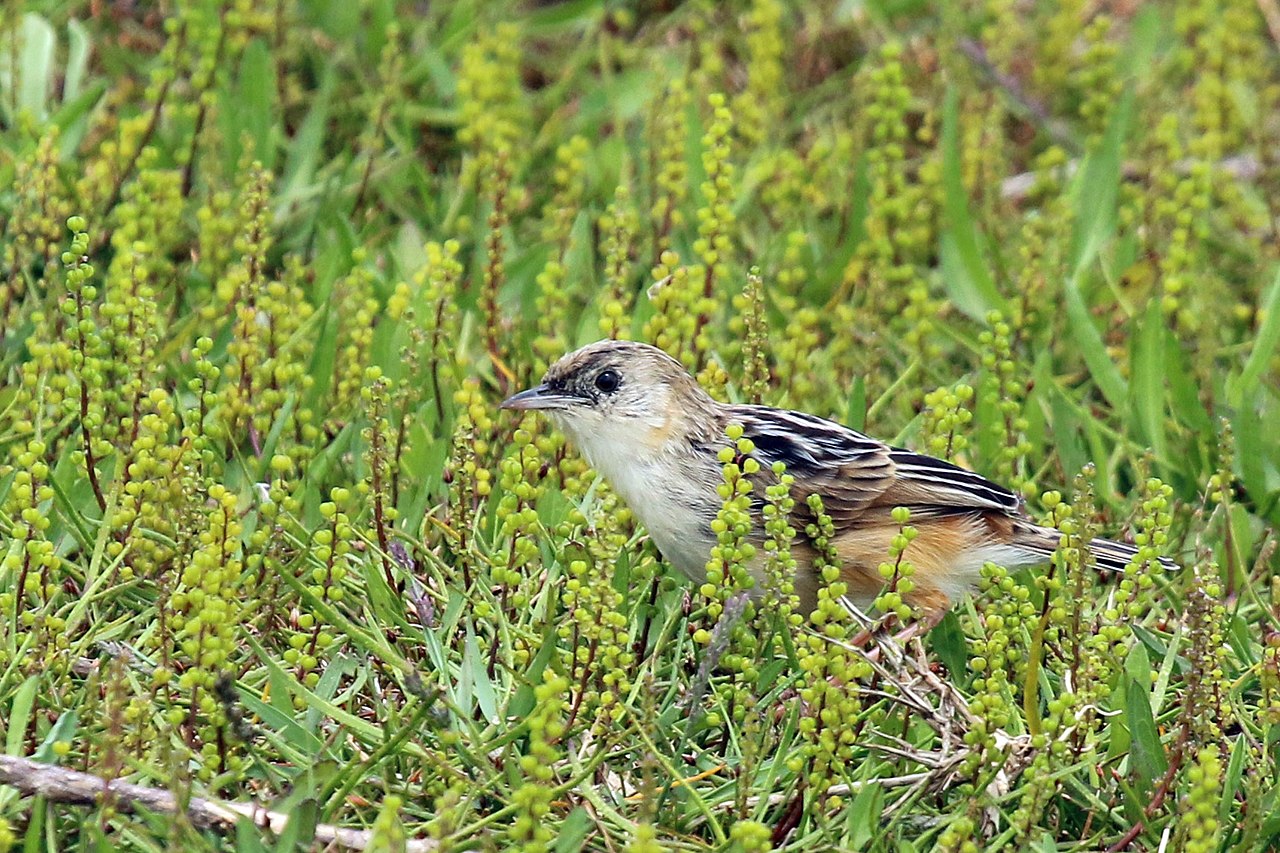
The crimson-rumped waxbill also known as rosy-rumped waxbill is a common species of estrildid finch found in eastern Africa. It has an estimated global extent of occurrence of 830,000 km2.
Region
East Africa
Typical Environment
Occurs widely across eastern Africa, including countries such as Ethiopia, Eritrea, Somalia, South Sudan, Kenya, Uganda, and northern Tanzania. It favors open grassy habitats, dry savanna, acacia scrub, and edges of cultivation, especially where seeding grasses are abundant. Often found near water sources and in lightly degraded or pastoral landscapes. Local movements follow rainfall and seed availability, but it is generally non-migratory.
Altitude Range
0–2500 m
Climate Zone
Tropical
Ease of Keeping
Beginner friendly: 3/5
A small estrildid finch of eastern Africa, it flashes a vivid crimson rump in flight, which is the key field mark behind its name. It often moves in loose, chattering flocks through grasslands and scrub. The species builds neat, ball-shaped grass nests with a side entrance, and adapts well to lightly human-modified habitats.

Temperament
social and active
Flight Pattern
short rapid wingbeats with undulating, low flights
Social Behavior
Typically seen in small flocks or family groups outside the breeding season, keeping close to cover. Pairs are monogamous and cooperate in nest building and chick rearing. Nests are neat, spherical structures of fine grasses, placed low in shrubs or dense grass clumps.
Migratory Pattern
Resident
Song Description
Soft, high-pitched twittering and tinkling notes delivered in short sequences. Contact calls are thin and sibilant, often given continuously as flocks forage.
Plumage
Fine, smooth plumage with warm brown to grey-brown upperparts and paler underparts; subtle barring on the flanks. The rump and upper tail-coverts are a bright crimson, contrasting with a darker tail. Plumage is otherwise plain, giving the red rump and red bill prominence.
Diet
Primarily consumes small grass seeds, gleaned from seed heads or the ground. During the breeding season it supplements with small insects such as termites and other arthropods for added protein. It also takes seeds of weedy plants in disturbed areas and along field margins.
Preferred Environment
Feeds in open grassy areas, overgrazed pastures, roadsides, and lightly cultivated fields. Often forages low, hopping among grass stems or on bare ground near cover and water.