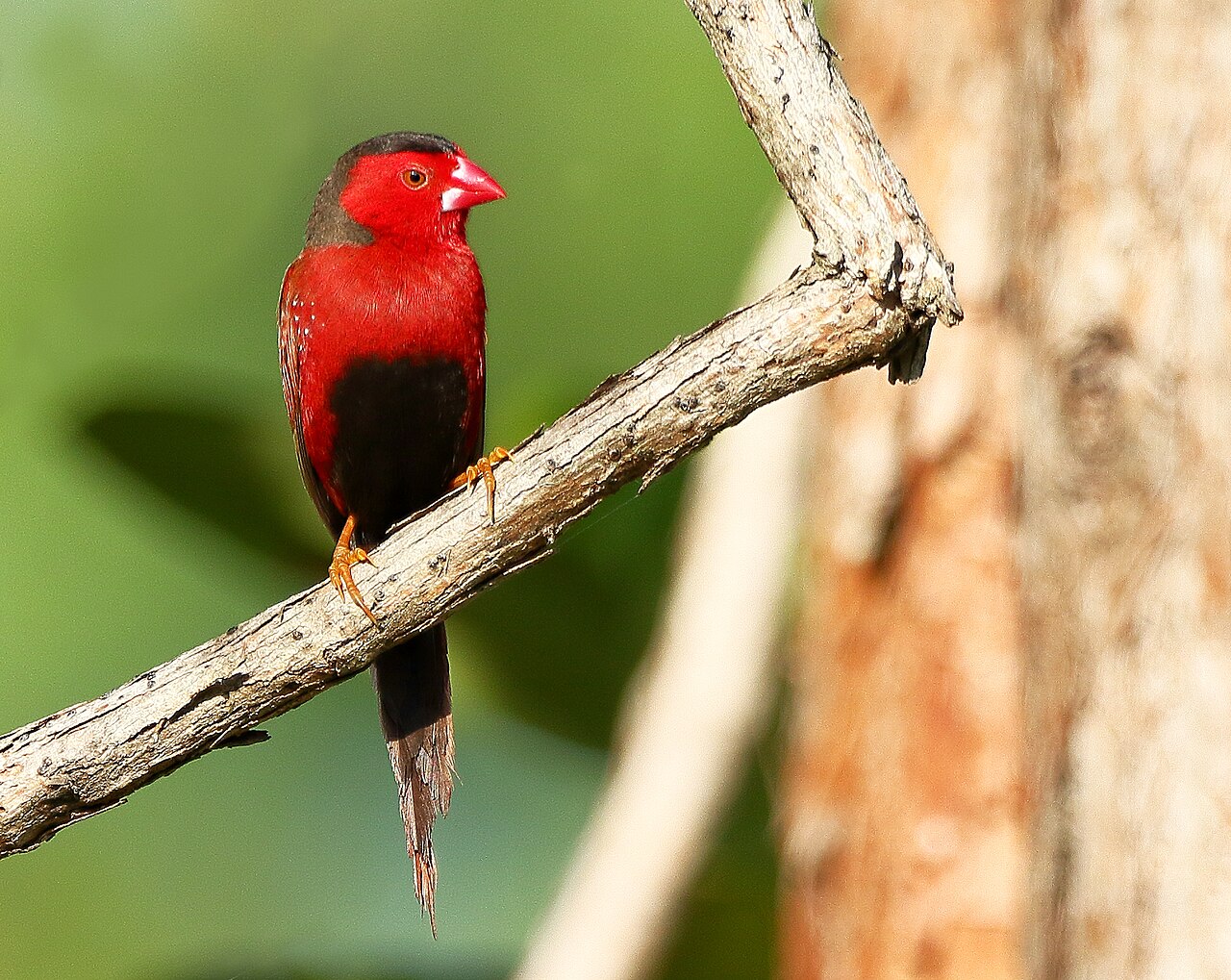
The cricket warbler, also known as cricket longtail, scaly longtail or cricket prinia, is a species of bird in the family Cisticolidae. It belongs to the genus Spiloptila; it is often the only species included in the genus but sometimes the red-fronted prinia is placed there as well.
Region
Sahel and southern Sahara
Typical Environment
Occurs across the Sahel belt from Mauritania and Senegal east through Mali, Niger, and Chad to Sudan, inhabiting arid scrub and semi-desert. It favors thorny acacia and Balanites thickets, wadis with scattered shrubs, and sandy plains with patchy cover. The species avoids dense woodland and open, vegetation-free dunes. Local movements often track recent rains and emergent insect prey.
Altitude Range
0–1500 m
Climate Zone
Arid
Ease of Keeping
Beginner friendly: 1/5
Named for its high, insect-like trilling call, the cricket warbler’s song can be mistaken for an actual cricket. It carries an exceptionally long, graduated tail that it often cocks and fans during display. The species inhabits arid Sahelian scrub and is the core member of the usually monotypic genus Spiloptila.

Temperament
skulking but active
Flight Pattern
short rapid wingbeats, low and bouncing
Social Behavior
Usually found singly or in pairs, sometimes in small family groups. Nests are placed low in thorny shrubs; pairs are monogamous within a breeding season. Breeding often coincides with post-rainfall periods when insect prey is abundant.
Migratory Pattern
Resident
Song Description
A high-pitched, dry, mechanical trill reminiscent of a cricket, delivered from low perches or within shrubs. Calls include sharp chips and rattles used in contact and alarm.
Plumage
Fine scaly patterning on sandy-buff upperparts with paler, lightly streaked or scaled underparts; very long, graduated tail often held cocked.
Diet
Primarily small insects such as ants, beetles, bugs, and caterpillars, gleaned from foliage and twigs. It also takes spiders and other arthropods from the ground and low shrubs. Foraging is quick and deliberate, with frequent tail flicks and short hops.
Preferred Environment
Feeds in thorn scrub, acacia thickets, and along wadis where sparse cover concentrates insects. Often forages within 0–2 m of the ground among dense, spiny vegetation.