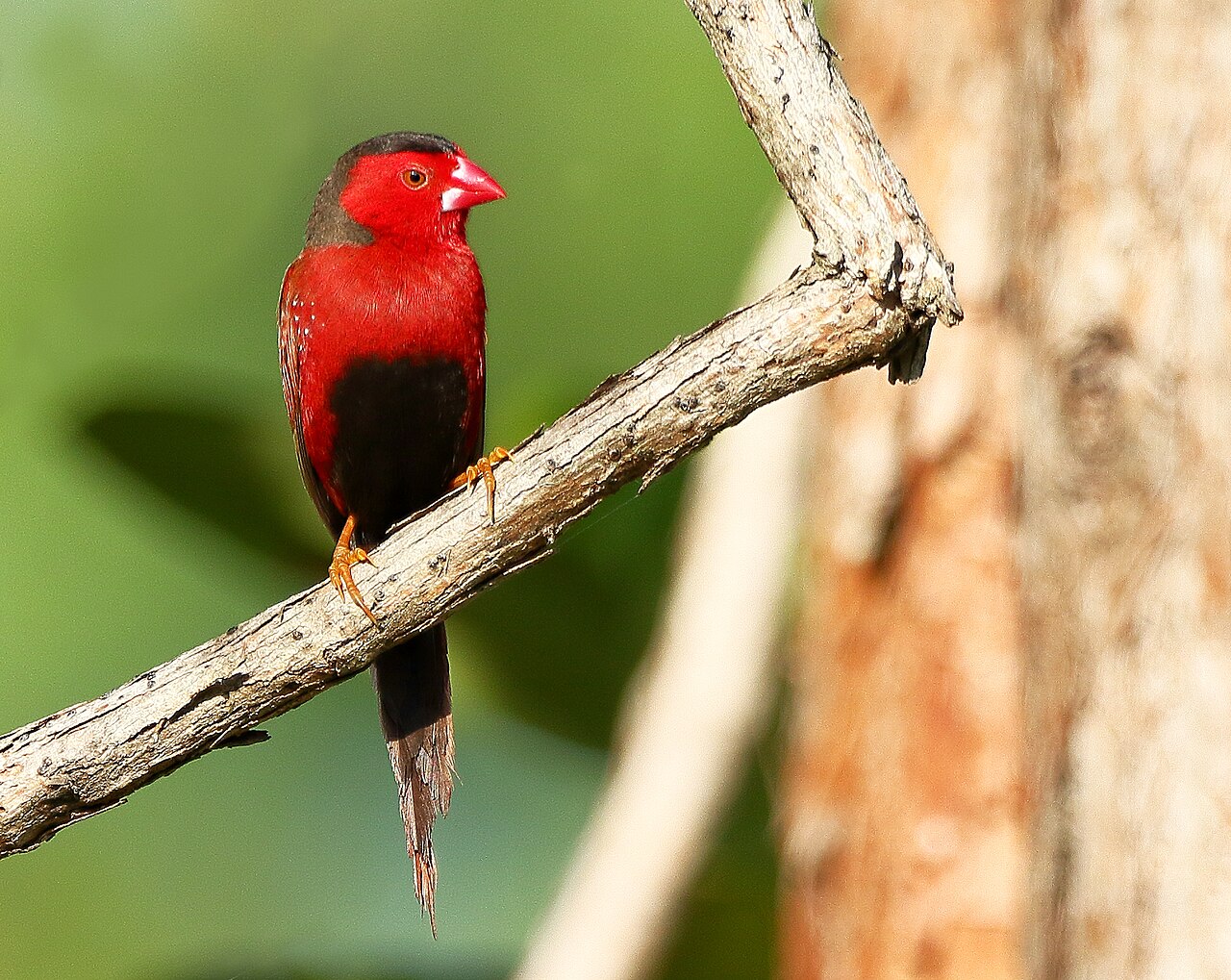
The crimson chat is a species of small bird found in Australia. It is also known as the tricoloured chat, saltbush canary, and crimson-breasted nun.
Region
Australian arid and semi-arid interior
Typical Environment
Occurs widely across the interior of Australia wherever chenopod shrublands, saltbush, and samphire flats are present. Also uses mulga and acacia shrublands, spinifex edges, and open grasslands with scattered low shrubs. After rains, it expands into temporarily lush areas, including floodplains and ephemeral watercourses. It avoids dense forests, favoring open, low-vegetation habitats with accessible ground and shrub-level foraging.
Altitude Range
0–1000 m
Climate Zone
Arid
Ease of Keeping
Beginner friendly: 1/5
Crimson chats are highly nomadic, tracking rainfall across Australia’s arid interior to exploit bursts of food. Males are brilliantly colored during breeding, while females and juveniles are much duller, aiding camouflage. They often gather in small, mobile flocks and can appear suddenly in recently greened landscapes. Nests are low cups hidden in shrubs, and breeding is closely tied to good seasonal conditions.


Female
Temperament
social and active
Flight Pattern
low, undulating flight with rapid wingbeats
Social Behavior
Often forms small, mobile flocks that roam widely after rainfall. Breeding typically occurs in pairs with a cup nest placed low in a shrub; both sexes help feed the young. Group foraging and loose colonies may occur where resources are abundant.
Migratory Pattern
Nomadic and irruptive following rainfall
Song Description
Soft, tinkling warbles interspersed with buzzy trills and high, thin contact calls. Vocalizations are most frequent during the breeding season and when flocks are on the move.
Plumage
Male shows vivid crimson crown, breast, and rump with a white throat bordered by a black facial mask; upperparts are warm brown. Female is sandy-brown above with a pale throat and belly and a faint reddish wash on the crown and rump, lacking the bold mask. Juveniles resemble females, being drab with minimal red tones.
Diet
Primarily takes insects such as ants, beetles, caterpillars, and spiders gleaned from the ground and low shrubs. It also consumes small seeds of chenopods and grasses, and occasionally nectar from flowering shrubs. Foraging is opportunistic and increases markedly after rain when invertebrates are abundant.
Preferred Environment
Feeds in open shrublands, saltbush flats, and along creeklines with scattered low cover. Often forages on the ground and at shrub level, moving quickly between bushes.