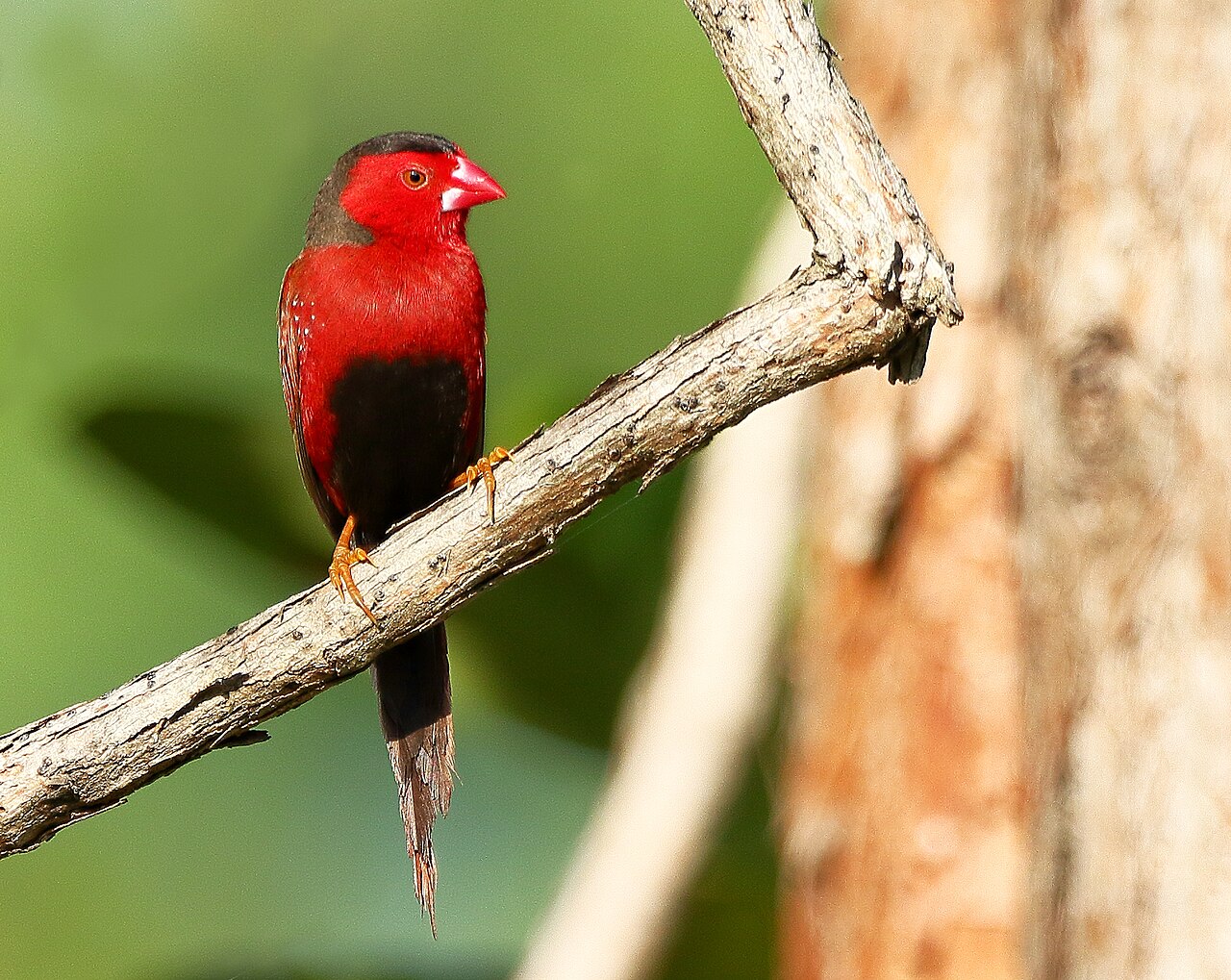
The crested tit-warbler is a species of bird in the family Aegithalidae. It is found in China and possibly India. Its natural habitat is boreal forest. It generally has a red hint to it and a bit of blue on, or near, its wings. The tail is of an emerald green colour.
Region
Eastern Tibetan Plateau and Hengduan Mountains
Typical Environment
Primarily inhabits montane coniferous and mixed forests dominated by spruce, fir, and pine, often with dense rhododendron and juniper understory. It favors forest edges, clearings, and shrubby slopes where it can glean insects from foliage and twigs. The species is largely Chinese, with records from western and southwestern provinces and marginal occurrence toward the Himalayas. In winter it may descend slightly to lower elevations but remains tied to wooded habitats. It regularly joins mixed flocks outside the breeding season.
Altitude Range
2400–4300 m
Climate Zone
Highland
Ease of Keeping
Beginner friendly: 1/5
A dazzling high-montane long-tailed tit of the family Aegithalidae, it sports a jaunty crest and unusual blends of rosy, blue, and green tones. It often forages in mixed-species flocks with tits and other small insectivores, especially in winter. Males tend to be brighter, with more vivid blue and green hues, while females are slightly duller. The erectable crest is used in display and helps make this tiny bird surprisingly conspicuous in its forest home.


Temperament
social and active
Flight Pattern
short rapid wingbeats
Social Behavior
Often moves in pairs or small family parties, frequently joining mixed-species flocks with tits and warblers outside the breeding season. Nesting is in dense shrubs or conifers, with a well-camouflaged cup nest. Pairs are likely monogamous and defend small territories during breeding.
Migratory Pattern
Partial migrant
Song Description
High, thin, tinkling notes interspersed with rapid twittering phrases. Calls are soft, sibilant tsit and tsee notes that help maintain contact within flocks.
Plumage
Soft, silky plumage with a pointed, erectile crest; rosy to rufous-tinged underparts, bluish wings, and a green to turquoise tail. Upperparts show subtle olive and blue tones with pale edging on the wing feathers. Face is pale with a delicate darker eye-line and contrasting crown and crest.
Diet
Feeds mainly on small insects, spiders, and other arthropods gleaned from needles, leaves, and twigs. In colder months it may add small berries and seeds, such as juniper, to supplement scarce prey. It uses quick, agile movements and occasional hover-gleaning to pick prey from foliage.
Preferred Environment
Forages in the mid to upper canopy of conifers and among dense rhododendron and juniper thickets. Frequently works along forest edges, clearings, and sheltered gullies where insect activity is concentrated.