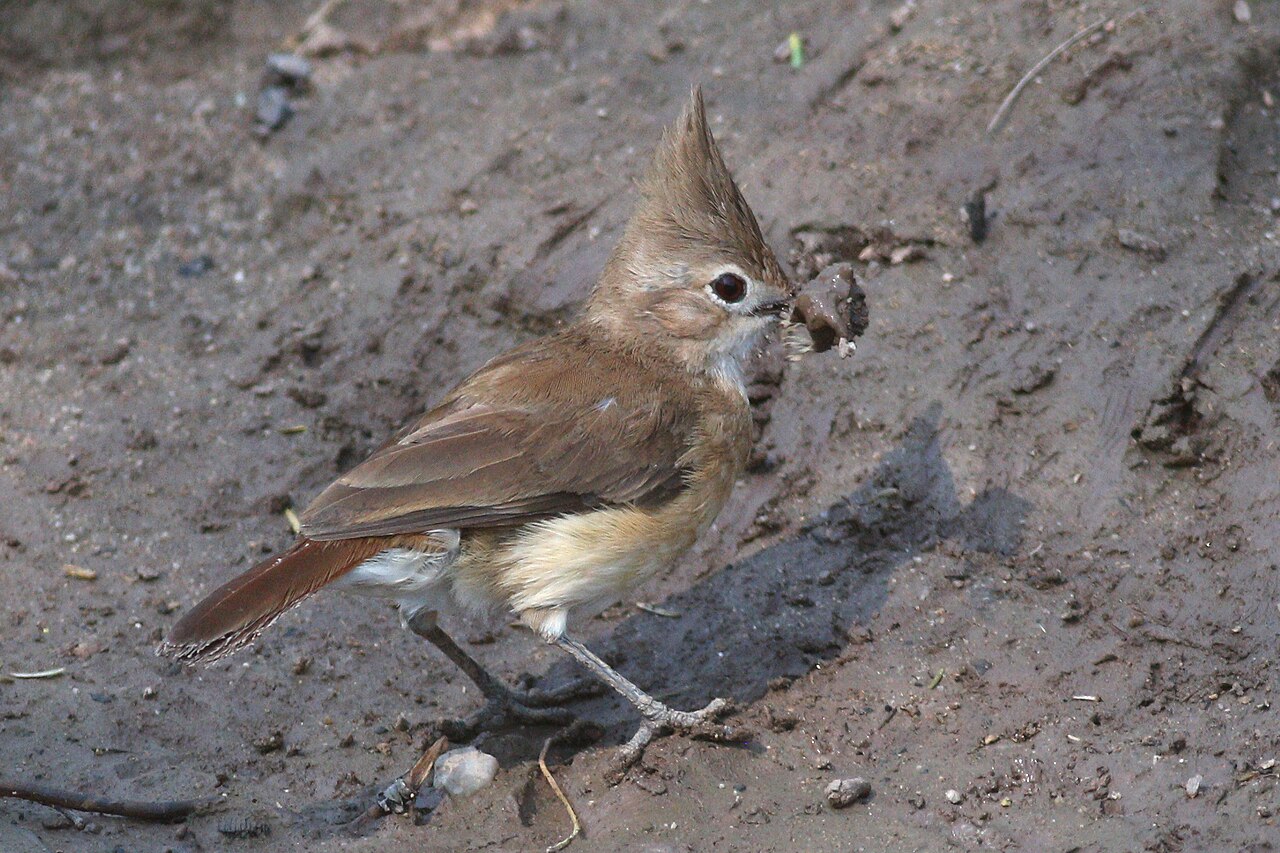
The crested francolin is a species of bird in the family Phasianidae. It is found in southern Africa. One of its subspecies, Ortygornis sephaena rovuma, is sometimes considered a separate species, Kirk's francolin.
Region
Southern and Eastern Africa
Typical Environment
Occurs widely from northeastern South Africa through Eswatini, Mozambique, Zimbabwe, Botswana, and into Malawi, Zambia, and southern Tanzania. It favors dry to semi-arid savanna, acacia and mopane woodland, thornveld, and scrubby grassland. Often found along bushy drainage lines, at the edges of cultivation, and near waterholes, but it avoids dense forests and true deserts. Nests are shallow scrapes on the ground concealed under shrubs or grass tussocks.
Altitude Range
Sea level to 1800 m
Climate Zone
Subtropical
Ease of Keeping
Beginner friendly: 2/5
Crested francolins are ground-dwelling gamebirds that rely on camouflage and freeze-or-flush tactics when threatened, often bursting into short, noisy flight. They commonly live in pairs or small family groups and give loud, duetted calls at dawn and dusk. At night they frequently roost in low trees, and they dust-bathe regularly to maintain their plumage. Some authorities treat the Rovuma form (O. s. rovuma) as a separate species, Kirk's francolin.


Temperament
wary and territorial
Flight Pattern
short rapid wingbeats with a brief glide; explosive flush
Social Behavior
Usually seen in pairs or small family parties; pairs often remain together year-round and defend territories. Breeding is primarily in the warmer months; the nest is a ground scrape lined with vegetation and concealed under cover. Clutches are moderate in size, and both adults guard the brood; birds may roost a few meters up in trees.
Migratory Pattern
Resident
Song Description
A loud, ringing series of cackling notes often delivered as a duet by the pair, typically at dawn and dusk. Calls carry far across savanna habitats and include sharp, accelerating phrases ending in a rasping trill.
Plumage
Coarsely barred and mottled brown upperparts with pale streaking; underparts buffy to whitish with dark streaks and barring on the flanks. Head shows a small crest and striking black-and-white facial pattern with a bold supercilium. In flight, rufous-brown wing panels are noticeable against otherwise barred wings.
Diet
Feeds on a mix of grass and forb seeds, shoots, bulbs, and berries, supplemented with insects such as termites, ants, beetles, and their larvae. It scratches and pecks at the ground and leaf litter, often exploiting recently burned or grazed areas where food is exposed. After rains, it frequently targets termite emergences. Small stones (grit) are swallowed to aid digestion.
Preferred Environment
Forages on open woodland floors, along bushy tracks and roadsides, field margins, and around scrubby thickets that provide quick cover. Often feeds near water sources and at edges between grassland and shrub cover.